
What is contemporary workwear style: your 2026 guide
Contemporary workwear style is defined as professional clothing that balances polished presentation with comfort, versatility, and modern design. Known in the industry as “business casual” or “smart casual,” it moves away from rigid corporate formality towards adaptable, seasonless pieces that suit a range of workplace settings. For Australian professionals and students, understanding this style means knowing which fabrics, silhouettes, and wardrobe foundations deliver both confidence and practicality. The shift is real, the stakes are professional, and the right wardrobe makes both a personal and career statement.
What key features distinguish contemporary workwear style from traditional office attire?
Contemporary workwear style is defined by tailored yet relaxed silhouettes, technical fabrics, and adaptable layering. Traditional office attire relied on rigid suiting, heavy wool, and strict formality. Modern professional clothing prioritises ergonomic cuts that move with the body and breathable materials suited to the Australian climate.
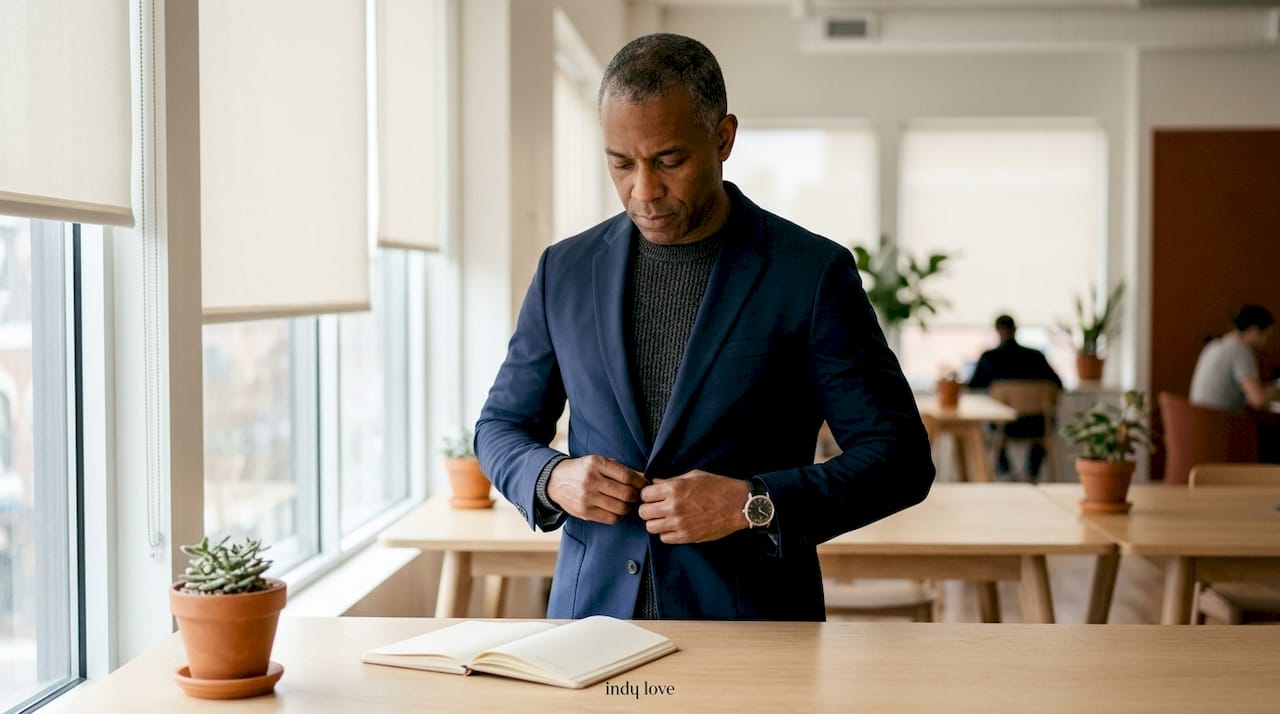
Technical and breathable fabrics are central to this shift. Lightweight linen and wool blends perform well on days above 30 degrees, while structured outer layers add polish without sacrificing comfort. The result is a wardrobe that works from a morning meeting to an afternoon site visit without requiring a full outfit change.
The contrast between old and new is clearest in silhouette and fabric choice:
| Feature | Traditional workwear | Contemporary workwear |
|---|---|---|
| Silhouette | Structured, rigid suiting | Tailored but relaxed, ergonomic cuts |
| Fabric | Heavy wool, polyester blends | Linen, technical blends, breathable weaves |
| Dress code | Formal business attire | Smart casual, business casual |
| Colour palette | Conservative navy, black, grey | Neutral foundations with textured contrast |
| Layering | Formal jacket or blazer only | Versatile layering for temperature regulation |
The move towards smart casual and business casual looks reflects a broader cultural shift. Relaxed dress codes driven by Millennials and Gen Z reflect a generational preference for comfort and individuality over conservative corporate formality. This is not a temporary trend. It is now the baseline expectation across most Australian industries.
Key design features of contemporary professional clothing include:
- Ergonomic cuts that allow full range of movement without pulling or bunching
- Breathable, technical fabrics suited to warm Australian conditions
- Structured blazers that add polish without the weight of traditional suiting
- Tailored trousers with a relaxed leg for all-day comfort
- Crisp shirting in natural fibres that holds its shape through a full workday
How do gender-specific design and inclusivity shape modern workwear?
Gender-specific design is one of the most significant shifts in latest work fashion trends. For decades, workwear defaulted to unisex or male-cut garments adapted for women. That approach is now being replaced by clothing engineered specifically for female body types and professional roles.
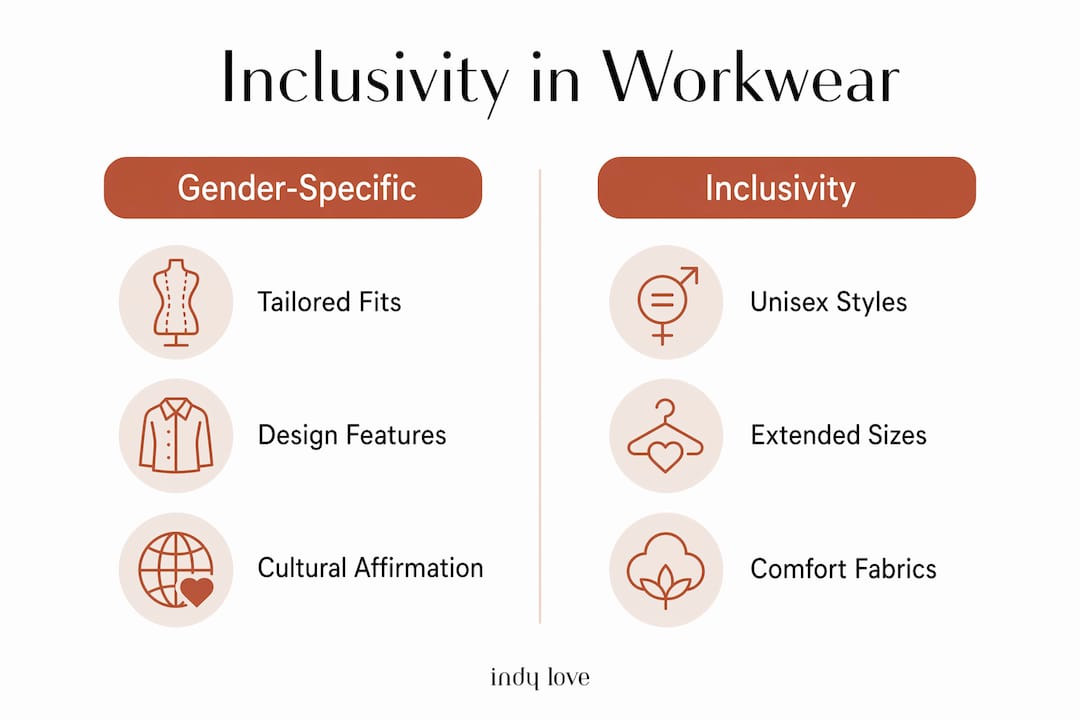
Female participation in Australian trades and healthcare has increased by 14% since 2021. That growth has accelerated demand for workwear that fits and performs correctly for women across physically demanding roles.
The design adaptations driving this change include:
- Four-way stretch fabrics that move with the body during physical tasks
- Antimicrobial treatments for hygiene and freshness over long shifts
- Articulated seams that reduce friction and improve range of motion
- Tailored waistbands that sit correctly on female body proportions
- Reinforced panels in high-wear areas without adding bulk
These features are not just about comfort. They reflect a functional and cultural affirmation of women’s growing presence across all professional sectors. A garment that fits correctly performs better and projects more confidence.
Inclusivity in contemporary professional clothing also extends to diverse body types. Brands are expanding size ranges and offering multiple fit options within the same style. This means a professional can find a tailored trouser or structured blazer that genuinely fits, rather than settling for a garment that approximates the right look.
Pro Tip: When assessing a workwear piece for both performance and style, check for at least two of these: a fabric with stretch or breathability, a seam placement that does not restrict shoulder movement, and a waistband that sits flat without gaping. If a garment fails all three, it will compromise both comfort and presentation by mid-morning.
How to build a seasonless, versatile workwear capsule
A seasonless workwear wardrobe is built around durable, high-quality foundations that remain stylish through changing workday demands and climates. The goal is a small number of pieces that combine in multiple ways, reducing decision fatigue and wardrobe cost over time.
The foundational pieces for an Australian professional wardrobe are:
| Wardrobe item | Why it works year-round |
|---|---|
| Tailored trousers | Pairs with blazers, blouses, and knitwear across seasons |
| Structured blazer | Adds polish to casual pieces; works as a light outer layer |
| Crisp shirting | Versatile base layer in natural fibres that breathes in heat |
| Knit midi dress | Transitions from desk to after-work without accessory overhaul |
| Lightweight coat or jacket | Extends summer pieces into cooler months with minimal effort |
Layering is the practical skill that makes a capsule wardrobe work across Australian seasons. A linen shirt worn alone in summer becomes the base layer under a structured blazer in winter. A knit dress paired with a light jacket covers both a warm Brisbane office and a cool Melbourne morning commute.
Disciplined colour palettes deliver more styling impact than bold colour choices. Neutral foundations in camel, ivory, charcoal, and stone allow contrast through texture and fabric weight rather than competing colours. This approach creates a wardrobe where every piece works with every other piece.
Pro Tip: Build your capsule around three neutral tones and introduce contrast through fabric texture. A cream linen shirt, a charcoal tailored trouser, and a camel blazer already give you nine outfit combinations before you add a single accessory. That is the efficiency a seasonless wardrobe delivers.
Fabric choice matters as much as silhouette. Seasonless workwear construction in Australia relies on lightweight, breathable fabrics layered with structured outer layers to maintain comfort and professional aesthetics throughout varied temperatures. Linen, merino wool, and technical blends are the workhorses of a well-built professional wardrobe.
A common mistake is building a wardrobe around silhouette alone while ignoring the local climate. Improper fit and fabric choice that ignores Australian conditions compromises both comfort and style. Australian professionals succeed by prioritising fabric technology and tailored layering over trend-driven purchases.
For more ideas on how to style workwear pieces across different settings, Indy Love’s fashion tips blog covers practical outfit building for the modern Australian professional.
How does workplace culture influence contemporary workwear choices in Australia?
Workplace culture is the single biggest variable in how professionals interpret contemporary workwear. The same tailored trouser and blazer combination reads as formal in a law firm and relaxed in a creative agency. Understanding your workplace’s unwritten dress code is as important as understanding the written one.
Only 0.41% of Australian job postings explicitly mention relaxed dress standards, but 11.6% of insurance industry roles mention casual dress. That gap shows how inconsistently dress expectations are communicated across sectors. Most professionals are left to read the room rather than follow a written policy.
Legal obligations add another layer of complexity. Employers must enforce dress codes that are reasonable, role-based, and non-discriminatory under the Sex Discrimination Act. Dress policies must recognise different safety and professional needs rather than applying a blanket standard.
Integrating personal style with workplace policy requires a practical approach:
- Read the room on your first week. Observe what senior professionals wear, not what the dress code policy states. The two are often different.
- Default to one level above the average. If the office wears jeans, wear tailored trousers. If the office wears tailored trousers, add a blazer. This positions you as polished without appearing out of place.
- Know your industry’s baseline. Finance and law skew formal. Creative, tech, and healthcare roles vary widely. Research the sector norm before your first day.
- Raise dress code concerns through proper channels. If a dress code feels unreasonable or discriminatory, the Sex Discrimination Act provides a framework for raising the issue formally with HR or a legal adviser.
- Invest in versatile pieces that cross dress code levels. A well-cut blazer works in both formal and casual environments. A linen shirt reads as relaxed or polished depending on how it is styled. These pieces protect you across workplace culture shifts.
The generational shift towards relaxed workwear is persistent and accelerating post-pandemic. Professionals who build wardrobes around versatile, quality pieces are better positioned to adapt as dress codes continue to evolve. For a detailed breakdown of professional women’s attire options, Indy Love’s 2026 workwear guide covers the full spectrum of contemporary professional clothing.
Key takeaways
Contemporary workwear style succeeds when you combine seasonless foundations, ergonomic fabrics, and a clear understanding of your workplace’s dress culture.
| Point | Details |
|---|---|
| Define your dress code baseline | Read your workplace culture, not just the written policy, to calibrate your wardrobe correctly. |
| Invest in seasonless foundations | Tailored trousers, structured blazers, and crisp shirting deliver year-round professional polish. |
| Prioritise fabric and fit | Breathable, technical fabrics with ergonomic cuts outperform trend-driven purchases in comfort and longevity. |
| Use a disciplined colour palette | Neutral foundations with textural contrast give more outfit combinations than bold colour choices. |
| Know your legal rights | Australian dress codes must be reasonable, role-based, and non-discriminatory under the Sex Discrimination Act. |
Why I think most professionals are building their work wardrobes backwards
Most professionals shop for workwear by trend first and function second. They buy the blazer that looks good on the rack, then discover it pulls across the shoulders by 10AM. They choose a linen dress for its colour, then realise it creases beyond recovery before lunch. The wardrobe ends up full of pieces that look right in theory but fail in practice.
The approach that actually works is the reverse. Start with fabric and fit, then layer in style. A tailored trouser in a breathable technical blend that fits your body correctly will always look more polished than a trend-forward piece that does not. Modern confidence in workwear comes from investing in timeless, seasonless, high-quality staples that offer professional polish with flexibility across contexts. That is not a styling opinion. It is the consistent finding from professionals who have built wardrobes that last.
The other mistake I see constantly is over-indexing on formality. Wearing a full suit to a business casual office does not signal ambition. It signals that you have not read the room. Contemporary workwear is about calibration. The goal is to look intentional and polished within the culture you are operating in, not above it.
My honest advice: buy fewer pieces and spend more on each one. Three well-cut, breathable, seasonless pieces will serve you better than ten trend-driven purchases that each solve only one problem. Check the summer fashion trends for inspiration, but always filter through the lens of fit, fabric, and your specific workplace culture.
— Helen
Chic, versatile workwear at Indy Love
Indy Love curates a carefully selected range of women’s professional clothing that covers everything from polished business casual looks to chic everyday office attire.
Every piece in the Indy Love collection is chosen with the modern Australian professional in mind: breathable fabrics, flattering fits, and styles that transition from desk to after-work without missing a beat. Whether you are building a seasonless capsule wardrobe or refreshing a single key piece, the Indy Love boutique offers fashion-forward options at accessible prices, with free shipping on orders over $150 across Australia. Shop the full collection and find your next must-have workwear piece today.
FAQ
What is contemporary workwear style?
Contemporary workwear style is professional clothing that combines polished presentation with comfort, versatility, and modern design. It prioritises ergonomic cuts, breathable fabrics, and adaptable pieces that suit a range of workplace settings from formal to business casual.
How is business casual different from smart casual at work?
Business casual typically includes tailored trousers, structured blazers, and crisp shirting without requiring a full suit. Smart casual is one step more relaxed, allowing quality knitwear, neat denim, and less structured layering while still maintaining a professional appearance.
What fabrics work best for Australian workwear?
Lightweight linen, merino wool, and technical blends perform best in the Australian climate. These fabrics breathe in warm conditions, layer well in cooler months, and hold their shape through a full workday.
Do Australian employers have legal obligations around dress codes?
Yes. Under the Sex Discrimination Act, Australian employers must enforce dress codes that are reasonable, role-based, and non-discriminatory. Policies must account for different safety and professional needs rather than applying a blanket standard.
How many pieces do you need for a workwear capsule wardrobe?
A functional capsule wardrobe for an Australian professional requires five to eight foundational pieces: tailored trousers, a structured blazer, crisp shirting, a knit midi dress, and a lightweight outer layer. These pieces combine in multiple ways to cover most professional settings across all seasons.