
How to shop online fashion sales smartly in 2026
Shopping online fashion sales smartly is defined as the practice of intentional, prepared purchasing that secures genuine discounts on quality clothing without overspending or accumulating ill-fitting returns. The difference between a savvy shopper and an impulse buyer comes down to three things: knowing your measurements, verifying deal authenticity, and understanding your rights. This guide covers the full cycle, from pre-sale preparation through to post-purchase troubleshooting, with specific strategies for Australian shoppers navigating the best online clothing sales available today.
What do you need to prepare before shopping online fashion sales smartly?
Preparation is the single biggest predictor of a successful online fashion purchase. Shoppers who skip this step are the ones filing returns two weeks later.
Measure accurately before you browse
Measuring bust, waist, and hips accurately and comparing those numbers against each brand’s size chart is the most reliable way to avoid sizing errors. Sizing varies dramatically between labels. A size 12 at one Australian boutique can fit like a 14 at another. Take your measurements with a soft tape measure, standing naturally, and record them somewhere you can access quickly, such as a note on your phone or a saved document.
Store your measurements alongside a fit reference list: a record of which brands and sizes have worked for you in the past. Maintaining a consistent fit reference eliminates guesswork on every future purchase and dramatically reduces returns. Think of it as building a personal sizing database.
Set a budget and a shopping goal
Setting clear shopping goals and using price-tracking alerts, rather than relying on urgency marketing, is the approach recommended by consumer finance advisors. Before you open a single tab, decide what you actually need. Are you after a versatile work dress, a casual weekend top, or a statement coat? Specificity protects your wallet.
Once you have a goal, set a firm budget. Write it down. Shoppers who browse without a spending limit are far more susceptible to the psychological triggers that drive impulse purchases during sales events.
Tools to use before you shop
The right browser tools make price comparison automatic rather than effortful.
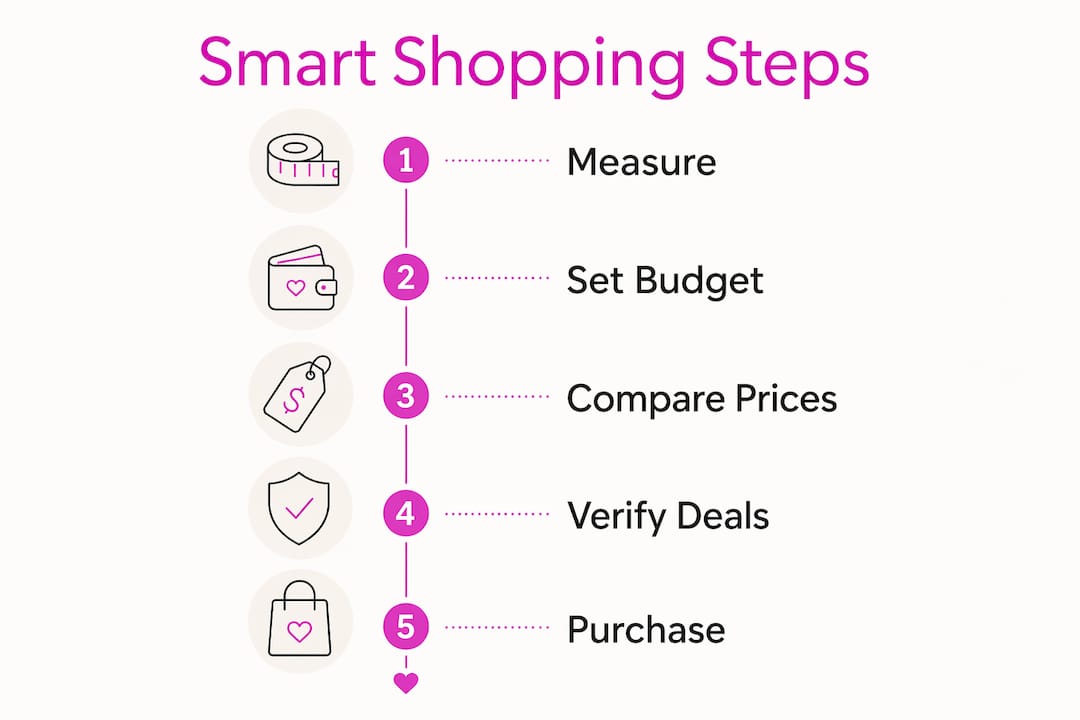
| Tool | What it does | Best for |
|---|---|---|
| PayPal Honey | Automatically applies coupon codes at checkout | Reducing price at point of purchase |
| Camelizer | Tracks price history on products over time | Verifying whether a “sale” price is genuinely lower |
| Google Shopping | Compares prices across multiple retailers | Finding the best price for a specific item |
| Brand size charts | Converts your measurements to brand-specific sizes | Avoiding sizing errors before ordering |
Pro Tip: Save your measurements and a shortlist of preferred brands in a notes app before any major sale event. When a flash sale drops, you can move quickly without second-guessing your size or budget.

How to identify genuine fashion sale deals and avoid misleading discounts
Not every “sale” is a real saving. The phrase “up to X% off” is one of the most misleading constructs in retail marketing. It means one item in the entire catalogue might be discounted at that rate. Everything else could be 10% off or less.
Sanity-checking the real value behind discounts by assessing fabric quality, construction, and final price context is the ACCC’s own advice for Australian consumers. A $30 dress marked down from $60 is only a good deal if the quality justifies the original price. If the fabric feels cheap and the stitching is loose, the “50% off” label is irrelevant.
Timing and stock availability matter
Checking sale dates and item stock carefully is critical, particularly for popular sizes and colours. Sales on quality pieces fragment fast. The size 10 in the colourway you want will often sell out within hours of a sale going live. Shopping early in a sale cycle, rather than waiting to see if prices drop further, is the smarter move for in-demand items.
Here is what to check before committing to any sale purchase:
-
Confirm the sale end date so you are not rushed into a poor decision
-
Check all colour and size variants are still available in your size
-
Cross-reference the discounted price against the product’s price history using a tool like Camelizer
-
Read recent customer reviews for that specific product, not just the brand overall
-
Look for independent coverage of the sale on deal forums or style blogs
Pro Tip: If a sale item has no reviews and the discount seems unusually high, search the product name plus “review” before buying. Genuine clearance items from reputable boutiques will almost always have some customer feedback trail.
What are the best smart shopping tactics when browsing and buying?
Execution is where preparation pays off. The goal at this stage is to shop with purpose, move efficiently, and avoid the decision fatigue that leads to regret purchases.
Intent-based shopping, which means browsing with defined categories and goals rather than scrolling aimlessly, reduces decision fatigue and improves fit and satisfaction outcomes. Open your shopping session with your goal and budget already decided. Navigate directly to the category you need rather than browsing the full site.
Follow these steps when you are ready to buy:
-
Filter by your size first, before you fall in love with something unavailable
-
Apply your budget filter to remove items outside your range immediately
-
Read at least five recent reviews, focusing on comments about fit, fabric, and whether the item matches its photos
-
Apply the “wear it three ways” rule: can you style this piece for at least three different occasions? If not, reconsider
-
Check the return policy before adding to cart, not after
-
Confirm the seller’s credibility by looking for clear contact details, an ABN, and secure payment options
On the topic of security, Australian Scamwatch warns that red flags include pressure for unusual payment methods, missing terms and conditions, and prices that seem too good to be true. Always pay by credit card or PayPal when shopping with an unfamiliar retailer. These methods offer dispute resolution options that direct bank transfers do not.
“Combining AI-assisted product discovery with manual comparison prevents overspending and avoids bias towards popular but overpriced items.” — Awesomeagents.ai
AI tools like Google Lens or conversational search can speed up product discovery, but they should be paired with your own price comparison. AI surfaces popular results, not necessarily the best value ones.
Pro Tip: Use the Indylove fashion tips blog to cross-reference styling ideas before committing to a purchase. Seeing how a piece is styled in multiple ways helps you apply the “wear it three ways” rule with real examples.
How to troubleshoot common mistakes and ensure satisfaction after purchase
Returns are expensive in time and sometimes in money. The most common causes are wrong size, misleading product descriptions, and poor quality that was not apparent from photos. All three are preventable with the right habits.
The most frequent return trigger is a sizing error that could have been avoided by checking the brand’s size chart against stored measurements. If you skipped that step before purchase, you are likely to repeat the mistake. After your first order from any new brand, record which size you bought and how it fit. This becomes your reference for every future purchase from that label.
Know your rights as an Australian consumer
Australian Consumer Law remedies apply regardless of a store’s stated return policy. If a product is faulty, does not match its description, or is not fit for purpose, you are entitled to a remedy even if the return window has technically closed. Keep your order confirmation and any product photos as proof of purchase.
Here is what to do if something goes wrong:
-
Contact the seller directly first, with your order number and a clear description of the issue
-
Include photos of the item if quality or description is the problem
-
Reference your consumer rights under the Australian Consumer Law if the seller is unresponsive
-
Escalate to your payment provider (credit card chargeback or PayPal dispute) if the seller does not resolve the issue
-
For persistent issues with Australian retailers, contact the ACCC or your state’s fair trading office
Impulse purchases driven by emotional states are a leading cause of post-purchase regret. NielsenIQ research identifies psychological triggers, including urgency messaging and scarcity cues, as the primary drivers of unplanned spending. A 24-hour waiting rule for any non-essential purchase over a set threshold, say $80, gives you time to assess whether you genuinely want the item or were just caught up in the sale excitement.
Pro Tip: After every return, write one sentence about why it happened. After three or four returns, you will see a pattern. Most shoppers discover they consistently misjudge one specific thing, whether that is sleeve length, fabric weight, or neckline fit, and can correct for it going forward.
Key takeaways
Shopping online fashion sales smartly requires accurate measurements, verified deal authenticity, intent-based browsing, and a clear understanding of your consumer rights under Australian law.
| Point | Details |
|---|---|
| Measure before you browse | Store bust, waist, and hip measurements with a brand fit reference to avoid sizing errors. |
| Verify deal authenticity | Check price history and product quality before trusting percentage-off claims. |
| Shop with intent | Define your goal and budget before opening any sale page to reduce impulse purchases. |
| Know your legal rights | Australian Consumer Law protects you beyond store return windows for faulty or misdescribed items. |
| Record and learn from returns | Log fit outcomes after each purchase to build a personal sizing reference that improves over time. |
Why patience and preparation are the real fashion sale strategies
My honest experience with online fashion sales in Australia is that the biggest savings rarely come from reacting fast. They come from preparing well. The shoppers I see getting the most value are the ones who already know their measurements, have a shortlist of trusted boutiques, and are not browsing out of boredom during a sale event.
The “up to 70% off” banners are designed to create urgency. I have learned to treat those claims with scepticism until I have checked the price history and read the reviews. Genuine clearance from a quality boutique looks different from a promotional markdown on slow-moving stock. The fabric quality, the construction detail, and the original price context all tell you which one you are looking at.
One shift that made a real difference for me was treating fit as a system rather than a guess. Keeping a running note of which brands run true to size, which run small, and which have unusual proportions has saved me more money than any coupon code ever has. The Indylove style blog is one of the resources I return to regularly for sizing context and styling ideas specific to the Australian market.
The online fashion sale space in Australia is maturing. More boutiques are publishing detailed size guides, offering transparent sale calendars, and providing genuine clearance rather than inflated-then-discounted pricing. That is good news for prepared shoppers. The more you know before you click “buy,” the better every purchase becomes.
Shop chic and confidently with Indylove
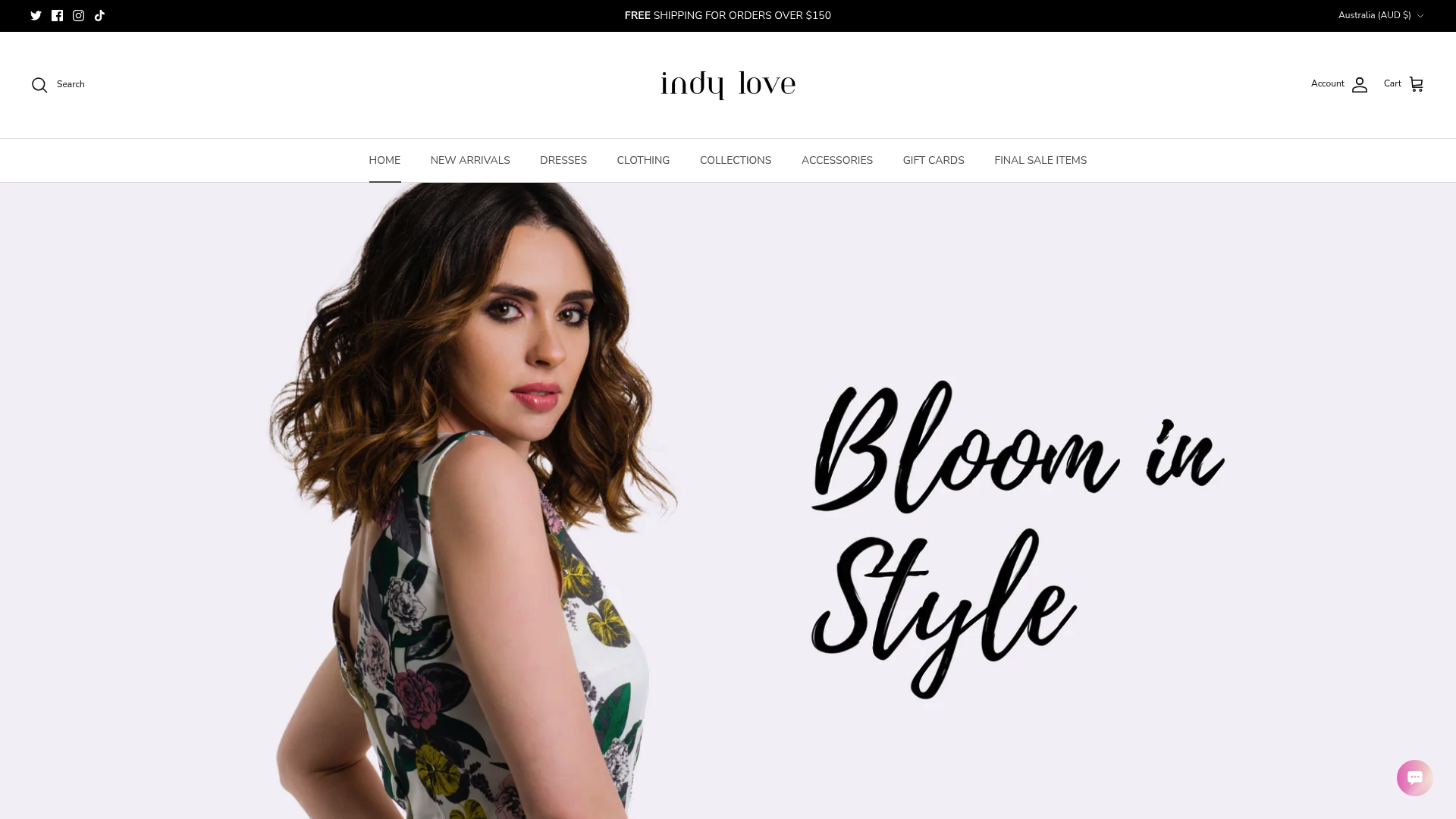
Indylove is an Australian online women’s fashion boutique built for shoppers who want quality, style, and genuine value without the guesswork. Every piece in the collection comes with clear sizing information, and the boutique runs transparent sale events so you always know exactly what you are getting. From the stunning Ruby Floral Dress to the elegant Floraison Maxi Dress, each item is curated with real wearability in mind. Free shipping applies on orders over $150, and secure payment options give you complete confidence at checkout. Explore the full Indylove women’s fashion collection and put your smart shopping skills to work on pieces worth wearing.
FAQ
What does it mean to shop online fashion sales smartly?
Shopping online fashion sales smartly means purchasing with intention: knowing your measurements, verifying that discounts are genuine, and checking return policies before checkout rather than after. The goal is quality pieces at real savings, with minimal returns.
How do I know if an online fashion sale is genuine?
Check the product’s price history using a tool like Camelizer, assess fabric quality and construction against the final price, and read recent customer reviews. The ACCC advises Australian consumers to sanity-check the real value behind any discount before purchasing.
What are my rights if an online fashion purchase goes wrong in Australia?
Under the Australian Consumer Law, you are entitled to a remedy if a product is faulty, misdescribed, or not fit for purpose, regardless of the retailer’s stated return policy. Keep your order confirmation and contact the seller directly with photos as your first step.
How do I avoid impulse buying during online fashion sales?
Set a firm budget and a specific shopping goal before browsing, and apply a 24-hour waiting rule for non-essential purchases. NielsenIQ identifies urgency messaging and scarcity cues as the primary psychological triggers for unplanned spending during sale events.
Which tools help with how to shop fashion discounts effectively?
PayPal Honey automatically applies coupon codes at checkout, Camelizer tracks price history to verify genuine markdowns, and Google Shopping compares prices across retailers. Combining these tools with your stored measurements gives you a strong foundation for every online fashion purchase.
Recommended
-
Fashion Tip | Indylove Adelaide Women’s Fashion Boutique – Indy Love Boutique
-
Indy Love Boutique | Women’s Fashion & Clothing Online Australia
-
Fashion Blog | Style Tips & Trends | Indy Love Boutique Australia
-
Discover the Latest Trends at Indy Love: Your Premier Australian Onlin – Indy Love Boutique