
Role of photography in online fashion: 2026 guide
Photography in online fashion is the primary medium through which brands communicate style, texture, and identity to consumers who cannot physically touch or try on a product. Without a fitting room, the image is the product. The role of photography in online fashion goes far beyond aesthetics. It drives purchasing decisions, shapes brand perception, and replaces the tactile experience that bricks-and-mortar retail relies on. From AI-generated on-model imagery to immersive virtual reality, the tools shaping fashion photography in 2026 are rewriting how brands like Indylove connect with their customers.
How photography shapes consumer buying behaviour
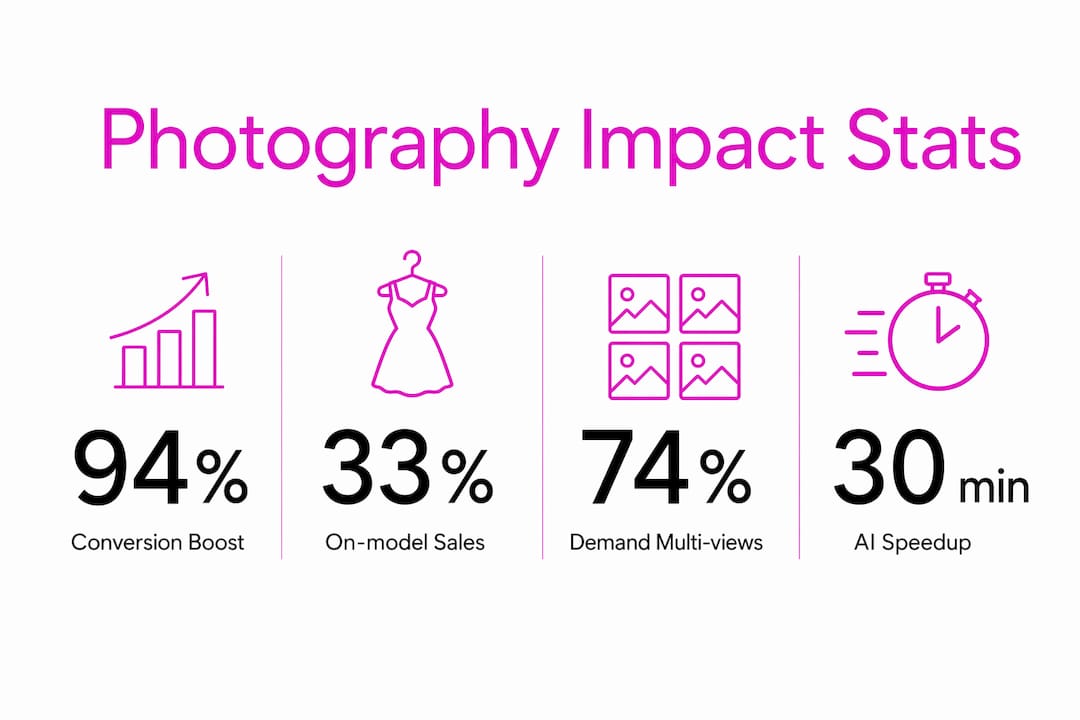
High-resolution product images increase conversion rates by 94% compared to low-quality visuals. That figure alone tells you everything about the commercial weight photography carries in online retail.
The psychology behind it is straightforward. When shoppers cannot touch a fabric or check a hem in person, their eyes do all the work. 76% of online shoppers rate image quality as the most critical factor when exploring products. This means a stunning photo is not a nice-to-have. It is the deciding factor between a sale and a bounce.
On-model photography outperforms flat-lay images in a measurable way. On-model imagery increases conversions by up to 33% compared to flat-lay photos alone. Seeing a dress on a real person gives shoppers a sense of scale, drape, and wearability that a folded garment on a white background simply cannot deliver.

Visual merchandising also triggers emotional responses that drive impulse purchases. A study of 91 marketplace users shows strong positive links between visual elements and spontaneous buying behaviour. Emotions like urgency and self-confidence are activated when imagery is composed and styled with intention.
Multiple views matter too. 74% of shoppers demand multiple product views before considering a purchase. Brands that show front, back, side, and detail shots reduce purchase hesitation significantly.
Pro Tip: Shoot each garment from at least four angles, including a close-up of the fabric texture. This single change addresses the most common reason shoppers abandon a product page without buying.
Does creative direction really differentiate a fashion brand?
Creative direction is defined as the deliberate combination of styling, lighting, location, and model selection to express a brand’s identity through imagery. Fashion photography creative direction is as much a commercial strategy as it is a creative one. It shapes how consumers feel about a brand before they read a single word of copy.
Visual storytelling in fashion photography works through what researchers call visual metaphors. Compositional visual metaphors that are concrete and easy to process increase brand attitude and purchase intention more effectively than abstract or complex imagery. A model laughing in a sun-drenched field communicates ease and joy far more powerfully than a conceptual studio shot with obscure symbolism.
Processing fluency is the key mechanism here. When an image is easy to interpret, the brain associates that ease with positive feeling. That positive feeling transfers directly to the brand. This is why brands that invest in clear, emotionally resonant photography consistently outperform those that prioritise artistic complexity over clarity.
The table below summarises the main visual storytelling strategies and their effects on consumer response.
| Strategy | Description | Consumer Impact |
|---|---|---|
| On-model editorial | Styled shoot with model in a real-world setting | High emotional resonance, strong brand identity |
| Flat-lay product | Garment laid flat on a neutral background | Clear product detail, lower emotional engagement |
| Compositional metaphor | Simple visual cue linking product to a feeling | Improved brand attitude and purchase intention |
| User-generated content | Informal customer photos and styling shots | High cognitive and emotional engagement, especially Gen Y and Z |
| Abstract conceptual | Artistic, non-literal imagery | Lower processing fluency, reduced persuasion for most audiences |
Pro Tip: Brief your photographer with a mood board that includes three words describing how you want customers to feel when they see the image. Emotion-first direction produces more consistent results than style-first direction.
How is technology changing fashion photography online?
AI-driven on-model image generation is the most disruptive shift in fashion photography for e-commerce right now. Traditional shoots cost $150–$500+ per outfit and can take weeks to produce. AI tools reduce that production time to under 30 minutes. For fast fashion brands responding to viral trends, that speed is a genuine commercial advantage.
Platforms like Picjam now allow brands to generate on-model imagery without booking a photographer, a studio, or a model. The implications for small and mid-size boutiques are significant. Brands that previously could not afford professional photography can now produce catalogue-quality images at a fraction of the cost.
Immersive virtual reality is another technology reshaping the online fashion imagery role. VR boosts engagement in hedonic fashion shopping but may hinder utilitarian evaluation. In plain terms: VR works brilliantly for browsing and inspiration, but shoppers trying to assess practical fit and fabric details may find it less useful than a well-lit flat-lay. The key is matching the technology to the shopper’s intent.
Here is a snapshot of the technologies currently reshaping photography trends in fashion:
- AI on-model generation: Produces styled, on-model images in minutes. Best for trend-responsive catalogues and size-inclusive representation.
- 360-degree product photography: Lets shoppers rotate and inspect garments from every angle. Reduces returns by improving fit confidence.
- Immersive VR showrooms: Creates an experiential browsing environment. Most effective for premium and lifestyle brands targeting hedonic shoppers.
- User-generated content (UGC) integration: UGC visuals drive higher engagement among Gen Y and Z consumers than polished catalogue images. Authenticity outperforms perfection for younger audiences.
Pro Tip: Use AI-generated imagery for speed-to-market on new arrivals, then follow up with a professional on-model shoot for hero pieces and campaign imagery. The two approaches complement each other rather than compete.
What are the best practices for online fashion photography?
The most effective approach to fashion photography for e-commerce combines editorial style with practical clarity. Hybrid photography strategies that blend editorial and flat-lay images reduce returns by showing accurate fit and fabric behaviour. Overly stylised poses that obscure how a garment actually sits on the body are one of the leading causes of returns in online fashion retail.
Here is a practical framework for building a strong fashion photography strategy:
- Lead with on-model imagery. Use a model whose proportions reflect your core customer. This builds immediate relatability and reduces the guesswork around fit.
- Include a flat-lay or ghost mannequin shot. This gives shoppers a clear view of the garment’s structure, seams, and fabric without distraction.
- Shoot a fabric close-up. Texture is one of the hardest things to communicate online. A macro shot of the weave or finish answers the question shoppers cannot ask in person.
- Optimise every image file. SEO optimisation through metadata, file naming, and alt-text improves visual search visibility. Poor technical alignment loses search rankings regardless of how strong the image looks aesthetically.
- Write descriptive alt-text. Alt-text like “navy wrap dress with flutter sleeves on model” outperforms “product image 1” in both accessibility and search indexing.
The benefits of professional fashion photos extend beyond aesthetics into measurable commercial outcomes. Brands that treat photography as a technical and creative discipline, not just a visual exercise, consistently see lower return rates and higher repeat purchase rates.
Pro Tip: Name your image files descriptively before uploading. “indylove-loren-denim-dress-front.jpg” will always outrank “IMG_4521.jpg” in Google Image Search.
Key takeaways
Professional, well-directed fashion photography is the single most powerful driver of online conversion, brand trust, and return reduction in e-commerce fashion retail.
| Point | Details |
|---|---|
| Image quality drives conversions | High-resolution images increase conversion rates by 94% compared to low-quality visuals. |
| On-model beats flat-lay | On-model photography lifts conversions by up to 33% by showing real fit and wearability. |
| Creative direction builds brand identity | Styling, lighting, and model selection communicate brand values before a shopper reads any copy. |
| AI is reshaping production speed | AI on-model tools cut shoot time from weeks to under 30 minutes, enabling trend-responsive catalogues. |
| Technical SEO completes the picture | Metadata, alt-text, and file naming are required for images to rank in visual search results. |
Why photography is the most underrated commercial tool in fashion
I have spent years watching fashion brands pour money into paid advertising while treating photography as an afterthought. The results are predictable. Ads drive traffic to product pages where flat, poorly lit images fail to convert. The photography was always the weak link, not the media spend.
What I find genuinely fascinating about the current moment is how AI is democratising access to professional-quality imagery. Small boutiques that once could not compete with the production budgets of major retailers can now generate on-model imagery that looks polished and on-trend. That is a real shift in the competitive landscape.
That said, I would caution aspiring stylists against treating AI as a replacement for creative direction. The technology produces the image. It does not produce the idea behind the image. The brands that will stand out in 2026 are those that use AI for speed and scale while investing in genuine creative thinking for their hero campaigns.
The other thing I keep coming back to is the gap between artistic ambition and commercial clarity. Abstract, conceptual photography might win awards, but it rarely wins sales. The most effective fashion imagery I have seen combines emotional resonance with practical information. A shopper should finish looking at a product page knowing exactly how a garment will feel to wear, and wanting it.
If you are building your eye as a stylist, study how fashion photography trends translate into real purchasing behaviour. The gap between what looks beautiful and what actually converts is where the most interesting creative problems live.
Shop chic women’s fashion at Indylove
Indylove is Australia’s go-to online women’s fashion boutique for chic, trendy clothing that does not compromise on quality or your budget. Every piece in the Indylove collection is photographed to show you exactly what you are getting, from fabric texture to how it sits on the body. Whether you are after a stunning statement dress for a special occasion or a must-have everyday look, Indylove’s curated range has you covered. Enjoy fast shipping across Australia and free shipping on orders over $150. Browse the full collection now and find your next favourite piece.
FAQ
Why does image quality matter so much in online fashion?
76% of online shoppers rate image quality as the most critical factor when exploring products. Without the ability to touch or try on a garment, the image is the only sensory information a shopper has.
What is the difference between editorial and flat-lay fashion photography?
Editorial photography shows garments on a model in a styled setting, communicating fit, movement, and brand identity. Flat-lay photography presents the garment on a surface, offering a clearer view of structure and detail with less emotional context.
How does AI affect fashion photography for e-commerce?
AI on-model generation tools reduce production time from weeks to under 30 minutes and cut costs significantly compared to traditional shoots. This allows brands to respond to viral trends in near real time without sacrificing image quality.
Does on-model photography really increase sales?
On-model imagery increases conversion rates by up to 33% compared to flat-lay photos alone. Seeing a garment on a person helps shoppers assess fit, scale, and wearability with far greater confidence.
How do i optimise fashion images for search engines?
Use descriptive file names, write detailed alt-text that includes garment type, colour, and style, and add structured metadata to every product image. Proper image SEO directly improves visibility in Google Image Search and visual discovery platforms.
Recommended
- Fashion Blog | Style Tips & Trends | Indy Love Boutique Australia
- Fashion Tip | Indylove Adelaide Women’s Fashion Boutique – Indy Love Boutique
- Discover the Latest Trends at Indy Love: Your Premier Australian Onlin – Indy Love Boutique
- Indy Love Boutique | Women’s Fashion & Clothing Online Australia