
What does boutique quality mean in fashion?
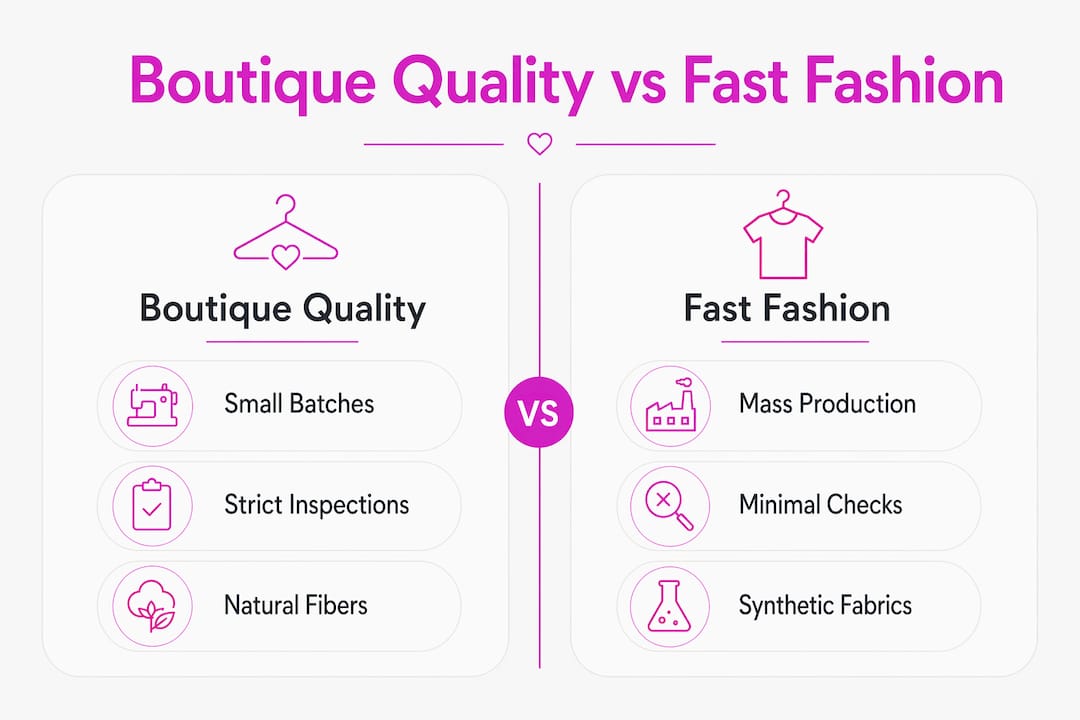
Boutique quality is defined as clothing produced in small batches with exceptional attention to craftsmanship, superior materials, and a personalised retail experience that mass-market fashion cannot replicate. The term “boutique quality” is widely used in fashion marketing, but the industry standard behind it is artisanal garment production, a practice built on documented quality controls, curated fabric sourcing, and intentional design. Understanding what separates genuine boutique quality from a well-decorated shopfront helps you spend smarter, dress better, and build a wardrobe that actually lasts.
Boutique quality clothing sits at the intersection of visible style and invisible production rigour. Where a fast fashion retailer prioritises volume, a boutique producer prioritises precision. The difference shows up in how a garment feels on your skin, how it holds its shape after twenty washes, and how confidently you wear it three years from now.
What does boutique quality mean in production standards?
Boutique production uses smaller runs, often around 150-piece batches, which allows for the kind of close oversight that large-volume manufacturing simply cannot sustain. That smaller scale is not a limitation. It is the mechanism that makes higher quality possible.
The production controls behind genuine boutique quality include:
- AQL 2.5 inspections (Acceptable Quality Limit): a globally recognised sampling standard that flags defects at a far stricter threshold than typical retail production
- Fabric inspections on a 4-point system: each roll of fabric is scored for flaws before a single cut is made
- Shade banding with light boxes: fabric lots are checked for colour consistency so finished garments match across a collection
- Needle detection before packing: finished pieces pass through metal detectors to catch any broken needles left in seams, a safety step mass manufacturers routinely skip
These unseen production controls are what separate a boutique garment from a look-alike at a fraction of the price. The stitching may appear similar on a hanger, but the process behind it is entirely different.
Certifications add another layer of verified assurance. Labels like GOTS (Global Organic Textile Standard) and OEKO-TEX confirm that fabric has been tested for harmful substances and produced under ethical conditions. Certifications like GOTS and OEKO-TEX are more reliable indicators of quality than any amount of premium branding or polished store design.
Pro Tip: When assessing boutique quality standards, ask the retailer directly whether their supplier holds AQL inspection records or third-party certifications. A confident, specific answer is a strong signal of genuine quality.
| Quality indicator | What it tells you |
|---|---|
| AQL 2.5 inspection | Defect rate is controlled to a strict professional standard |
| GOTS certification | Fabric is organically grown and ethically processed |
| OEKO-TEX label | Garment has been tested free of harmful chemicals |
| 4-point fabric inspection | Raw materials are checked before production begins |
| Needle detection | Finished garment has passed a final safety check |
How does boutique quality shape fit, fabric, and style?
Boutique quality extends well beyond the factory floor. It shapes every decision from the fabric roll to the fitting room, and that is where you feel the difference most directly.
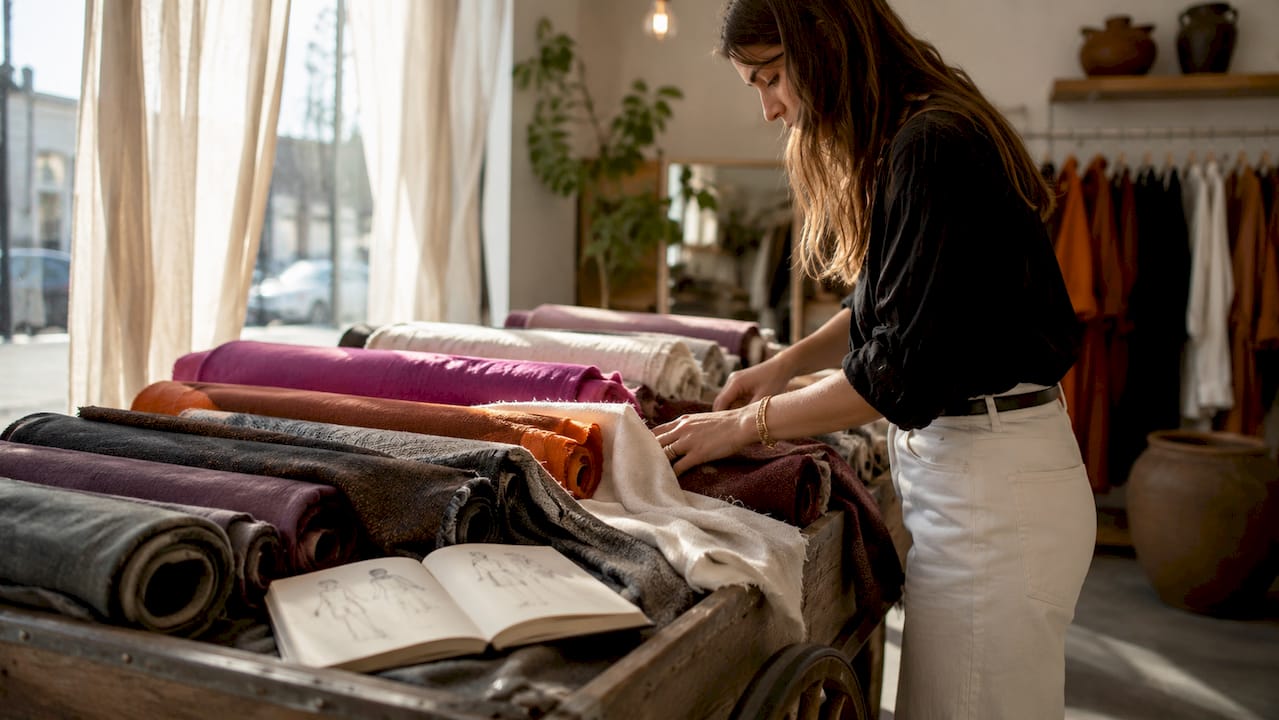
Fabric choice is the clearest expression of boutique quality standards. Boutique clothing uses superior fibres including silk, organic cotton, TENCEL, cupro, recycled denim, and alpaca. These materials produce a softer hand feel and better drape than the polyester blends that dominate mass-market racks. A silk-cotton blend shirt, for example, moves with your body, breathes in warm weather, and softens further with each wash rather than pilling or losing shape.
Fit is treated as a non-negotiable in boutique retail. Where chain stores design for a statistical average, boutique producers assess fit across a narrower, more considered size range. Many boutiques offer complimentary alterations or can connect you with a tailor, which means the garment you take home is the garment that actually fits your body. Tailoring support improves comfort and appearance, leading to more frequent wear and far better value per dollar spent.
The construction details on boutique garments also signal quality in ways that are easy to check yourself:
- Pattern matching at seams: stripes and prints align across panels, a sign of careful cutting and assembly
- Reinforced stress points: bartack stitching at pocket corners and button placements that won’t pull loose after a season
- Clean internal finishing: French seams or bound edges inside the garment, not raw fraying edges
- Consistent stitch density: even, tight stitching throughout rather than loose or skipped stitches
Boutique owners hand-pick items for quality, longevity, and alignment with their brand values rather than chasing disposable trend cycles. This curation reduces the decision fatigue that comes with scrolling through thousands of options, and it means every piece in a boutique collection has been chosen to work with the others.
What benefits do you get from choosing boutique quality clothing?
The practical case for boutique quality comes down to cost-per-wear. A $180 boutique dress worn forty times costs $4.50 per wear. A $40 fast fashion equivalent worn six times before it loses shape costs $6.67 per wear. The boutique piece wins on value, and that calculation does not even account for the environmental cost of replacing garments constantly.
Here are the concrete benefits boutique quality delivers:
- Longer garment lifespan: superior fibres and construction mean garments hold their shape, colour, and structure through years of wear and washing
- Expert fabric care guidance: boutique staff advise on fabric content, weight, lining, and drape, so you know exactly how to care for what you buy. For delicate pieces, professional dry cleaning services extend garment life significantly
- After-sale support: access to alterations and inventory knowledge means your garment continues to fit well as your body or style preferences shift
- Ethical sourcing: boutique retailers often focus on ethical manufacturing, supporting artisans and reducing environmental impact compared to fast fashion supply chains
- Intentional consumption: buying fewer, better pieces reduces wardrobe waste and builds a more cohesive personal style
Pro Tip: Ask your boutique for a care card or fabric content sheet when you purchase. Knowing whether a piece is dry clean only, hand wash, or machine washable on cold protects your investment from the first wear.
The personalised service boutiques provide also extends to continuity of knowledge. Chain stores rotate staff between departments, which weakens specialist expertise. A boutique team member who has worn and washed the pieces themselves gives you advice that is grounded in real experience, not a product description card.
How to identify if a brand truly meets boutique quality standards
Not every brand that uses the word “boutique” delivers boutique quality. Some producers overuse premium branding without investing adequately in quality processes. Here is how to tell the difference.
Check for real certifications, not just claims. GOTS, OEKO-TEX, WRAP (Worldwide Responsible Accredited Production), and BSCI (Business Social Compliance Initiative) are independently audited. A brand that displays these logos can be verified. A brand that simply says “ethically made” cannot.
Ask about production transparency. Genuine boutique producers can tell you where their fabric is sourced, what batch sizes they run, and who manufactures their garments. Vague answers like “our trusted suppliers” are a red flag.
Inspect the garment itself. Run through this checklist before purchasing:
- Hold the fabric up to light. A quality weave is consistent with no thin or loose areas
- Check seam allowances inside. Wider seams (at least 1.5 cm) allow for alterations and indicate quality construction
- Test the hardware. Zips should glide smoothly, buttons should be firmly attached, and metal fittings should feel solid rather than hollow
- Look at the label. Fabric content listed as 100% natural or certified blended fibres is a positive sign
Seek boutiques that offer expert advice and after-sale services. A boutique that offers styling consultations, alteration referrals, and fabric care guidance is investing in your experience beyond the transaction. That level of service reflects confidence in the product itself.
| Genuine boutique quality | Marketing hype only |
|---|---|
| GOTS, OEKO-TEX, or WRAP certification displayed | Vague claims like “premium quality” or “luxury feel” |
| Transparent production information available | No information on manufacturing origin |
| Detailed fabric content on labels | Generic “polyester blend” labelling |
| After-sale support and alteration services | No post-purchase assistance offered |
| Small-batch or limited-edition production noted | Unlimited stock with constant restocking |
Key takeaways
Boutique quality is defined by small-batch production, verified certifications, superior natural fibres, and personalised after-sale service that collectively deliver longer garment lifespan and greater value than mass-market alternatives.
| Point | Details |
|---|---|
| Production rigour matters most | AQL 2.5 inspections and 4-point fabric checks separate genuine boutique quality from marketing claims. |
| Certifications verify quality | GOTS and OEKO-TEX labels confirm independently audited standards beyond showroom aesthetics. |
| Fabric and fit define the experience | Natural fibres like silk, organic cotton, and TENCEL deliver superior drape, comfort, and longevity. |
| After-sale support adds real value | Alteration services and expert fabric care advice extend garment life and improve cost-per-wear. |
| Inspect before you invest | Check seam quality, hardware, fabric content labels, and production transparency before purchasing. |
Why boutique quality is worth understanding before you shop
After years of paying close attention to how garments are made and how they hold up, one thing stands out clearly. The gap between genuine boutique quality and well-marketed fast fashion is far wider than the price tag suggests, and most shoppers never see it because it lives inside the garment rather than on the surface.
The most revealing test I have found is the wash test. A boutique-quality piece in organic cotton or a silk blend comes out of the wash looking essentially the same as it went in. A fast fashion equivalent in a synthetic blend starts to pill, fade, or lose structure within three to five washes. That difference is the direct result of the production controls and fibre choices that define boutique quality standards.
What surprises most people is that boutique quality is not always about price. It is about process. A $120 dress from a boutique with documented quality controls, certified fabrics, and a team that can tell you exactly how to care for it will outlast and outperform a $300 piece from a brand that invests in marketing rather than manufacturing. The Indylove fashion blog covers this kind of practical style knowledge regularly, and it is worth reading before your next purchase.
My advice is straightforward. Before you buy, ask two questions. What is this fabric, and how do I care for it? If the person selling it cannot answer both confidently, that tells you everything you need to know about the quality behind the product.
Discover boutique quality fashion at Indylove
If you are ready to experience boutique quality for yourself, Indylove brings together chic, carefully curated women’s fashion designed for Australian women who want style and substance in equal measure.
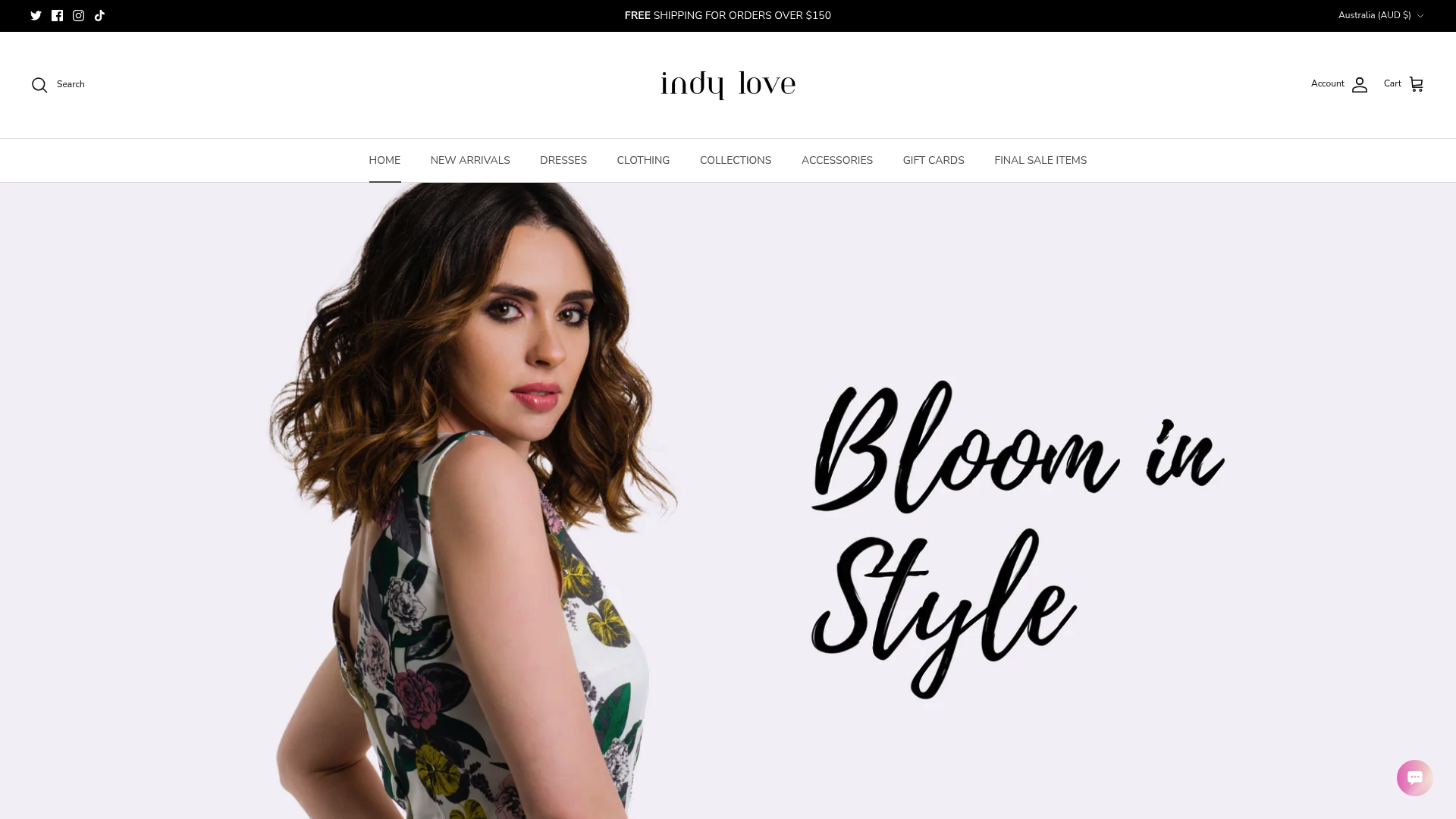
Every piece in the Indylove collection is selected with attention to fabric, fit, and craftsmanship. From the structured Emily Wide Collar Coat to the effortlessly elegant Floraison Maxi Dress, each style reflects the boutique quality standards this article has outlined. Free shipping on orders over $150 makes it even easier to build a wardrobe you will actually wear. Shop now and find your next favourite piece.
FAQ
What is the definition of boutique quality in fashion?
Boutique quality refers to clothing produced in small batches using superior natural fibres, strict quality controls such as AQL 2.5 inspections, and a personalised retail experience. It is defined by craftsmanship and exclusivity rather than volume.
How do I identify genuine boutique quality clothing?
Look for independently verified certifications like GOTS or OEKO-TEX, check fabric content labels for natural fibres, inspect seam quality and hardware, and confirm the retailer offers after-sale support such as alterations or fabric care advice.
What are examples of quality boutique clothing items?
Quality boutique clothing items include garments made from silk, organic cotton, TENCEL, or alpaca, such as tailored coats, knit dresses, and limited-edition floral dresses with pattern-matched seams and reinforced stress points.
Is boutique quality clothing always expensive?
Not necessarily. Boutique quality is about production process and material standards, not just price. A mid-priced boutique piece with certified fabrics and documented quality controls often delivers better cost-per-wear than a higher-priced mass-market alternative.
What certifications should I look for when buying boutique clothing?
GOTS (Global Organic Textile Standard), OEKO-TEX, WRAP, and BSCI are the most credible certifications to look for. These are independently audited and confirm both material safety and ethical manufacturing practices.
Recommended
- Fashion Blog | Style Tips & Trends | Indy Love Boutique Australia
- Discover the Latest Trends at Indy Love: Your Premier Australian Onlin – Indy Love Boutique
- Indy Love Boutique | Women’s Fashion & Clothing Online Australia
- Fashion Tip | Indylove Adelaide Women’s Fashion Boutique – Indy Love Boutique