Workwear dress styles for women 2026: 6 silhouettes that work
The six workwear dress styles every professional woman needs in 2026 are: the soft tailoring midi, the shirt-inspired midi, the technical knit sheath, the slip dress styled with a blazer, the structured shirtdress, and the wrap or utility midi. Australian offices have loosened their dress codes while still expecting a polished appearance, and these six silhouettes hit that sweet spot perfectly.
Here’s why each one earns its place in your 2026 capsule:
- Soft tailoring midi — relaxed structure with a refined finish; reads professional without feeling stiff.
- Shirt-inspired midi — button-through versatility that shifts from boardroom to client lunch with ease.
- Technical knit sheath — four-way stretch and crease resistance make it the workhorse of long office days.
- Slip dress with blazer — a chic pairing that turns a simple silhouette into a polished, layered look.
- Structured shirtdress — a perennial favourite updated with softer fabrics and a more relaxed fit for 2026.
- Wrap or utility midi — adjustable, flattering, and endlessly adaptable across dress codes and climates.
TL;DR: Build your capsule around two or three of these silhouettes, prioritise breathable and wrinkle-resistant fabrics, and focus on fit above all else. Fewer, better pieces will always outperform a wardrobe full of seasonal one-offs.
Table of Contents
- What do the top 2026 workwear dress styles actually look like?
- How do you match a work dress to your office dress code?
- What should you look for when buying a 2026 work dress in Australia?
- How do you adapt your work dresses across Australian seasons?
- Why are comfort-forward silhouettes leading 2026 workwear?
- Key takeaways
- The case for dressing with intention in 2026
- Indy Love Boutique picks for your 2026 workwear capsule
- Sources and further reading
What do the top 2026 workwear dress styles actually look like?
The top dress silhouettes for 2026 lean into minimalist monochrome shapes, soft draped forms, and shirt-inspired midis. Each one reflects a broader shift: professional women want clothes that move with them, not against them.
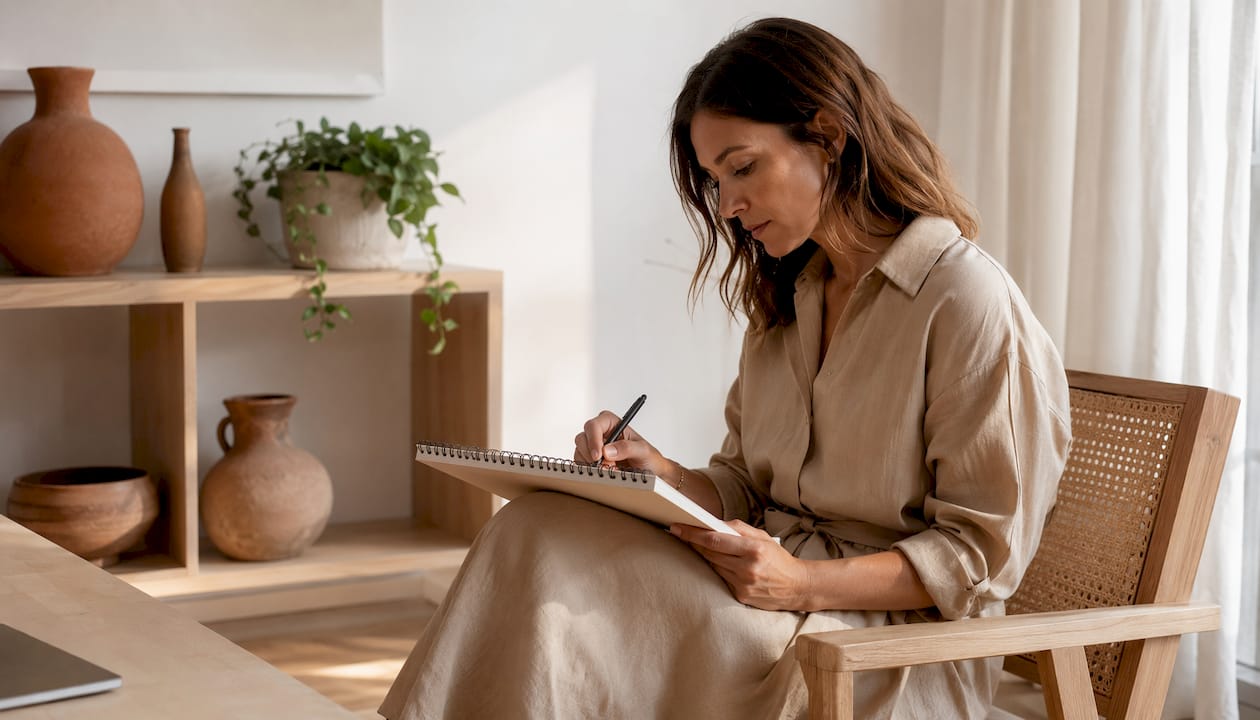
Soft tailoring midi
This silhouette sits just below the knee in a relaxed A-line or straight cut, usually in a ponte or lightweight wool blend. The structure is there — you look put-together — but the fabric has enough give to sit comfortably through back-to-back meetings. In Melbourne, where mornings can be cool even in summer, a soft tailoring midi in a mid-weight fabric layers beautifully under a blazer for the commute and stands alone once you’re inside.
Shirt-inspired midi
Think a classic button-through dress, but cut longer and in softer fabrics than the traditional shirtdress. Linen blends and Tencel versions are ideal for Brisbane and Sydney summers. Wear it belted at the waist for a more defined silhouette, or leave it loose for a relaxed smart-casual read. The button-through detail means you can adjust the neckline for client-facing days.
Technical knit sheath
This is the dress that earns its keep. A well-cut knit sheath in a technical fabric — think four-way stretch with moisture-management properties — resists creasing on the commute, moves freely when you’re on your feet, and still looks sharp at 5pm. It’s the style that female-specific tailoring has finally caught up with, replacing the old scaled-down men’s cut with something that actually fits a woman’s body.
Slip dress with blazer
The slip dress alone reads too casual for most offices. Paired with a structured blazer, it becomes one of the most chic and versatile combinations in 2026 workwear. Layering a slip silhouette with a blazer shifts the formality instantly — swap the blazer for a lightweight knit cardigan on warmer days and you’ve got a completely different outfit from the same dress.
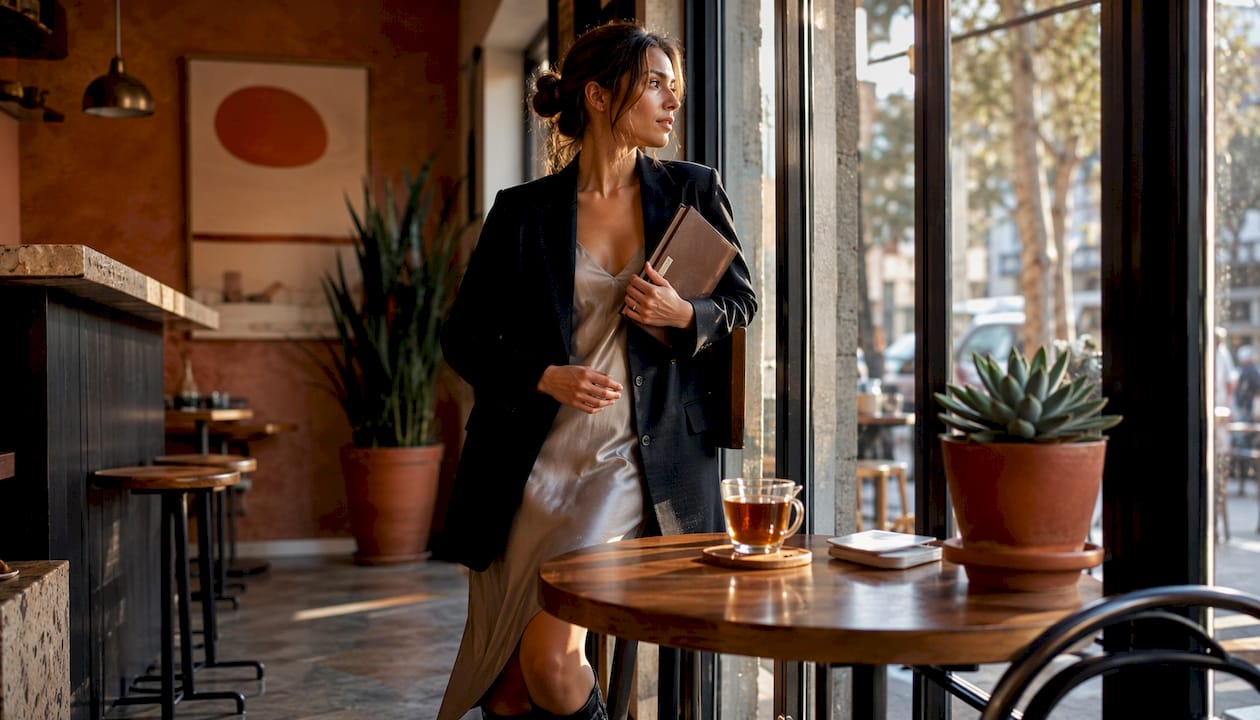
Pro Tip: When shopping for a slip dress to wear professionally, look for one with a lining. An unlined slip in a thin fabric will always read too casual, no matter how good the blazer is.
Structured shirtdress
The 2026 update to this classic is all about softer fabrication. Where older versions were stiff cotton or polyester, the current crop comes in Tencel blends and lightweight chambray that drape rather than box. Wear it with block-heeled mules and a minimal tote for a smart-casual office, or add a tailored blazer and pointed-toe flats for a more corporate setting.
Wrap or utility midi
The wrap midi remains a go-to because it flatters a wide range of body shapes and adjusts easily. The utility update adds subtle details — a patch pocket, a tie belt, a slightly more structured bodice — that keep it feeling current. In a neutral like camel, olive, or deep rust, it works across seasons and dress codes without looking like you’re trying too hard.
How do you match a work dress to your office dress code?
Australian workplaces span a wide range of expectations, and the same dress can read very differently depending on how you style it. Matching your dress choice to the job is the single most practical thing you can do when building your workwear wardrobe.
Corporate and formal offices
Stick to structured silhouettes: the soft tailoring midi, the knit sheath, or the structured shirtdress. Fabric matters here — opt for ponte, lightweight wool blends, or technical knits in neutral palettes (navy, black, charcoal, camel). Keep accessories minimal and footwear polished. A pointed-toe flat or a low block heel reads professional without sacrificing comfort.
Outfit example: Technical knit sheath + structured blazer + pointed-toe flats + minimal gold jewellery.
Smart-casual and client-facing roles
This is where the shirt-inspired midi and the wrap midi shine. You have more room to play with colour and print, but the silhouette should still be clean and intentional. Corporate apparel in Australia is shifting toward adaptable pieces that balance professionalism with comfort, and a well-chosen midi dress does exactly that.
Outfit example: Wrap midi in a muted print + short-sleeve blazer + block-heeled sandals + structured tote.
Creative and casual offices
More latitude here, but “casual” doesn’t mean unthought. A slip dress with a blazer, or a relaxed shirtdress in a linen blend, keeps things stylish without overdressing. Swap heels for clean white trainers or loafers and you’ve got a look that’s effortlessly chic.
Outfit example: Slip dress + oversized linen blazer + white leather loafers + minimal crossbody bag.
Hybrid and work-from-home days
Comfort leads, but it’s worth dressing intentionally even at home — video calls are real. A soft tailoring midi or a knit sheath in a comfortable fabric means you’re camera-ready without feeling like you’re in office armour.
Questions to ask before wearing a dress to a new workplace:
- Does my role involve client-facing meetings this week?
- Are there safety or physical requirements (bending, lifting, outdoor work)?
- What length and neckline reads appropriately for my team’s culture?
- Will I be on camera, and does the dress read well on screen?
What should you look for when buying a 2026 work dress in Australia?
Fit is the first filter. A dress that fits well in the shoulders and waist but needs a hem adjustment is a better buy than one that fits perfectly off the rack but pulls across the hips when you sit. For professional dressing, tailoring a hem or taking in a waist seam is a small investment that dramatically improves how a dress reads.
Fit checklist
- Hem length: A midi that sits 2–3cm below the knee when standing is the most versatile length for Australian workplaces. It works seated, on stairs, and in client meetings.
- Waist placement: A defined waist (whether seamed or belted) creates a more polished silhouette than a shapeless shift.
- Ease for movement: Sit down in the fitting room. If the dress pulls across the thighs or rides up significantly, it won’t work for a full day.
- Shoulder fit: This is the hardest thing to alter — get it right off the rack.
Fabric priorities for Australian climates
Technical fabrics with four-way stretch and moisture-management finishes are worth prioritising for long days. For summer, linen blends, Tencel, and lightweight wool blends are breathable and professional. For cooler months, ponte and mid-weight knits hold their shape and layer well. Wrinkle resistance is a practical non-negotiable for commuters — a dress that looks crumpled by 9am is a confidence drain.
Pro Tip: Check the fabric composition before you buy. A blend of at least 5% elastane in a tailored silhouette gives you the stretch you need for a full day of sitting, standing, and moving — without the dress losing its shape.
Pockets, linings, and care
Pockets in work dresses are genuinely useful — look for them in side seams rather than patch pockets, which can add bulk. A lining prevents fabric from clinging and keeps the dress looking structured. For care, most technical knits and Tencel blends are machine-washable on a gentle cycle; structured wool blends may need dry cleaning. Check the care label before you buy, not after.
How do you adapt your work dresses across Australian seasons?
The beauty of the 2026 workwear dress silhouettes is that they’re built for layering and adaptation. For Australian markets, climate and commuting realities mean adaptable dresses consistently outperform strictly seasonal pieces. The same midi dress can carry you from a Brisbane summer to a Melbourne winter with the right swaps.
Summer (December–February)
- Choose linen blends, Tencel, or lightweight cotton-modal for breathability.
- Swap a heavy blazer for a short-sleeve structured blazer or a lightweight linen layer.
- Wear a slip liner under sheer or lightweight fabrics to stay comfortable and professional.
- Opt for block-heeled sandals or leather mules instead of closed-toe shoes.
- Consider sun protection on the commute — a light linen overshirt doubles as a layer and UV cover.
Shoulder seasons (March–May and September–November)
- Add a lightweight knit cardigan or a mid-weight blazer over your summer dresses.
- Transition footwear: ankle boots or loafers bridge the gap between sandals and winter boots.
- A wrap midi in a heavier crepe or a ponte soft tailoring dress handles temperature swings without requiring a full outfit change.
Winter (June–August)
- Reach for ponte, mid-weight wool blends, or technical knits that hold warmth without bulk.
- Layer opaque tights or fine-knit leggings under midi dresses for warmth.
- A structured wool coat or a longline blazer over a knit sheath is a polished winter combination.
- Ankle boots or knee-high boots in leather or suede complete the look and add warmth.
Quick commute-to-office swap: Wear a wrap midi with a warm coat and ankle boots on the commute. At the office, remove the coat and swap to block-heeled mules kept at your desk. Same dress, two completely different energy levels.
Why are comfort-forward silhouettes leading 2026 workwear?
The clearest trend in 2026 professional dressing is this: comfort and movement are no longer a compromise. They’re the design brief. Designers have moved away from scaled-down men’s cuts toward female-specific tailoring and performance fabrics that support a full day’s work without restricting movement. The result is a generation of work dresses that look sharp and feel genuinely good to wear.
Australian offices reflect this shift. As investment dressing and elevated basics replace rigid dress codes, the expectation isn’t to look formal — it’s to look intentional. A technical knit sheath or a soft tailoring midi achieves that without the discomfort of traditional structured suiting.
The practical advice that follows from this: when you’re evaluating a work dress, ask whether it passes the full-day test. Can you sit in it for three hours, walk to a lunch meeting, and still look polished at 4pm? If yes, it earns its place. If the answer involves constant adjusting, it doesn’t matter how good it looks on the hanger.
For durability signals, look for reinforced seams, quality zips, and fabric compositions that include performance fibres. These details separate a dress that lasts two seasons from one that pills and loses shape after six washes. You can find more guidance on professional workwear categories and how to build a capsule that holds up over time.
Key takeaways
The most effective 2026 workwear dress capsule is built around two or three versatile silhouettes in breathable, wrinkle-resistant fabrics, tailored to fit your specific workplace and climate.
| Point | Details |
|---|---|
| Core silhouettes to own | Prioritise the soft tailoring midi, technical knit sheath, and wrap midi for maximum versatility across dress codes. |
| Fabric first | Choose linen blends, Tencel, or technical knits with stretch for Australian climates; wrinkle resistance matters for commuters. |
| Fit over quantity | A well-fitted dress in a quality fabric outperforms a wardrobe of ill-fitting pieces; tailor the hem and waist where needed. |
| Layer for every season | The same midi dress works year-round with the right blazer, knit, or coat — adaptability is the 2026 workwear advantage. |
| Indy Love picks | The Arabella Midi Dress and Marissa Midi Dress from Indy Love map directly to the soft tailoring and wrap midi silhouettes the article recommends. |
The case for dressing with intention in 2026
There’s a version of the “dress for success” conversation that’s been going on for decades, and most of it misses the point. The real question isn’t whether you’re dressed formally enough — it’s whether your clothes are working for you or against you. In 2026, the best contemporary workwear does both: it reads professional in any room and feels genuinely comfortable across a full day.
The habit worth building? Start with five pieces — two midi dresses, one sheath, one blazer, one versatile layer — and style them across your week before adding anything new. Most professional women find they need far less than they think, and far better quality than they’ve been buying.
Indy Love Boutique picks for your 2026 workwear capsule
If you’re ready to put these silhouettes into practice, Indy Love has three dresses that map directly to the 2026 workwear brief — chic, versatile, and priced to make quality accessible.
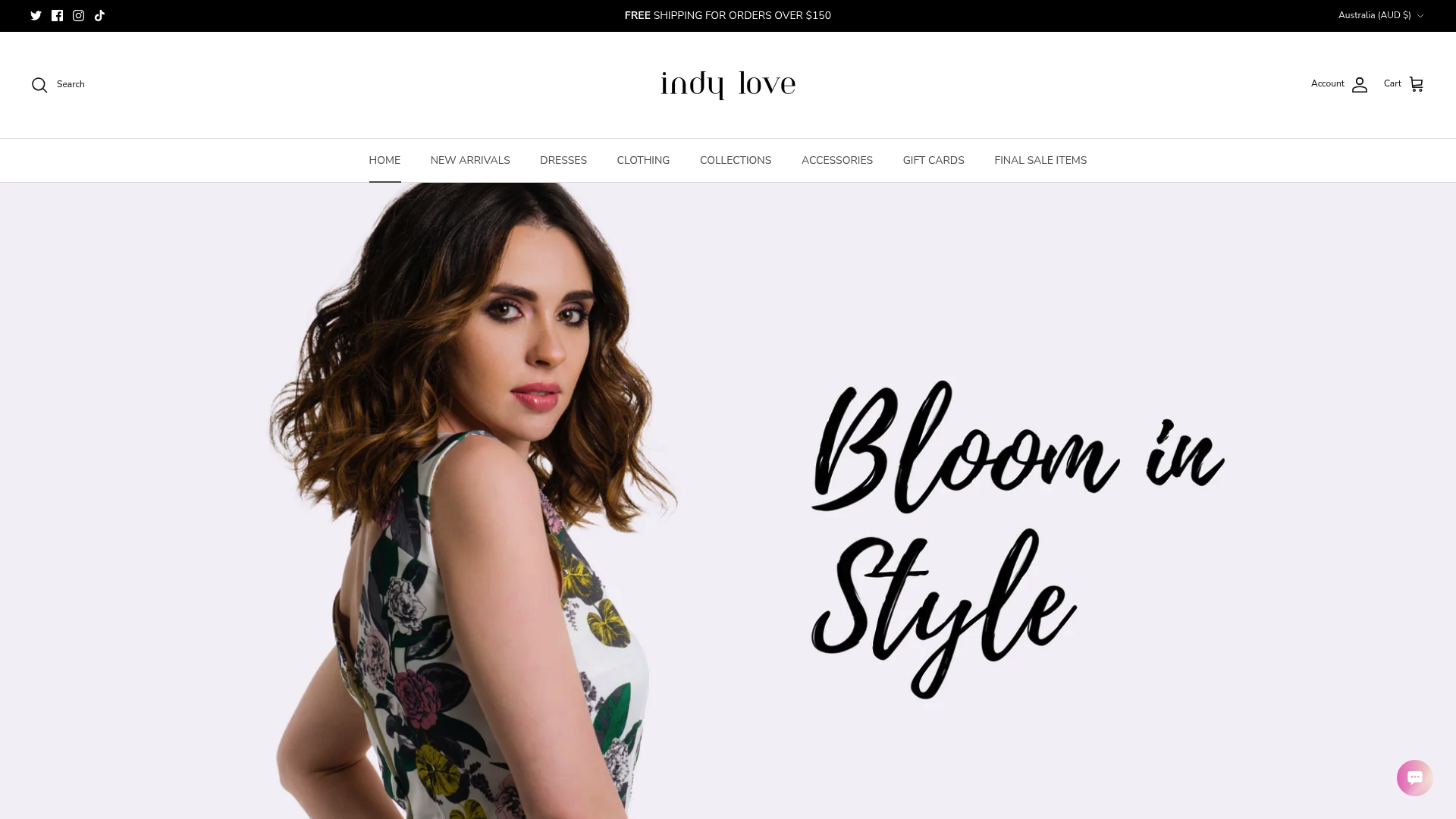
The Abyss Long Dress brings elegant length and a fluid silhouette that suits creative and smart-casual offices beautifully. It’s the kind of dress that looks considered without trying too hard — pair it with a structured blazer and pointed flats for client days, or wear it alone with minimal jewellery for a relaxed creative environment.
The Arabella Midi Dress is a standout for corporate and client-facing roles. Its tailored midi length and clean lines read polished across a range of settings, and it layers effortlessly under a blazer for cooler months. This is the dress you reach for when you need to look sharp without overthinking it.
The Marissa Midi Dress leans into the wrap and soft tailoring trend with flattering drape and an adjustable silhouette. It’s genuinely versatile — styled with ankle boots and a knit layer for winter, or with block-heeled sandals and a linen blazer for summer. For women who want one dress that adapts to multiple dress codes, this is it.
Indy Love offers free shipping on orders over $150 and fast delivery across Australia. Browse the full workwear dress edit and find the silhouette that fits your office and your style.
Sources and further reading
Key sources used in this guide, with brief context for each:
- Workwear but make it cool: 9 Aussie office outfit formulas — Fashion Weekly — supports the relaxed tailoring and elevated basics framing for Australian offices.
- Top corporate workwear trends in Australia 2026 — Alice Clothing — used for corporate dress-code expectations and fabric priorities.
- What to wear at work: a guide for professional dressing — Jora AU — supports dress-code categories, tailoring advice, and fit guidance.
- The professional woman’s guide to elevated workwear in 2026 — White Wear — used for technical fabric guidance and female-specific tailoring insights.
- What dress styles are trending in 2026? — Vero Moda blog — supports silhouette names and trend descriptions.
- Girls happy hour dress code: what to wear in 2026 — GirlsHappyHour.com — used for slip dress styling examples and layering advice.
- Modern Work Dresses in Australia: Top 7 Trends Defining 2026 — Priklaer — Australian-focused trend context for 2026 work dress silhouettes.