
Avoid online fashion shopping mistakes: your 2026 guide
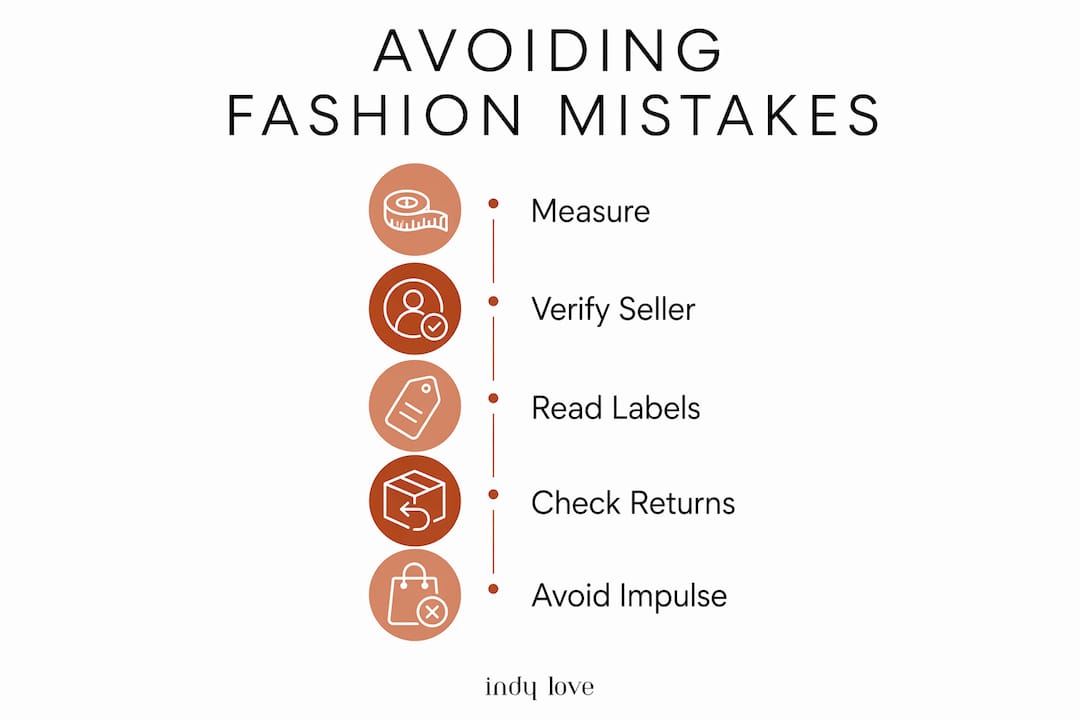
Avoiding online fashion shopping mistakes means making informed choices through accurate measurements, recognising trustworthy sellers, and knowing your rights under Australian Consumer Law (ACL). These are not optional extras. They are the difference between a wardrobe you love and a drawer full of regret. Ghost stores, sizing confusion, and impulse buys are the three biggest traps Australian women fall into when shopping for clothes online. This guide covers every stage of the purchase, from measuring up to handling a dispute, so you can shop with confidence every time.
How to avoid online fashion shopping mistakes with accurate sizing
Sizing is the single most common source of frustration in online clothing shopping. A size 12 at one boutique is a size 14 at another, and international sizing adds another layer of confusion. Getting this right before you buy saves you the cost and hassle of returns.
Take your measurements correctly
- Measure your bust, waist, and hips using a soft tape measure. Hold the tape snug but not tight, and measure over your undergarments, not bulky clothing.
- Note your height in centimetres. Many size charts factor height into fit, especially for dresses, jumpsuits, and trousers.
- Check the store’s specific size chart. Do not assume a universal standard applies. Sizing varies significantly between Australian boutiques, US brands, and European labels.
- Compare your measurements to the garment’s listed measurements, not just the size label. A dress listed as “size 10” may have a 78cm bust. Your measurement tells you whether it will actually fit.
- Read customer reviews for fit feedback. Shoppers often note whether an item runs small, large, or true to size.
Pro Tip: Keep a note on your phone with your current bust, waist, hip, and height measurements. Update it every six months. You will have the numbers ready every time you shop.
Sizing mistakes account for the majority of online fashion returns. Taking ten minutes to measure yourself properly before your first purchase can eliminate most of that frustration permanently.
How do you spot a trustworthy online fashion retailer?
Ghost stores are a growing scam in Australia. These fake online shops use fabricated backstories, fake local addresses, and names similar to well-known brands to trick shoppers into paying for goods that never arrive or are nothing like the photos.
Scamwatch warns that ghost stores show clear warning signs. Knowing what to look for protects your money and your personal details.
- Check for an Australian Business Number (ABN). Legitimate Australian retailers display their ABN on their website. Verify it for free on the Australian Business Register at abr.business.gov.au.
- Look for a .com.au domain. A .com domain alone does not confirm an Australian business. Scam stores frequently use .com to appear local.
- Confirm real contact details. A legitimate retailer lists a physical address, a working phone number, and a customer service email. A contact form alone is a red flag.
- Be sceptical of suspiciously low prices. A $300 dress listed for $29 is not a bargain. It is a warning sign.
- Avoid unusual payment methods. Ghost stores often require payment by gift card, cryptocurrency, or direct bank transfer. These methods offer no buyer protection.
- Read independent reviews. Check Google Reviews, ProductReview.com.au, and social media comments. Look for patterns of complaints about non-delivery or poor quality.
Pro Tip: Run a reverse image search on any product photo that looks too good to be true. Scam stores frequently steal images from legitimate brands. If the same photo appears on dozens of unrelated sites, walk away.
Consumers should think twice before buying from boutiques promoted only through social media ads. Many are dropshippers selling inferior products at inflated prices, with no local accountability. Reading fashion boutique reviews before you purchase is one of the most effective habits you can build.

What are your rights under Australian Consumer Law for online purchases?
Australian Consumer Law gives you automatic protections when you buy clothing online. These rights apply regardless of what a store’s returns policy says, and they cannot be signed away.
Under ACL, Australian consumers have an automatic right to a remedy for faulty products, including items bought on sale. For a major problem, you choose the remedy: repair, replacement, or refund. For a minor problem, the retailer decides how to fix it, but they must fix it.
Here is how to act on those rights if something goes wrong:
- Document the problem immediately. Take clear photos of the fault. Note the date you received the item and the date you noticed the issue.
- Contact the retailer in writing. Email creates a record. State the problem, cite your rights under the ACL, and specify the remedy you want.
- Know the difference between a fault and a change of mind. ACL does not require retailers to accept returns for change of mind. That is governed by the store’s own policy. Check it before you buy.
- Escalate if needed. If the retailer refuses a legitimate remedy, contact your state’s consumer affairs office or the ACCC.
Two or more minor problems with the same product can be treated as a major problem under ACL. That means you can request the remedy of your choice, not just accept whatever the retailer offers.
Return shipping is another area where shoppers lose money unnecessarily. For bulky or heavy items, the seller is responsible for return postage costs when the product is faulty. You should not be out of pocket for a problem you did not cause. Dispute resolution rests with the retailer who sold the item, so keep every email and record every conversation.
Pro Tip: Always use email, not phone calls, when raising a dispute. Written records are your strongest tool if you need to escalate to a consumer affairs body.
How do you avoid impulse buys when shopping for fashion online?
Impulse buying is the most expensive common online shopping error. A sale price creates urgency. That urgency overrides judgement. The result is a wardrobe full of items you never wear.
Fashion editors stress the importance of intentional, versatile shopping focused on wardrobe needs rather than momentary excitement. Before you complete any purchase, ask yourself these questions:
- Does this suit my actual lifestyle? A stunning cocktail dress is wasted if you rarely attend formal events. Be honest about how you spend your time.
- Can I style this at least three ways? Versatility is the mark of a worthwhile purchase. If you can only picture one outfit, reconsider. A cultural fashion versatility checklist is a useful tool for assessing this before you buy.
- Am I buying this because it is on sale? A 50% discount on something you do not need is still money spent. A sale is not a reason to buy. It is a reason to pay less for something you already wanted.
- Does it work with what I already own? Open your wardrobe mentally. Name three specific items this new piece would pair with. If you cannot, it probably does not belong in your collection.
Pro Tip: Keep a running shopping list of items you genuinely need. When you feel the urge to buy something not on the list, wait 24 hours. Most impulse urges disappear overnight.
Knowing how to shop online sales smartly is a skill that saves you real money over time.
Reading product descriptions, care labels, and return policies
Thorough pre-purchase research prevents the most frustrating post-purchase surprises. Most shoppers skim product descriptions. The ones who read them carefully return far fewer items.
| What to check | Why it matters |
|---|---|
| Fabric composition | Synthetic blends may not breathe well in Australian summers; natural fibres like linen and cotton are more comfortable |
| Care instructions | Dry-clean-only garments add ongoing cost; hand-wash items require time and care |
| Shipping timeframe | Some items ship from overseas and take 3–6 weeks; confirm before buying for an event |
| Return window | Many stores offer 14–30 day change-of-mind returns, but only if items are unworn and tagged |
| Return postage responsibility | Some retailers cover return shipping; others require you to pay, which can be costly for bulky items |
Fabric type affects both comfort and longevity. A polyester dress that photographs beautifully may feel stiff and hot in real life. Check the fabric content listed in the product description, not just the photos.
Shipping times catch shoppers off guard regularly. If you need an item for a specific date, confirm the estimated delivery window before purchasing. Some boutiques ship from warehouses overseas, which affects both timing and potential customs fees.
Pro Tip: Before buying, check whether the store covers return postage for change-of-mind returns. For bulky items, this cost can outweigh the value of the purchase. Compare boutique shipping options before you commit.
Key takeaways
Avoiding online fashion shopping mistakes requires accurate measurements, verified sellers, and a clear understanding of your ACL rights before you buy.
| Point | Details |
|---|---|
| Measure before you buy | Take bust, waist, hip, and height measurements and compare them to each store’s size chart. |
| Verify the retailer | Check for an ABN, a .com.au domain, and independent reviews before entering payment details. |
| Know your ACL rights | You are entitled to a repair, replacement, or refund for faulty items, including those bought on sale. |
| Resist impulse buys | Ask whether an item suits your lifestyle and can be styled three ways before completing the purchase. |
| Read the fine print | Check fabric type, care instructions, shipping times, and return postage responsibility before buying. |
What I have learned from years of online fashion shopping
The mistake I see most often is not the one people expect. It is not falling for a scam or buying the wrong size. It is buying something beautiful that simply does not belong in your life.
I spent years accumulating pieces that looked perfect on a model and sat unworn in my wardrobe. The shift happened when I started asking one question before every purchase: “Where will I actually wear this?” Not where I imagine wearing it. Where I will realistically wear it, given my actual week.
The sizing issue is real, but it is also the most fixable. Once you have your measurements saved and you know how to read a size chart, that problem largely disappears. The harder discipline is emotional. Sales create pressure. Beautiful photography creates desire. Neither of those things is a good reason to buy.
My honest advice is to trust your instincts when something feels off about a retailer. If the prices seem too low, the website looks rushed, or the contact details are vague, that discomfort is information. Act on it. The benefits of shopping at reputable online boutiques are real, and they are worth the extra few minutes of research.
Shopping online for fashion should feel exciting and confident, not anxious. The tools and knowledge exist to make every purchase a good one.
— Helen
Chic, confident shopping starts at Indy Love
Indy Love is a curated Australian women’s fashion boutique built for shoppers who want quality, style, and transparency without the guesswork. Every product listing includes detailed sizing information, fabric composition, and care instructions, so you can make an informed choice before you buy. Indy Love’s customer service team supports your ACL rights, and free shipping applies to orders over $150 across Australia. If you are ready to shop with confidence, the Alice Shirt Dress is a chic, versatile starting point. Explore the full range at Indy Love and find pieces that genuinely suit your style and your life.
FAQ
What is the most common online clothing shopping mistake?
Buying without checking measurements against the store’s specific size chart is the most common error. Sizing varies significantly between brands, so your measurements matter more than the label.
How do I know if an online fashion store is legitimate in Australia?
Check for a verified ABN on the Australian Business Register, a .com.au domain, and real contact details. Avoid stores that only accept gift cards, cryptocurrency, or direct bank transfer.
Do I have the right to a refund for online fashion purchases under ACL?
You have an automatic right to a remedy for faulty items under ACL, including sale items. Change-of-mind returns are not automatic and depend on the store’s own policy.
Who pays for return shipping when a fashion item is faulty?
The seller covers return postage for faulty or bulky items under ACL. You should not pay to return a product that does not meet consumer guarantees.
How can I avoid impulse buying when shopping online?
Wait 24 hours before completing any unplanned purchase, and ask whether the item suits your lifestyle and pairs with at least three things you already own.
Recommended
- Read fashion boutique reviews: your 2026 shopping guide – Indy Love Boutique
- Benefits of shopping online fashion boutiques – Indy Love Boutique
- Types of women’s clothing boutiques online: 2026 guide – Indy Love Boutique
- The Ultimate Guide to Affordable Clothing Online: Stay Stylish Without – Indy Love Boutique