
Compare online boutique shipping options: 2026 guide
Comparing online boutique shipping options means understanding three things before you check out: processing time, transit time, and the pricing model the boutique uses. These three factors determine when your order actually arrives and what you pay. Most shoppers focus only on the carrier speed shown at checkout, which is why so many deliveries arrive later than expected. This guide breaks down how boutique shipping timelines work, what the common cost models mean for your wallet, and how to read a shipping policy so you can make a confident, informed choice every time.
How do shipping timelines influence your boutique order delivery expectations?
The estimated delivery date equals the estimated ship date plus transit time. That formula sounds simple, but the “ship date” is where most shoppers get caught out.
Processing time is the period between when you place your order and when the boutique hands it to a courier. Transit time is the period the courier takes to move the parcel from the warehouse to your door. Many boutiques display transit times prominently at checkout but bury processing times in their shipping policy pages.

Carrier transit times at checkout often begin only after the warehouse hands the parcel over. Processing and fulfilment time is excluded entirely. A boutique advertising “2–5 business day delivery” may take 1–2 business days to pack and dispatch your order first, meaning your actual wait is closer to 3–7 business days.
Fulfilment cut-off times add another layer of complexity. If a boutique’s warehouse closes at 1pm for same-day dispatch and you order at 2pm, your order enters the next business day’s queue. That single hour can shift your delivery by a full day.
- Processing time is the gap between order confirmation and dispatch.
- Ship date is the day the courier collects or scans the parcel.
- Delivery date is the day the parcel reaches your address.
- Transit time is the carrier’s travel window, which starts at ship date, not order date.
Pro Tip: Always check the boutique’s shipping policy page for processing time, not just the transit estimate shown at checkout. The two figures together give you the real delivery window.
What are the common shipping cost models boutiques use?
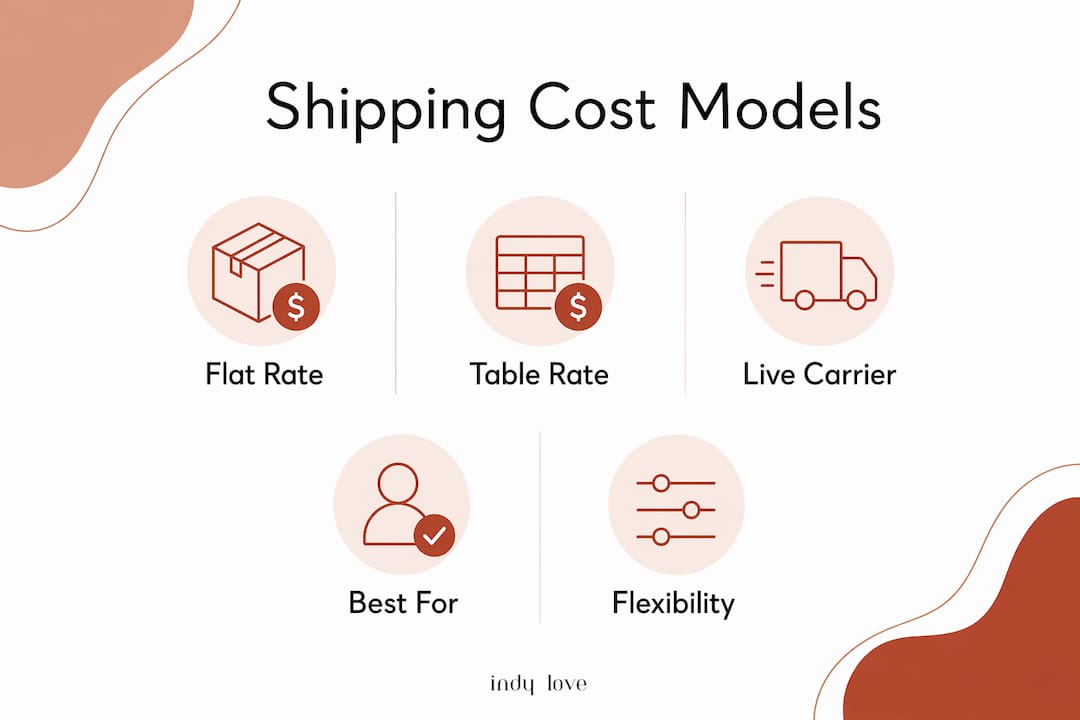
Boutiques use three main shipping cost models: flat rate, table rate, and live carrier rates. Each model affects how accurately the price at checkout reflects the true cost of shipping your specific order.
Flat-rate shipping
Flat-rate shipping charges every customer the same fixed amount regardless of order size, weight, or destination. It is simple and predictable, which shoppers appreciate. The downside is that it can overcharge customers with small, light orders and undercharge those with large, heavy ones. For boutiques, flat rate works well when most orders are similar in size and weight, such as a single dress or blouse.
Table-rate shipping
Table-rate shipping adjusts the price based on rules the boutique sets, such as order value, total weight, item quantity, or destination zone. A boutique might charge $8.95 for orders under 500g, $12.95 for orders between 500g and 2kg, and free shipping for orders over $150. This model hits a practical sweet spot between accuracy and simplicity. It rewards customers who buy more and reflects real cost differences across order sizes without requiring live carrier connections.
Live carrier rates
Live carrier rates pull real-time pricing from carriers like Australia Post based on the parcel’s actual weight, dimensions, and destination postcode. Carriers calculate costs using volumetric weight, meaning two orders of similar weight can cost different amounts to ship if their packaging dimensions differ. This model is the most accurate but can surprise shoppers with unexpected price changes at checkout.
| Shipping model | How cost is set | Best for |
|---|---|---|
| Flat rate | Fixed amount for all orders | Boutiques with uniform order sizes |
| Table rate | Rules based on weight, value, or destination | Fashion boutiques with varied order sizes |
| Live carrier rates | Real-time carrier pricing by weight and dimensions | High-volume boutiques needing maximum accuracy |
Pro Tip: If a boutique uses live carrier rates, add your full order to the cart before checking shipping costs. The price can shift significantly between a single item and a multi-item order.
What delivery timeframes can you expect from Australian boutiques?
Australian interstate shipping averages around 5 business days, with the fastest options covering major city routes in 1–3 days. Sydney to Perth routes typically take 4–6 business days. Remote and regional destinations can push that out to 10–11 business days or more.
Local deliveries within the same city or state are the fastest, usually arriving in 1–2 business days once dispatched. Interstate routes between major capitals like Melbourne and Sydney sit in the 2–3 business day range for express services and 3–5 days for standard. Cross-country routes to Western Australia or the Northern Territory take the longest.
Australian delivery promises often exclude weekends, public holidays, and rural surcharges. A boutique advertising “2–7 business day delivery” could mean a real wait of 10 or more calendar days for a customer in a regional area ordering over a long weekend.
| Delivery type | Typical timeframe (business days) |
|---|---|
| Local, same state | 1–2 |
| Interstate, major capitals | 2–5 |
| Cross-country (e.g. Sydney to Perth) | 4–6 |
| Regional and remote areas | 7–11+ |
| Express, major city routes | 1–3 |
Peak seasons like Christmas, Black Friday, and end-of-financial-year sales extend these windows further. Boutiques that are transparent about peak-period delays in their shipping policy are worth favouring. That transparency signals they understand their fulfilment process well enough to communicate it honestly.
How to read and evaluate boutique shipping policies
A boutique’s shipping policy page tells you far more than a checkout estimate. Knowing what to look for saves you from unpleasant surprises after you pay.
-
Find the processing time disclosure. Look for language like “orders are dispatched within 1–3 business days.” If this figure is missing, contact the boutique before ordering. Shipping speed comparisons are inaccurate when shoppers only look at transit days and ignore processing lead times.
-
Check whether delivery estimates are windows or guarantees. Policies often clarify that delivery estimates are not guarantees and can vary due to carrier delays, public holidays, and high-demand periods. A policy that calls estimates “windows” is being honest. One that promises specific dates without caveats deserves scrutiny.
-
Look for tracking and communication details. Does the boutique send a dispatch confirmation with a tracking number? Can you monitor your parcel through the carrier’s website? Tracking availability is a strong indicator of a boutique’s fulfilment quality. Without it, you have no visibility once the parcel leaves the warehouse.
-
Note rural and remote surcharges. Rural and remote delivery surcharges are a frequent source of domestic delivery confusion. Some boutiques apply these automatically at checkout; others add them after the order is placed. Check the policy for any mention of additional fees for non-metropolitan postcodes.
-
Identify the free shipping threshold. Many boutiques offer free shipping above a certain order value. Indy Love, for example, offers free shipping on orders over $150. Knowing this threshold before you shop helps you plan your order to get the best value.
-
Contact the boutique if anything is unclear. A boutique that responds quickly and clearly to a shipping question before purchase is likely to handle post-purchase issues just as well. Slow or vague responses are a warning sign worth heeding.
Understanding how boutique and marketplace shopping differ also helps here. Boutiques typically have more direct control over their fulfilment process than marketplace sellers, which often means more consistent shipping communication.
Key takeaways
The most accurate way to compare boutique shipping options is to add processing time to transit time, then check for rural surcharges and peak-period caveats before committing to a purchase.
| Point | Details |
|---|---|
| Processing time matters | Add processing days to transit days to calculate your real delivery window. |
| Know your cost model | Table-rate shipping offers the best balance of fairness and transparency for most boutique orders. |
| Australian geography affects timing | Remote and regional deliveries can take 7–11+ business days, even with express options. |
| Policies reveal the full picture | Check for tracking availability, rural surcharges, and whether estimates are windows or guarantees. |
| Free shipping thresholds add value | Boutiques like Indy Love offer free shipping over $150, making larger orders more cost-effective. |
What I’ve learnt from years of shopping Australian boutiques
The single biggest mistake I see shoppers make is treating the transit time shown at checkout as the delivery time. It is not. It is the carrier’s travel window after dispatch, and dispatch can be days away.
The boutiques I trust most are the ones that state their processing time clearly on the shipping policy page, not buried in a FAQ. That one detail tells me they understand their own fulfilment process. Boutiques that only show carrier transit times are either unaware of the confusion this creates or hoping you will not notice.
Australian geography makes this more important than it is in smaller countries. A Sydney-based boutique shipping to Broome or Cairns is dealing with real logistical complexity. Boutiques that acknowledge this with honest delivery windows and rural surcharge disclosures are the ones worth your loyalty. Price matters, but a boutique that sets accurate expectations and delivers on them is worth more than one that promises fast shipping and consistently falls short.
— Helen
Indy Love Boutique: shipping you can actually count on
Indy Love is built for Australian women who want chic, trendy fashion delivered with confidence. Every order comes with clear dispatch timeframes, tracking, and multiple shipping options so you always know where your parcel is.
Free shipping applies to all orders over $150, making it easy to build a stunning wardrobe without paying extra. Whether you are after a chic everyday dress or a statement-making coat, Indy Love’s shipping policy is straightforward and honest. Shop the full women’s fashion collection and enjoy the confidence of knowing exactly when your order will arrive.
FAQ
What is the difference between processing time and transit time?
Processing time is the period between your order and dispatch; transit time is the carrier’s travel window after dispatch. Your real delivery window equals both figures added together.
Why does my boutique order arrive later than the checkout estimate?
Checkout estimates typically show carrier transit time only. Processing and fulfilment time is excluded, so the actual delivery date is later than the transit estimate suggests.
What shipping cost model is best for boutique fashion orders?
Table-rate shipping is the most practical model for fashion boutiques. It adjusts pricing by order weight, value, or destination, offering fair costs without the complexity of live carrier rates.
Do Australian boutiques charge extra for rural delivery?
Many do. Rural and remote surcharges are common in Australian boutique shipping policies. Always check the policy for non-metropolitan postcode fees before completing your order.
How do I know if a boutique’s delivery estimate is reliable?
Look for policies that describe delivery windows rather than guaranteed dates and that disclose processing times separately. Boutiques offering order tracking after dispatch are also more likely to deliver within their stated timeframes.