Fit guides for buying dresses online: 2026 guide
Fit guides are the single most reliable tool for choosing the correct dress size when you cannot try something on first. The role of fit guides in buying dresses online goes far beyond a simple size chart. They reduce the guesswork that causes costly returns, ease the anxiety of sizing inconsistency, and give you the confidence to click “buy” without hesitation. Platforms like True Fit have demonstrated that fit guides drive conversion and reduce returns at scale. This guide breaks down how fit guides work, which types deliver the best results, and exactly how to use them to find your perfect dress every time.
What is the role of fit guides when buying dresses online?
Fit guides are structured sizing tools that translate your body measurements into a recommended dress size. The industry term for the most advanced version is “fit intelligence,” which goes well beyond a printed size chart. At their core, all fit guides solve the same problem: online dress shopping removes the physical try-on, so you need a reliable substitute for that tactile feedback.
Fit guides on product pages reduce hesitancy, lower cart abandonment, and discourage multi-size purchasing by addressing size anxiety directly. That last point matters more than most shoppers realise. Buying two or three sizes “just in case” is expensive for you and costly for retailers. A clear, well-placed fit guide removes that impulse entirely.
The importance of fit guides also shows up in repeat purchasing behaviour. When your first order fits well, you come back. When it does not, you leave and do not return. Fit guides are not a nice-to-have feature. They are a core part of a satisfying online shopping experience.
Why is sizing so difficult when shopping for dresses online?
Two forces make online dress sizing genuinely difficult: vanity sizing and brand variability. Vanity sizing causes inconsistency in labelled sizes, meaning a size 6 in one store can correspond to a size 10 in another. This is not an exaggeration. It is a documented, widespread practice across the fashion industry.
Without a physical try-on, you also lose the tactile feedback that tells you whether a fabric stretches, whether a waist sits high or low, or whether a cut runs narrow through the shoulders. Fit guides compensate for this by providing measurement instructions and clarifying how a specific dress is designed to fit your body shape.
The practical result is that relying on size labels alone is unreliable. Centimetre measurements are consistent. Size numbers are not. This is why every credible online dress size guide asks you to measure first and match to the chart second.
- Bust: measure at the fullest part of your chest, keeping the tape parallel to the floor
- Waist: measure above your belly button at the narrowest point of your torso
- Hips: measure at the widest point, typically 20–23 centimetres below your waist
- Height: include this when a guide asks, as it affects hem length on midi and maxi styles
Pro Tip: Take measurements in the morning wearing light clothing for the most consistent results. Your body measurements can shift slightly throughout the day, so morning readings give you the most accurate baseline for dress sizing.
Basic size charts vs. AI fit intelligence: what is the difference?
Fit guides exist on a spectrum from simple to sophisticated. Understanding where each type sits helps you get the most from whichever tool a retailer offers.
| Fit Guide Type | How It Works | Best For |
|---|---|---|
| Static size chart | Lists measurements against size labels | Quick reference when you know your measurements |
| Interactive size finder | Asks for your measurements and returns a size | Shoppers who want a guided recommendation |
| Fit quiz | Combines measurements with body shape and style preferences | More personalised sizing for specific dress cuts |
| AI fit intelligence | Uses real purchase and return data across brands to recommend a size | Shoppers with varied brand experience or unusual proportions |
PDP size guidance provides clues for shoppers, while AI-powered fit intelligence uses extensive purchase and return data to make precise size recommendations. The difference is significant. A static chart tells you what size the brand thinks you are. Fit intelligence tells you what size actually fits people with your measurements, based on what they bought and kept.
True Fit’s fit intelligence platform integrates over 20 years of cross-brand fit learning to improve decision-making. That depth of data means the system can handle edge cases, like when you are between sizes or when a particular dress style runs small through the bodice.
AI fit finder tools ground their size recommendations on real shopper purchase and return information, making them more reliable than generic size charts or chatbots. For new shoppers without prior purchase history on a platform, these tools use cross-brand calibration to still deliver a confident single-size recommendation.
Pro Tip: When a retailer offers a fit quiz or virtual fitting room, always complete it before checking the standard size chart. The quiz accounts for your body shape and the specific cut of the dress, not just your raw measurements.
What evidence shows that fit guides improve online dress shopping?
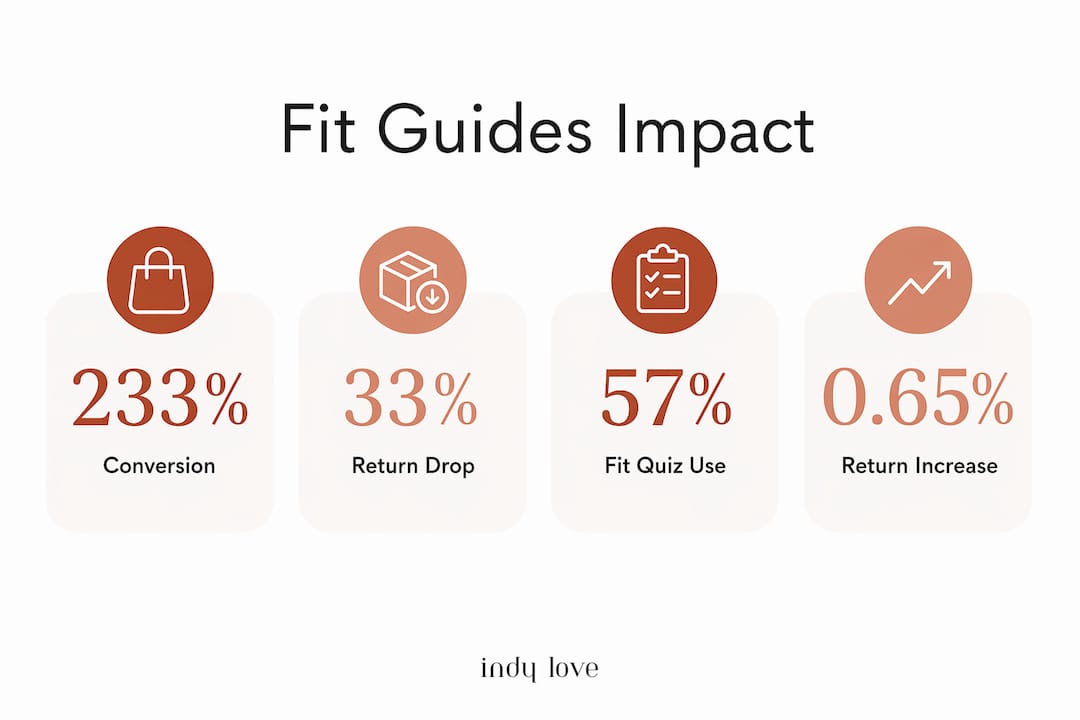
The data on fit guides is clear and consistent. Effective fit recommendation tools can increase conversion rates by 233% and reduce fit-related returns by approximately one-third. A 3-month trial with optimised size guidance recorded a 9% conversion increase and a 12% return rate decrease. Those numbers reflect a direct link between fit clarity and purchase confidence.
“Fit guides are not mere support pages but key conversion assets that reduce shopping hesitation and costly returns.” — Shopify Size Guide Best Practices
57% of customers in stores using fit quizzes follow the recommended size, effectively reducing multi-size ordering and returns. That means more than half of shoppers who engage with a fit quiz trust it enough to buy only one size. That is a significant shift in purchasing behaviour.
One nuance worth understanding: fit finder tools correlate with a small increase of 0.65% in returns but a significant increase of 7.51% in customer lifetime value due to higher repeat purchases. The slight uptick in returns is offset many times over by the loyalty those tools generate. Shoppers who use fit tools and get a good result come back repeatedly.
| Metric | Impact of Fit Guides |
|---|---|
| Conversion rate | Up to 233% increase with optimised fit guidance |
| Fit-related returns | Reduced by approximately one-third |
| Fit quiz adherence | 57% of shoppers follow the recommended size |
| Customer lifetime value | 7.51% increase following size finder usage |
Retailers must balance slight return increases from size finder tools against long-term gains in customer loyalty and lifetime value. For shoppers, this research confirms that using fit tools genuinely improves your experience, not just the retailer’s metrics.
How to use fit guides effectively when shopping for dresses online
Knowing a fit guide exists is not enough. You need to use it correctly to get the benefit. Follow these steps every time you shop for dresses online.
- Take your measurements before you browse. Grab a soft tape measure and record your bust, waist, and hip measurements in centimetres. Do this before you fall in love with a dress, not after.
- Locate the fit guide on the product page. Look for a “Size Guide,” “Fit Guide,” or “Find My Size” link near the size selector. On well-optimised product pages, this appears directly beside the size dropdown.
- Read the product-specific fit notes. Many dresses include notes like “runs small through the bust” or “relaxed fit through the hips.” These notes override the standard chart and reflect real feedback from the brand or previous customers.
- Complete any available fit quiz or virtual fitting room. Virtual fitting room advantages include personalised recommendations that account for your body shape, not just your measurements. If the retailer offers this tool, use it.
- Check customer reviews for fit feedback. Reviews that mention sizing are gold. Look for comments from shoppers with similar measurements to yours. Phrases like “I am 168cm and a size 10, ordered a 10 and it fits perfectly” give you real-world confirmation.
- Factor in fabric and cut. A structured bodycon dress has no give, so size up if you are between sizes. A wrap dress in jersey fabric is more forgiving. The fit guide should note the fabric, but if it does not, check the product description.
- Trust the measurement over the label. If the fit guide says your measurements place you in a size 12 but you usually wear a size 10, order the 12. Vanity sizing means the label is unreliable. Your centimetre measurements are not.
Pro Tip: When reading online dress size guides, always prioritise the brand’s specific chart over any general sizing you know from other retailers. A size 10 at one boutique is not the same as a size 10 anywhere else.
Dresses shopping tips online consistently point to one truth: the shoppers who return the fewest items are the ones who measure first, read the fit notes, and trust the data over their habitual size label.
Key takeaways
Fit guides are the most reliable tool for getting your dress size right online, and using them correctly reduces returns while increasing your confidence and satisfaction.
| Point | Details |
|---|---|
| Measure in centimetres first | Body measurements are consistent; size labels vary widely due to vanity sizing. |
| Use fit quizzes when available | 57% of shoppers who complete fit quizzes follow the recommendation and avoid multi-size ordering. |
| AI fit intelligence outperforms charts | True Fit and similar tools use real purchase data to deliver more accurate single-size recommendations. |
| Fit guides increase conversion and loyalty | Optimised fit guidance can lift conversions by up to 233% and customer lifetime value by 7.51%. |
| Read product-specific fit notes | Generic size charts do not account for cut, fabric, or style. Product notes do. |
Why i think most shoppers are still underusing fit guides
After years of watching women navigate online fashion, the pattern is consistent: most shoppers glance at a size chart, pick their usual size, and hope for the best. That approach works until it does not, and when it fails, the return process is frustrating enough to put you off a brand entirely.
What I find genuinely exciting about where fit technology is heading is the shift from passive charts to active intelligence. Tools like True Fit do not just show you a table. They learn from millions of real purchases and returns across brands to give you a recommendation grounded in what actually fits people like you. That is a fundamentally different experience, and it changes how confident you feel at checkout.
My honest advice: stop treating fit guides as a last resort when you are unsure. Make them your first stop. Measure yourself once, save those numbers somewhere accessible, and use them every time you shop. The fashion tips at Indy Love consistently reinforce this approach, and it is the single habit that separates confident online shoppers from frustrated ones.
The shoppers who get the best results online are not the ones with the best eye for style. They are the ones who trust the data.
— Helen
Shop dresses at indy love with confidence
Indy Love makes fit clarity a priority across its entire dress collection. Every product page includes detailed size guides and specific fit notes so you know exactly what to expect before you order.
Whether you are after a chic Catalina Maxi Dress for a special occasion or a trendy Cartel Mini Dress for a night out, each listing gives you the measurement guidance you need to order with confidence. Explore the full collection at Indy Love Boutique and use the size guides on every product page to find your perfect fit. Free shipping applies on orders over $150 across Australia.
FAQ
What is a fit guide in online dress shopping?
A fit guide is a sizing tool on a product page that translates your body measurements into a recommended dress size. It may be a static chart, an interactive size finder, or an AI-powered fit quiz.
How do i choose the right dress size online?
Measure your bust, waist, and hips in centimetres, then match those measurements to the brand’s specific size chart. Always read product fit notes and customer reviews for additional sizing context.
Do fit guides actually reduce returns?
Yes. Optimised fit guidance reduces fit-related returns by approximately one-third and increases conversion rates significantly. Shoppers who use fit quizzes are also 57% more likely to order only one size.
What are the advantages of virtual fitting rooms?
Virtual fitting room advantages include personalised size recommendations based on your body shape and style preferences, going beyond raw measurements to account for cut and fabric. They are particularly useful for dresses with structured or fitted silhouettes.
Why does my usual size not always fit across different brands?
Vanity sizing causes labelled sizes to vary significantly between brands. A size 6 in one store can correspond to a size 10 in another. Centimetre measurements remain consistent, which is why fit guides ask for your measurements rather than your usual size label.