How to spot quality women's clothing: a practical guide
Quality women’s clothing is defined by four measurable criteria: fabric composition, seam construction, finishing details, and fit. Knowing how to spot quality women’s clothing means you can skip the guesswork at the rack and shop with real confidence. A 3-minute physical inspection covers fabric feel, interior seams, buttons, zippers, and pattern alignment. These are the same checks a professional stylist runs before recommending any garment. Master them once and you will use them every time you shop, whether in store or online.
1. Why natural fibres signal quality first
Fabric is the single most reliable indicator of garment quality. Labels showing 95–100% natural fibre content in cotton, wool, or silk indicate better durability than vague blends. Natural fibres breathe, hold their shape, and age well. A blended fabric can still be good quality, but the higher the synthetic percentage, the more likely the garment will pill, stretch out, or lose its drape after a few washes.
Fabric density matters just as much as fibre type. Hold the fabric up to light. A quality woven fabric blocks most of the light. If you can see your hand clearly through a blouse, the weave is too loose and the garment will wear thin quickly. For knits, a tight, even loop structure signals durability.
Hand-feel is your fastest quality test. Run the fabric between your fingers. Quality cotton feels smooth and substantial. Quality wool has a slight spring to it. Cheap polyester feels slippery or papery. These sensations are consistent across garment types and price points.
- Cotton: Look for a firm, smooth hand-feel and a tight weave. Avoid fabrics that feel thin or rough.
- Wool: A slight spring and warmth indicate good fibre quality. Scratchy texture often signals low-grade wool.
- Silk: Smooth, cool, and slightly heavy. Cheap imitations feel light and plasticky.
- Linen: Naturally textured but should feel substantial, not flimsy.
- Blends: A small percentage of elastane (under 5%) in cotton or wool improves stretch recovery without sacrificing quality.
Pro Tip: Check the care label alongside the fibre content label. A garment labelled “dry clean only” in a cheap polyester blend is a red flag. Dry-clean instructions on genuine silk or structured wool, however, are entirely appropriate.
2. How to evaluate seams and stitching for craftsmanship
Seam quality is the clearest sign of how a garment was made. French seams and flat-felled seams signal high-quality construction because they encase raw edges completely. Overlocked edges are acceptable in mid-range garments. Raw, unfinished edges inside a garment are a firm sign of poor workmanship.
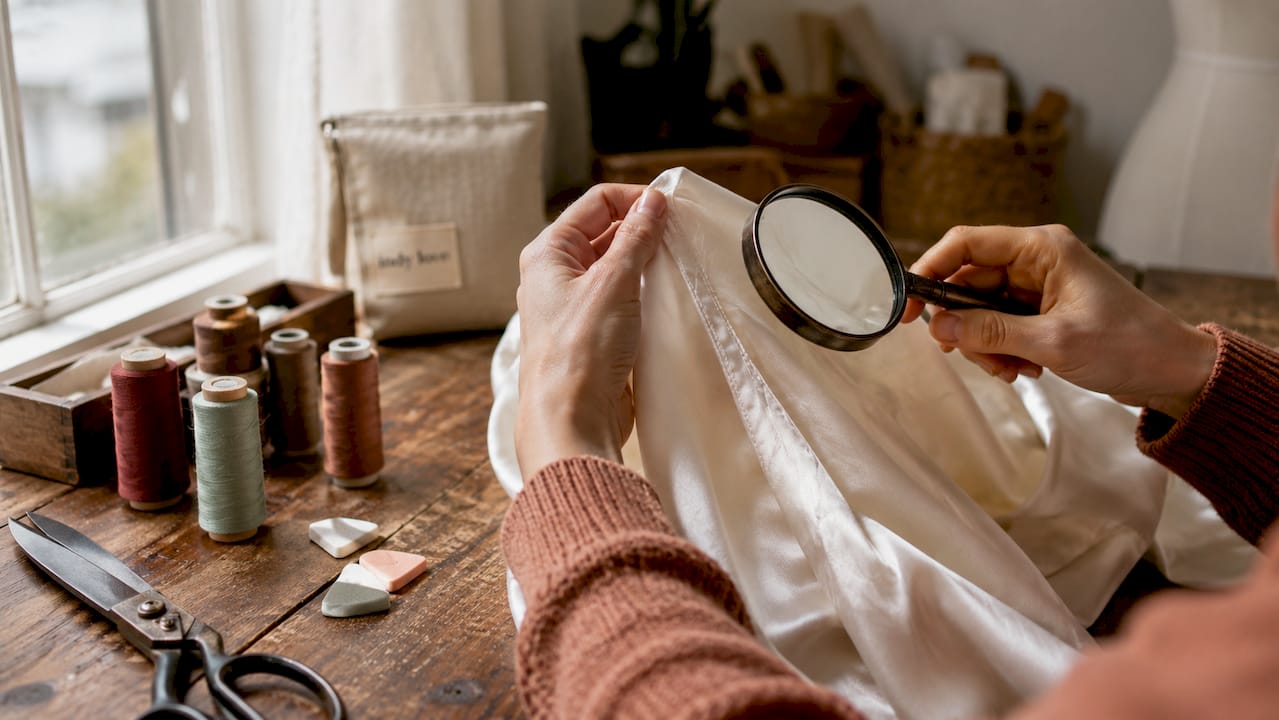
Turn the garment inside out and inspect the seams before you buy. Straight, evenly spaced stitches with no loose threads indicate a well-controlled manufacturing process. Puckered seams or uneven stitch spacing mean the fabric was fed through the machine too fast, which weakens the seam over time.
Seam allowance is a detail most shoppers overlook. A seam allowance of 1.5–2cm gives you room for future alterations and signals that the manufacturer expected the garment to last. Fast fashion often uses allowances as narrow as 3–5mm. That leaves no room to let out a seam and the garment cannot be tailored to fit you properly.
Pattern matching at seams is a finishing detail that separates well-made garments from rushed ones. On a striped or checked fabric, the pattern should align at side seams and pocket openings. Misaligned patterns mean the cutter prioritised speed over quality.
- French seams: Fully enclosed, no raw edges visible. Found in quality blouses and lightweight dresses.
- Flat-felled seams: Double-stitched and very strong. Common in quality denim and tailored shirts.
- Overlocked seams: Raw edges are bound but not enclosed. Acceptable in most mid-range garments.
- Raw edges: No finishing at all. Avoid these in any garment you expect to wear more than a few times.
| Seam type | Quality indicator | Common in |
|---|---|---|
| French seam | High | Silk blouses, fine dresses |
| Flat-felled seam | High | Denim, tailored shirts |
| Overlocked seam | Mid | Casual knits, everyday wear |
| Raw edge | Low | Fast fashion, disposable pieces |
Pro Tip: Pull gently on a seam from both sides. A quality seam holds firm. If the stitching gaps or the fabric puckers badly, the seam will fail with regular wear.
3. Assessing hardware and finishing touches
Buttons, zippers, linings, and hems are where quality either holds up or falls apart. Buttons sewn on shanks sit properly on the fabric surface and resist popping off under tension. Flat-sewn buttons without shanks pull the fabric and come loose faster. Check that each button has a thread shank or a plastic shank underneath it.
Zippers tell you a lot about a garment’s overall quality. A quality zip glides smoothly with no snagging on the first pull. Check the zip tape for a reputable maker’s name stamped along the teeth. A zip that catches or feels gritty on the first try will only get worse with washing and wear.
Linings provide structural support and reduce stress on the outer fabric. A well-attached lining in a blazer, skirt, or dress extends the garment’s life considerably. The lining should lie flat, not pull or bunch. It should be cut generously enough to allow movement without straining the outer shell.
Hems are the final finishing detail to check. A quality hem is deep enough to allow for future lengthening or shortening. Blind-stitched hems on trousers and skirts are a sign of careful finishing. A raw or glued hem is a shortcut that unravels quickly.
- Buttons: Check for shanks, secure thread attachment, and consistent spacing.
- Zippers: Test the glide before buying. Look for a maker’s name on the zip tape.
- Linings: Should lie flat, move freely, and be cleanly attached at all edges.
- Hems: Should be deep, evenly stitched, and finished without glue or raw edges.
- Buttonholes: Clean, tightly stitched buttonholes with no fraying indicate careful manufacture.
4. Fit and fabric behaviour tests in practice
Fit is not just about size. It is about how the fabric behaves on your body. Hold the garment at the shoulder seams and let it hang. A quality garment hangs straight without twisting. Visible twists in woven garments predict deformation after washing. If the side seams spiral forward when the garment hangs, the fabric was cut off-grain and will never sit properly.
For knits, the stretch and recovery test is definitive. Stretch the fabric gently across the grain and release it. Quality knit fabric snaps back to its original shape immediately. Fabric that stays stretched or takes several seconds to recover will bag at the knees, elbows, and seat after a few wears.
Ease is the built-in extra room that allows you to move comfortably. Proper ease in the hip, chest, and thigh areas prevents fabric stress during normal movement. A garment with no ease pulls across the back when you reach forward or gaps at the chest when you sit. These are signs the garment was cut too small for its intended size, not that you need a bigger size.
Care labels are a quality signal in themselves. A garment intended for everyday wear should have care instructions that match that use. Machine-washable cotton and linen are appropriate for casual pieces. Dry-clean-only instructions on a basic jersey top suggest the fabric or construction cannot handle normal use.
- Hold the garment at the shoulders and check for twisting side seams.
- Stretch knit fabric gently and watch for immediate recovery.
- Check ease by moving your arms forward and sitting down in the garment.
- Read the care label and confirm the instructions match the garment’s intended use.
- Check pattern alignment at side seams, pockets, and collar joins.
Pro Tip: When shopping online for fashion, zoom into close-up photos of seams, hems, and buttonholes. Read reviews that mention pilling, twisted seams, or lost shape after washing. These details replace the hand-feel test you cannot do in person.
Key takeaways
Quality women’s clothing is identified by natural fibre content, clean seam construction, secure hardware, and proper ease, not by price or brand name alone.
| Point | Details |
|---|---|
| Check fibre content first | Labels showing 95–100% natural fibre indicate better durability and shape retention. |
| Inspect seams inside out | French or flat-felled seams with 1.5–2cm allowances signal quality manufacture. |
| Test hardware before buying | Shanked buttons and smooth-gliding zippers predict long-term garment performance. |
| Assess fit and fabric recovery | Knit fabrics should snap back immediately; woven garments should hang without twisting. |
| Price does not equal quality | Technical construction details reveal value more reliably than a high price tag. |
What I have learned about spotting quality garments
The most useful benchmark I ever found for women’s clothing quality came from an unexpected place: men’s tailoring. High-end men’s jackets consistently show the construction standards that quality women’s garments should match. Full canvas interlinings, hand-stitched lapels, and generous seam allowances are the norm in quality men’s tailoring. Once you know what those details feel and look like, you spot their absence in women’s clothing immediately.
The other thing I have learned is that price does not reliably indicate quality. Brand marketing inflates cost far more often than superior materials do. I have handled $400 dresses with glued hems and $80 blouses with French seams and generous seam allowances. The construction details tell the real story every time.
Reading labels and reviews matters most when you cannot touch the garment. Online shopping requires close-up photo inspection and community reviews that mention real wear performance. Reviews noting pilling after two washes or seams that twist after the first wear are worth more than a polished product description. Trust the women who have already worn the piece.
One thing worth saying clearly: durability and quality are not the same thing. A delicate silk blouse with intricate hand-stitching is high quality despite needing careful handling. Fragile high-end textiles can be exquisite and worth every cent. The question is whether the construction matches the fabric’s needs, not whether the garment survives a hot wash.
— Helen
Quality fashion worth wearing, from Indy Love
Knowing what to look for in women’s clothes makes every purchase more satisfying. Indy Love curates its collection with exactly these standards in mind: fabric composition, careful construction, and styles that hold up beyond one season.
Every piece in the Indy Love Boutique collection is selected for its quality and style, so you spend less time second-guessing and more time wearing pieces you love. From chic everyday basics to stunning occasion wear, the range is built for women who want both quality and value. Free shipping applies on orders over $150 across Australia. Browse the full collection and find your next must-have piece today.
FAQ
What are the best materials for women’s clothing?
Cotton, wool, silk, and linen at 95–100% fibre content are the best materials for durability and comfort. These natural fibres hold their shape, breathe well, and age better than synthetic blends.
How do I check seam quality in a garment?
Turn the garment inside out and look for French seams, flat-felled seams, or clean overlocked edges with no loose threads. A seam allowance of 1.5–2cm indicates quality manufacture and allows for future alterations.
Does a higher price mean better quality clothing?
Price does not reliably indicate quality. Brand marketing often inflates cost more than superior materials or craftsmanship do. Technical construction details like seam type, fibre content, and hardware quality are more reliable indicators.
How do I assess clothing quality when shopping online?
Zoom into close-up photos of seams, hems, and buttonholes, and read reviews that mention pilling, twisted seams, or shape loss after washing. These details replace the physical inspection you would do in store. The benefits of shopping at online boutiques include detailed garment photography that makes this easier.
What is a quick way to test knit fabric quality?
Stretch the fabric gently across the grain and release it. Quality knit fabric recovers its shape immediately. Fabric that stays stretched or recovers slowly will bag at the knees and seat after regular wear.