
How to style clothing from online photos affordably
Styling clothing from online photos is the practice of using digital tools and AI-powered apps to replicate, experiment with, and build outfits based on images you discover online. Virtual try-on tools reduce returns by showing realistic previews before you spend a cent, which matters when 39% of online fashion shoppers return clothing monthly due to sizing or fit mismatches. Whether you are scrolling Pinterest, saving Instagram looks, or browsing a fashion lookbook online, you can now translate those images into real outfits without guesswork. This guide walks you through the tools, steps, and techniques to style outfits from photos confidently and affordably.
What tools do you need to style clothing from online photos?
The right tool makes the difference between a blurry guess and a confident outfit choice. Three platforms lead the field for photo-based fashion advice: EditThisPic, TryItOn, and Lookastic. Each serves a slightly different purpose, so understanding what they do helps you pick the right one for your goal.
EditThisPic is an AI outfit-changing tool that generates realistic outfit previews on your body in 30–60 seconds with no downloads or sign-ups required. You upload a photo, describe the outfit you want, and the AI renders the result directly on your image. It suits anyone who wants to test a specific look from an online photo before buying.

TryItOn focuses on virtual try-on, letting you swap clothing items onto your uploaded photo with strong attention to body shape and drape. It is particularly useful for checking how a specific garment will sit on your frame.
Lookastic functions as a digital wardrobe builder and personal AI stylist. Free plans support up to 12 wardrobe items, producing 5–10 distinct outfit combinations at no cost. It suits readers who want ongoing outfit ideas from images rather than a one-off preview.
| Tool | Best for | Cost | Sign-up needed |
|---|---|---|---|
| EditThisPic | AI outfit swap from photo | Free tier available | No |
| TryItOn | Virtual try-on on your body | Free tier available | No |
| Lookastic | Digital wardrobe and outfit building | Free up to 12 items | Yes |
| Aurelle | Wardrobe tracking and analytics | Free tier available | Yes |
| Ask My Wardrobe | Outfit advice and wardrobe management | Free tier available | Yes |
Beyond the platform itself, your input photo quality shapes everything. Full-body, front-facing photos against simple backgrounds produce the most accurate AI results. Natural lighting beats harsh indoor light every time.
Pro Tip: Take your input photo near a window during daylight hours. Stand against a plain wall, face the camera directly, and wear fitted clothing so the AI can read your body shape accurately.
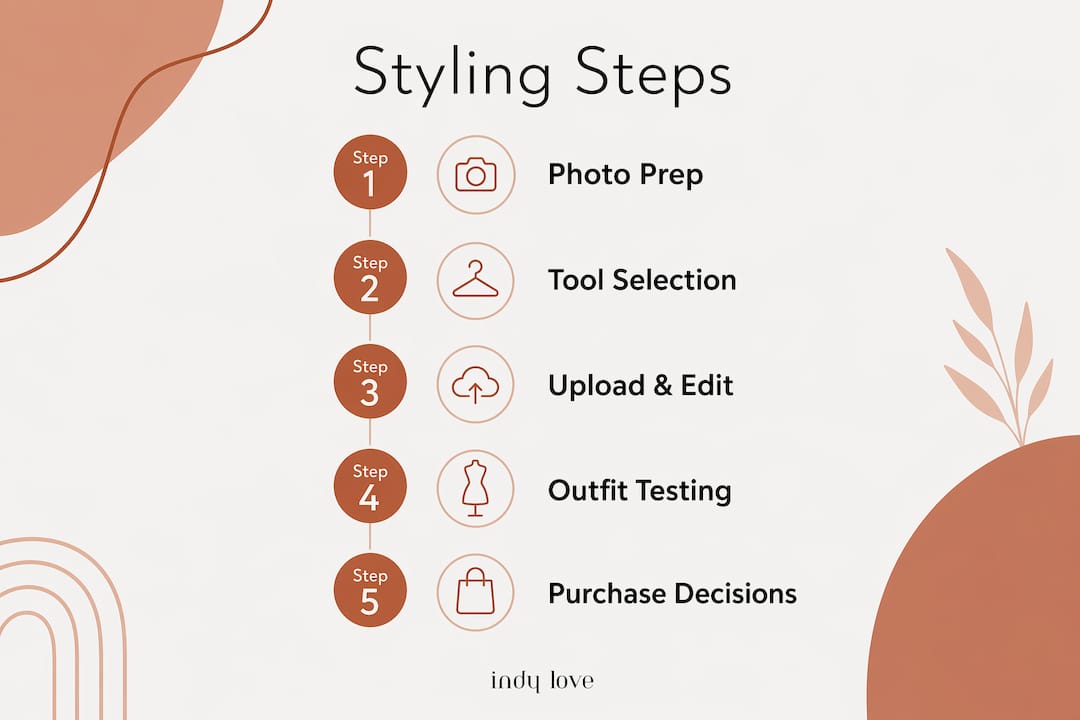
How to style outfits step by step from online photos
Virtual outfit styling follows a clear process. Skipping steps, especially photo preparation, is the most common reason results look unnatural.
-
Select and save your inspiration image. Find a photo online that captures the look you want. Save it clearly and note the specific elements you love: the silhouette, colour palette, or a particular garment.
-
Prepare your own photo. Take a full-body, front-facing shot in natural light against a plain background. Wear fitted clothing so the AI reads your shape correctly. Poor lighting or cluttered backgrounds cause unnatural clothing draping and artefacts in the final result.
-
Upload your photo to your chosen tool. Use EditThisPic, TryItOn, or a similar platform. Most accept standard JPEG or PNG files.
-
Describe the outfit with specific attributes. Specifying fit, colour, and fabric improves AI outfit swap realism significantly. “Relaxed-fit linen trousers in sage green” produces a far better result than “green pants.”
-
Experiment with variations. Try the same base outfit with different layering options, a jacket over a dress, or swapped footwear. Virtual try-ons let you experiment with radical new styles before buying, reducing the risk of unsuitable purchases.
-
Save and organise your results. Screenshot or download each result and label it by occasion: casual, work, or event. This builds a personal reference library you can return to when shopping or getting dressed.
Pro Tip: When writing your outfit description, include at least three attributes: the garment type, the fit, and the colour or fabric. For example: “oversized cream knit jumper, relaxed fit, chunky ribbed texture.” This level of detail consistently produces more realistic AI outputs.
A common mistake is uploading a low-resolution selfie taken in a dim bathroom. The AI struggles with shadows and unclear body lines, producing results that look pasted rather than worn. Always prioritise photo quality before touching any tool.
How to build a digital wardrobe from your own clothes and online inspiration
A digital wardrobe is a catalogue of your actual clothing items stored in an app, combined with saved online images for inspiration. Platforms like Aurelle and Ask My Wardrobe let you photograph each garment and upload it to a personal library. From there, the app suggests combinations and tracks what you actually wear.
Digitising a wardrobe allows clothing usage analytics, helping curb impulse spending and refine personal style over time. If you notice a blouse has not appeared in any outfit for three months, that is useful data. It tells you the item does not work with your current wardrobe and saves you from buying more pieces in the same vein.
Combining your own items with online clothing inspiration is where the real value appears. You can import an image of a trending look, then ask the app to suggest which pieces you already own could recreate it. This approach, explored in depth in Indy Love’s guide on fashion curation, turns scattered inspiration into a workable wardrobe plan.
Practical tips for building your digital wardrobe effectively:
- Photograph each garment flat on a white surface or hanging against a plain wall for the clearest image.
- Tag items by colour, occasion, and season so the app can filter and suggest combinations quickly.
- Import online inspiration images alongside your own pieces to see how new items would integrate.
- Review your wardrobe analytics monthly to identify underused items before buying anything new.
- Track which clothes are actually worn to support more sustainable and budget-conscious shopping choices.
On privacy: reputable apps like Aurelle and Ask My Wardrobe store your data on secure servers. Read each platform’s privacy policy before uploading personal photos, and choose tools that allow you to delete your data on request.
How to create affordable, stylish outfits for any occasion using online photos
Virtual styling outcomes translate directly into real-world shopping decisions. The key is using your digital previews as a filter before spending money, not as a substitute for personal judgement.
For casual outfits, use your digital wardrobe to confirm that a new basic, say a striped tee or relaxed denim, genuinely works with three or more items you already own. If it does not combine well digitally, it will not combine well in your wardrobe either. Indy Love’s advice on shopping online sales smartly pairs well here: buy pieces that your digital wardrobe confirms are versatile, not just pieces that look good in isolation.
For work and special occasions, virtual try-on tools let you test formality levels before committing. A midi dress might read as casual in one colour and polished in another. Testing both digitally saves you from a costly mistake.
Tips for replicating online looks affordably:
- Identify the hero piece in any inspiration photo and search for it at multiple price points before buying.
- Use second-hand platforms to source specific items your digital wardrobe confirms you need.
- Prioritise accessories to shift the tone of an outfit. A statement clutch or layered bracelet changes a look more than a new top does.
- Check online catalogues for how AI-assisted previews work across different retailers, as explained in this online fashion catalogues guide.
- Limit new purchases to items that appear in at least three planned outfits from your digital wardrobe.
Pro Tip: When accessorising digitally, add one statement piece at a time. Test a bold bag, then swap it for a scarf, then try a layered necklace. This shows you which single accessory does the most work for a given outfit, so you buy only what you will actually use.
Common challenges when styling clothing from online photos
Photo quality is the most frequent obstacle. Input photo quality dramatically impacts AI styling outcomes. Shadows across the body, busy backgrounds, and angled poses all confuse the AI and produce results that look unrealistic.
The second common issue is vague outfit descriptions. Generic prompts like “a nice dress” give the AI too little to work with. Detailed outfit descriptions yield more realistic AI outputs than generic prompts, so specificity is non-negotiable.
AI tools are directionally accurate enough for effective outfit evaluation, but they are not perfect. Expect occasional artefacts around hands, hair, and complex layering. Treat the result as a strong guide, not a photographic guarantee.
| Challenge | Solution |
|---|---|
| Poor lighting in input photo | Reshoot near a window in natural daylight |
| Cluttered background | Stand against a plain white or neutral wall |
| Unnatural clothing drape in result | Use a front-facing, full-body pose in fitted clothing |
| Vague outfit description | Include garment type, fit, colour, and fabric in every prompt |
| Artefacts around hands or hair | Crop the result to focus on the clothing, not the edges |
| Unrealistic layering results | Test one layer at a time rather than a full complex outfit |
Pro Tip: If your first AI result looks off, do not abandon the tool. Adjust one variable at a time: retake the photo, then refine the description, then try a simpler outfit. Systematic changes tell you exactly what improved the result.
Key takeaways
Styling clothing from online photos works best when you combine high-quality input photos, specific outfit descriptions, and a digital wardrobe that tracks what you already own.
| Point | Details |
|---|---|
| Photo quality is non-negotiable | Use full-body, front-facing shots in natural light against a plain background for accurate AI results. |
| Specific descriptions produce better results | Always include garment type, fit, colour, and fabric when prompting AI styling tools. |
| Digital wardrobes reduce impulse spending | Tracking worn items helps you identify gaps and avoid buying pieces that duplicate what you own. |
| Virtual try-on cuts costly mistakes | Testing styles digitally before purchasing reduces returns and unsuitable buys. |
| Accessories shift outfits significantly | One well-chosen accessory changes a look more efficiently than buying a new clothing item. |
Why I think most people are using these tools backwards
Most readers approach AI styling tools the way they approach a fitting room: they try something on, decide yes or no, and move on. That misses the real power of the technology.
The smarter approach is to use virtual styling as a planning tool, not a shopping trigger. Before I open any retail site, I run my inspiration images through a digital wardrobe check. I want to know whether the look I admire actually fits the clothes I already own. Virtual styling is most successful when you treat it as a guide to personal style intuition, not a replacement for it.
The sustainability angle also deserves more attention than it gets. Tracking which clothes are actually worn via digital wardrobes helps identify underused items, supporting more sustainable and budget-conscious shopping. That is not a minor benefit. It is the difference between a wardrobe that works and one that just grows.
My honest advice: start with five items from your existing wardrobe, digitise them, and spend one week building outfits before you buy anything new. The results will surprise you. You almost certainly own more than you think you do. The best results come from balancing technology with practical outfit assembly, including accessories and occasion appropriateness. Technology points the direction. Your instincts close the gap.
— Helen
Discover your next favourite look with Indy Love
Ready to take your virtual styling from screen to wardrobe? Indy Love is an Australian online boutique offering chic, affordable women’s fashion curated for real occasions, from weekend brunches to special events.
Browse the full women’s fashion collection to find pieces that slot straight into your digital wardrobe plan. The Alice Shirt Dress is a versatile staple that works across casual and workwear styling, while the Moda Maxi Dress delivers effortless occasion dressing. With free shipping on orders over $150 and fast delivery across Australia, Indy Love makes it easy to shop the looks you have already styled digitally. Explore the range and find your next must-have piece today.
FAQ
What does it mean to style clothing from online photos?
Styling clothing from online photos means using AI tools and digital wardrobe apps to replicate or experiment with outfits based on images you find online. Platforms like EditThisPic and TryItOn let you preview how those looks appear on your own body before buying.
Which free tools are best for virtual outfit styling?
EditThisPic and TryItOn offer free AI outfit swaps with no sign-up required, producing results in 30–60 seconds. Lookastic provides a free digital wardrobe for up to 12 items with 5–10 outfit combinations.
How do I get realistic results from AI outfit tools?
Upload a full-body, front-facing photo in natural light against a plain background, then describe your outfit with specific fit, colour, and fabric details. Vague prompts produce generic results; specific descriptions produce realistic ones.
Can virtual styling help me save money on clothes?
Yes. Testing outfits digitally before purchasing reduces returns and impulse buys. Tracking worn items in a digital wardrobe also reveals which pieces you actually use, helping you avoid redundant purchases.
How do I use online fashion inspiration without overspending?
Identify the key piece in any inspiration photo, confirm it works with at least three items you already own using a digital wardrobe tool, then search for it across multiple price points before buying. Second-hand platforms and online fashion order best practices can help you source specific items affordably.