Fabric care labels and online shopping: what you need to know
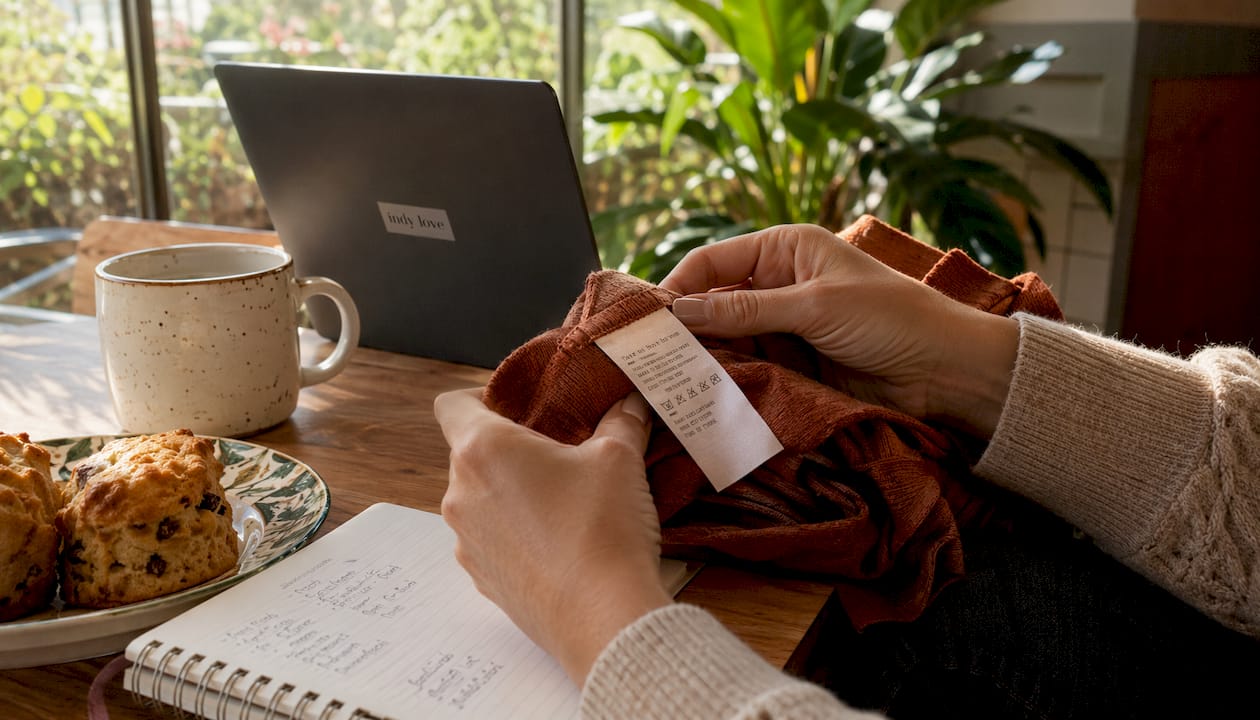
Fabric care labels are your clearest guide to keeping a garment looking its best, and when you’re shopping online, they carry even more weight. You can’t feel the fabric or check the stitching in person, so the care label on a product listing is often your only window into what that piece truly demands. Under Australian Consumer Law, these labels are mandatory on all clothing sold in Australia, including through online retailers, and they exist specifically to protect you from costly surprises after purchase.
Why fabric care labels matter so much for online shoppers
Reading care labels online is about more than laundry logistics. These small but mighty labels serve several critical functions that directly affect your wallet, your wardrobe, and even the planet.
- Garment preservation: Care labels tell you exactly how to wash, dry, iron, bleach, and professionally clean a piece so it stays looking fresh and lasts longer.
- Total cost of ownership: A label that reads “dry clean only” signals an ongoing expense. Knowing before you buy what professional care a garment needs lets you budget accurately.
- Damage prevention: Incorrect washing, such as machine washing a delicate silk blouse on a hot cycle, can cause irreversible damage. Labels prevent exactly that.
- Legal protection: The Consumer Goods (Care Labelling) Information Standard 2023 mandates that all clothing sold in Australia carries permanent, legible care instructions, whether the retailer operates online or in a physical store.
- Sustainability: Following care instructions correctly extends garment life, which means fewer replacements and less textile waste ending up in landfill.
- Purchase confidence: When a product listing includes clear care information, you can shop with genuine confidence rather than guessing at maintenance requirements.
The role of fabric care labels in online shopping goes well beyond a quick glance before you toss something in the wash. They are a consumer protection tool built into every garment by law.
How to understand fabric care label symbols
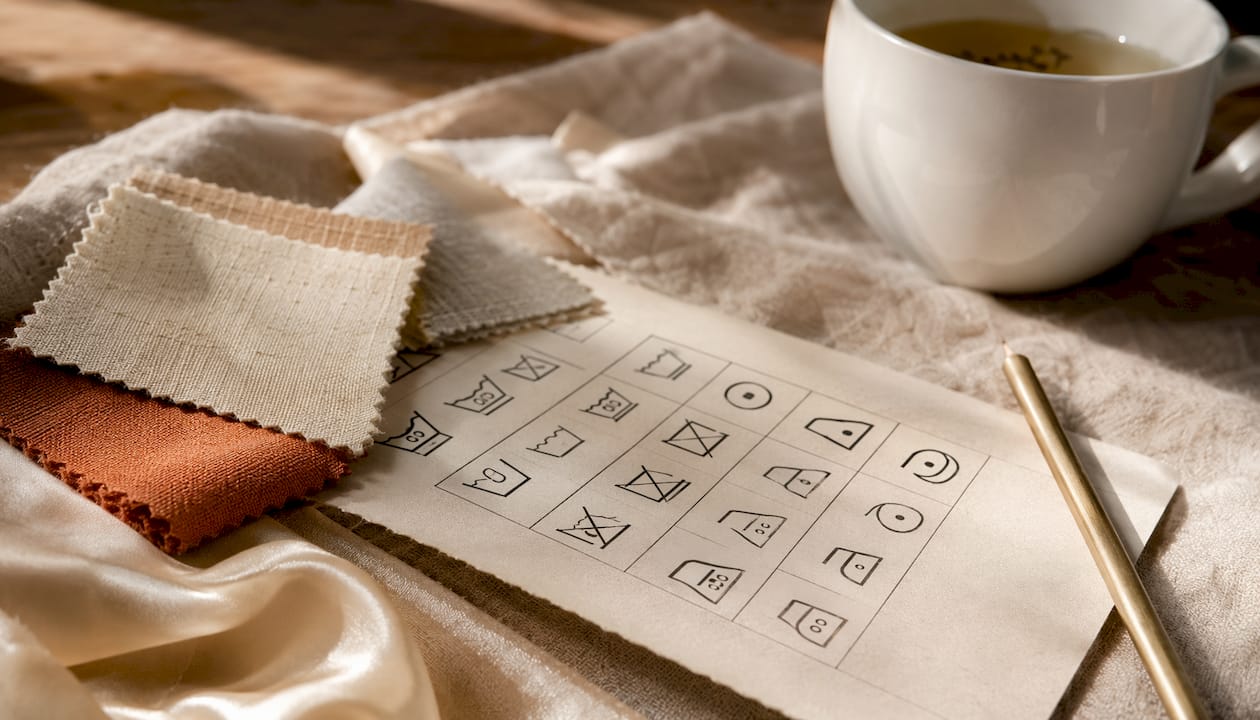
The five internationally recognised care symbols are the universal language of garment maintenance. Australian law permits care instructions to be given using these symbols, written English text, or both. Each symbol covers a distinct aspect of garment care, and together they tell the full story of how a piece should be treated.
- Washing (washtub symbol): Shows whether a garment can be machine washed or hand washed, and at what water temperature. A hand inside the tub means hand wash only. A crossed-out tub means do not wash.
- Bleaching (triangle symbol): An empty triangle means any bleach is safe. A triangle with two diagonal lines means only oxygen-based bleach. A crossed-out triangle means no bleach at all.
- Drying (square symbol): A square with a circle inside means tumble dry is safe. Lines or dots inside indicate heat settings. A crossed-out version means lay flat or hang to dry.
- Ironing (iron symbol): Dots inside the iron indicate heat level: one dot for low, two for medium, three for high. A crossed-out iron means do not iron.
- Professional care (circle symbol): Letters inside the circle indicate the type of dry cleaning solvent safe to use. A plain circle usually means standard dry cleaning. A crossed-out circle means do not dry clean.
These symbols have been widely used since 2006 across many countries, and they are protected by GINETEX, the international textile care labelling organisation. That said, research consistently shows a gap in how confidently shoppers interpret symbols alone. Combining text with symbols significantly boosts consumer confidence and reduces the risk of garment damage from misinterpretation. When you’re reading care labels online, always look for product listings that include both formats.
Pro Tip: If a product listing only shows symbols without any written explanation, search the brand’s website or contact the retailer directly for the full text instructions before you buy.
Why care labels protect your investment and the environment
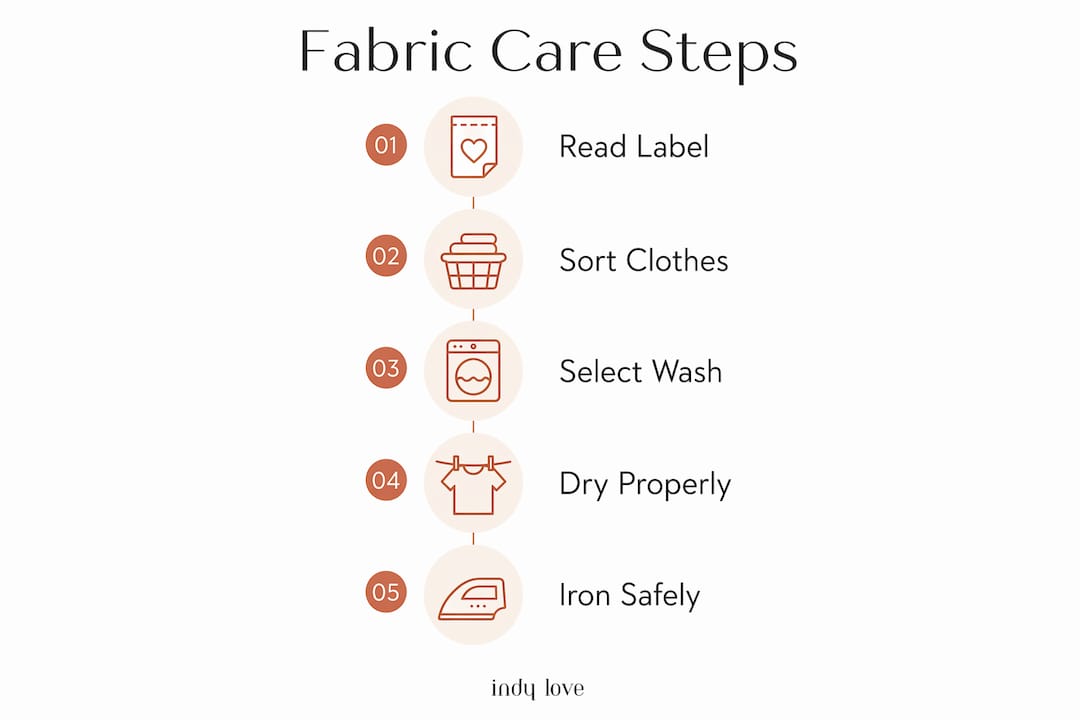
Every time you follow a care label correctly, you’re extending the life of that garment. It sounds simple, but the cumulative effect on both your wardrobe and the environment is real.
Garments that are washed at the wrong temperature, tumble dried when they shouldn’t be, or ironed on a setting too high for the fabric can shrink, fade, pill, or lose their shape permanently. That’s money lost. Care labels help you avoid those mistakes by giving you the precise treatment each piece needs, whether it’s a structured blazer that needs dry cleaning or a linen dress that prefers a cold hand wash.
There’s also a financial planning angle that shoppers often overlook. A garment requiring regular professional dry cleaning carries a higher total cost than one you can toss in the machine at home. Checking care requirements before purchase lets you factor that into your decision, rather than discovering it after the receipt is long gone.
From a sustainability perspective, following care instructions reduces textile waste by keeping garments in use longer. Fast fashion already puts enormous pressure on landfill. Choosing clothing by care labels, and then actually following them, is one of the most practical things you can do to shop more sustainably. For a deeper look at how fabric choices connect to environmental impact, sustainable textile care is worth exploring before your next purchase.
- Care labels reduce costly garment damage from incorrect washing or drying.
- They help you anticipate ongoing maintenance costs before committing to a purchase.
- Properly maintained garments last longer, reducing your need to replace them.
- Clear care instructions build confidence when shopping online, where you can’t physically inspect a piece.
- Choosing and caring for garments correctly supports reduced textile landfill waste.
Legal requirements for care labelling on clothing sold in Australia
Australia has some of the clearest care labelling laws in the world, and they apply fully to online retail. The Consumer Goods (Care Labelling) Information Standard 2023 sets out exactly what suppliers must provide on every piece of clothing sold in the country.
- Mandatory and permanent: Care labels must be permanently attached to garments and remain legible throughout the item’s useful life. A label that fades or falls off does not meet the standard.
- English or recognised symbols: Instructions must appear in English, use the five GINETEX-recognised care symbols, or include both. Retailers may add instructions in other languages as a bonus, but English or symbols are the legal baseline.
- Visible at point of sale: This requirement extends to online listings. Retailers must display care information visibly when selling online, not just on the physical label sewn into the garment.
- Penalties for non-compliance: Suppliers who fail to comply face fines, penalties, and potential product recalls. This applies equally to online marketplaces and physical stores.
- Consumer recourse: If you purchase a garment online that does not carry a compliant care label, you can report it to the ACCC’s Product Safety Australia. You also retain your rights under Australian Consumer Law regarding acceptable quality.
The law is clear: online retailers cannot sidestep care labelling obligations simply because the transaction happens digitally. As a shopper, you have every right to expect this information upfront, before you click “buy.”
Pro Tip: Before purchasing from an unfamiliar online retailer, check whether their product listings include care label information. If it’s missing, that’s a red flag about their compliance with Australian Consumer Law.
How to use care label information when shopping online
Knowing what care labels mean is one thing. Using that knowledge actively while you shop is where it pays off. Here’s how to make fabric care information work for you every time you browse online.
- Read both text and symbols: Don’t rely on symbols alone. As research confirms, text alongside symbols reduces the risk of misreading care requirements. Look for listings that provide both.
- Check for multi-fabric instructions: Garments made from blended fabrics, such as a cotton-polyester mix, sometimes carry instructions that seem contradictory. The rule of thumb is to follow the most delicate fibre’s requirements. A blend with 20% wool should generally be treated as wool.
- Verify the label is permanent: Product descriptions should confirm the care label is sewn in permanently, not printed on a hang tag that gets removed at purchase. Permanent labels are a legal requirement and protect your warranty rights.
- Don’t remove the label after purchase: Removing a care label voids your access to maintenance instructions and can affect your ability to make a warranty claim if the garment is damaged during cleaning.
- Use care labels to compare products: If you’re choosing between two similar pieces, the one with simpler care requirements may be the better long-term investment, especially if dry cleaning costs are a concern.
- Contact the retailer if information is missing: Australian law requires care information to be visible at the point of sale online. If a listing doesn’t include it, ask before you buy. A reputable retailer will provide it immediately.
- Keep your receipts and dockets: If you take a garment to a dry cleaner, bring the care label details and your purchase receipt. This protects you if a dispute arises over cleaning damage.
Understanding how to spot quality clothing goes hand in hand with reading care labels. A well-made garment will always carry clear, accurate care instructions because the manufacturer stands behind how it should be treated.
Pro Tip: Prioritise online retailers who display care label information directly on the product page, not buried in a PDF or hidden behind a “more details” tab. Clear upfront information is a sign of a trustworthy seller.
Natural vs synthetic fabrics: how care labels differ
The type of fabric in a garment directly shapes its care requirements, and care labels reflect those differences clearly. Natural and synthetic fibres behave very differently in the wash, under heat, and during drying.
Natural fibres such as cotton, linen, wool, and silk tend to be more sensitive to heat and agitation. Wool can felt and shrink dramatically in a hot machine wash. Silk loses its lustre and can pucker if ironed at high heat. Cotton is generally more forgiving but can shrink in very hot water. Linen wrinkles easily and often benefits from a slightly damp iron. Care labels on natural fibre garments frequently specify cold or warm water, gentle cycles, and low-heat or no-heat drying.
Synthetic fibres like polyester, nylon, acrylic, and viscose are often more durable in the wash but have their own sensitivities. Polyester can pill with rough agitation and may melt or distort under a hot iron. Acrylic behaves similarly to wool in some respects and often requires a gentle cycle. Viscose, despite being derived from natural sources, is notoriously fragile when wet and frequently requires hand washing or dry cleaning.
Blended fabrics combine the properties of both, which is why their care labels can look more complex. A polyester-cotton blend might tolerate a warm machine wash but still need a low-heat tumble dry to protect the polyester component. Always read the full label rather than assuming the dominant fibre sets all the rules.
When you’re shopping for affordable fashion online, understanding these fabric differences helps you choose pieces that fit your lifestyle. A busy week doesn’t leave much room for hand-washing delicates, so knowing what a garment needs before you buy it saves both time and disappointment. The care label is where that information lives.
Key takeaways
Care labels are a legally mandated, practical tool that protects your clothing investment and helps you make smarter purchasing decisions every time you shop online.
| Point | Details |
|---|---|
| Legal requirement in Australia | The Consumer Goods (Care Labelling) Information Standard 2023 mandates permanent, legible care labels on all clothing sold online and in stores. |
| Five standard care symbols | Washing, bleaching, drying, ironing, and professional care symbols must be used alongside or instead of English text instructions. |
| Total cost awareness | Checking care requirements before purchase helps you budget for ongoing costs like dry cleaning. |
| Text plus symbols builds confidence | Combining written instructions with symbols reduces misinterpretation and garment damage risk. |
| Natural vs synthetic care differences | Natural fibres like wool and silk need gentler treatment; synthetics like polyester tolerate more but still have heat limits. |
Ready to shop with confidence? The Alice Shirt Dress at Indy Love comes with clear fabric care information so you know exactly what you’re getting before you buy. Browse the full collection at Indy Love and find chic, trendy pieces that fit your style and your lifestyle.
Recommended
- Why affordable clothing differs from cheap: a clear guide – Indy Love Boutique
- How to spot quality women’s clothing: a practical guide – Indy Love Boutique
- How to navigate online boutique size guides with confidence – Indy Love Boutique
- Track your online fashion order: 2026 guide – Indy Love Boutique