
Why affordable clothing differs from cheap: a clear guide
Affordable clothing is defined as garments that offer genuine quality, durability, and fair pricing relative to their lifespan. Cheap clothing, by contrast, prioritises a low upfront price at the direct expense of materials, construction, and longevity. Understanding why affordable clothing differs from cheap is the single most useful skill a fashion-savvy shopper can develop. The difference shows up in fabric fibre quality, seam construction, hardware, and the real economics of cost-per-wear. Get this distinction right, and your wardrobe becomes an asset rather than a recurring expense.
Why affordable clothing differs from cheap: it starts with fabric
Fabric drape and fibre quality are the primary differentiators between affordable and cheap clothing. That single fact explains more about garment performance than any price tag ever will.
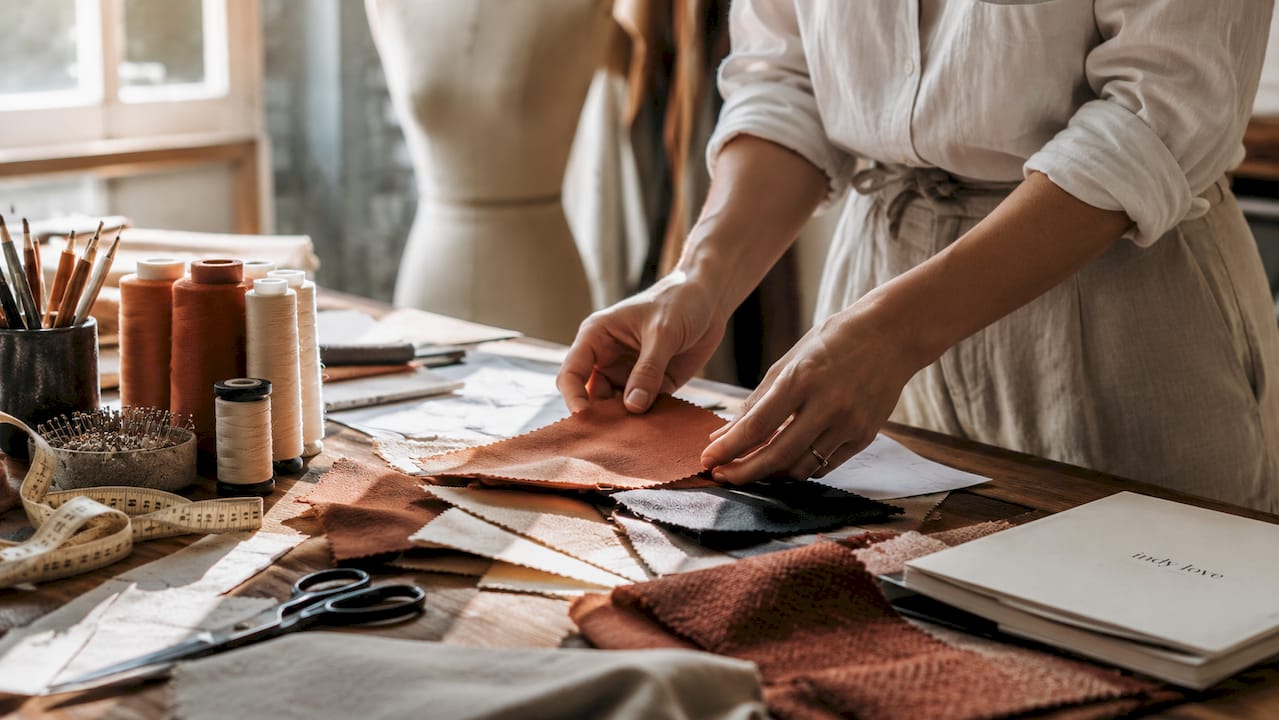
Cheap garments rely on short-staple cotton and thin synthetic polymer blends. These fibres pill quickly, lose colour after a handful of washes, and fail to recover their original shape. Affordable clothing uses longer-staple fibres, tighter weaves, and fabric blends chosen for drape and recovery. The difference is immediately obvious when you hold both garments side by side.
Key fabric quality markers to check before you buy:
- Pilling resistance: Rub the fabric between your fingers. Loose, fuzzy fibres signal short-staple construction and rapid surface degradation.
- Colourfastness: Quality dyes penetrate the fibre. Cheap dyes sit on the surface and fade or bleed within the first few washes.
- Stretch recovery: Stretch the fabric gently and release it. Affordable fabric springs back. Cheap fabric stays distorted.
- Drape: Hold the fabric up. Quality cloth falls smoothly. Thin synthetic blends look stiff or limp in an unflattering way.
- Weight: Heavier fabric generally signals denser weave and better durability, though this varies by garment type.
Affordable clothing uses fabrics with good drape and fibre quality, while cheap garments use synthetic, thin polymers that fail to recover shape after washing. That failure is not just aesthetic. It means you replace the garment far sooner than you planned.
Pro Tip: When shopping online, check the fabric composition listed in the product description. A blend of more than 50% polyester in a dress or blouse is a strong signal of cheap construction, regardless of how the item is styled in photos.
What does garment construction tell you about quality?
Construction is where the difference between affordable and cheap clothing becomes measurable. Cheap garments use single-needle stitching with minimal seam allowance of around 6mm, which prevents tailoring and limits the garment’s lifespan. Affordable clothing uses reinforced seams with 1.5cm or more of seam allowance, allowing repairs and alterations that extend wear.
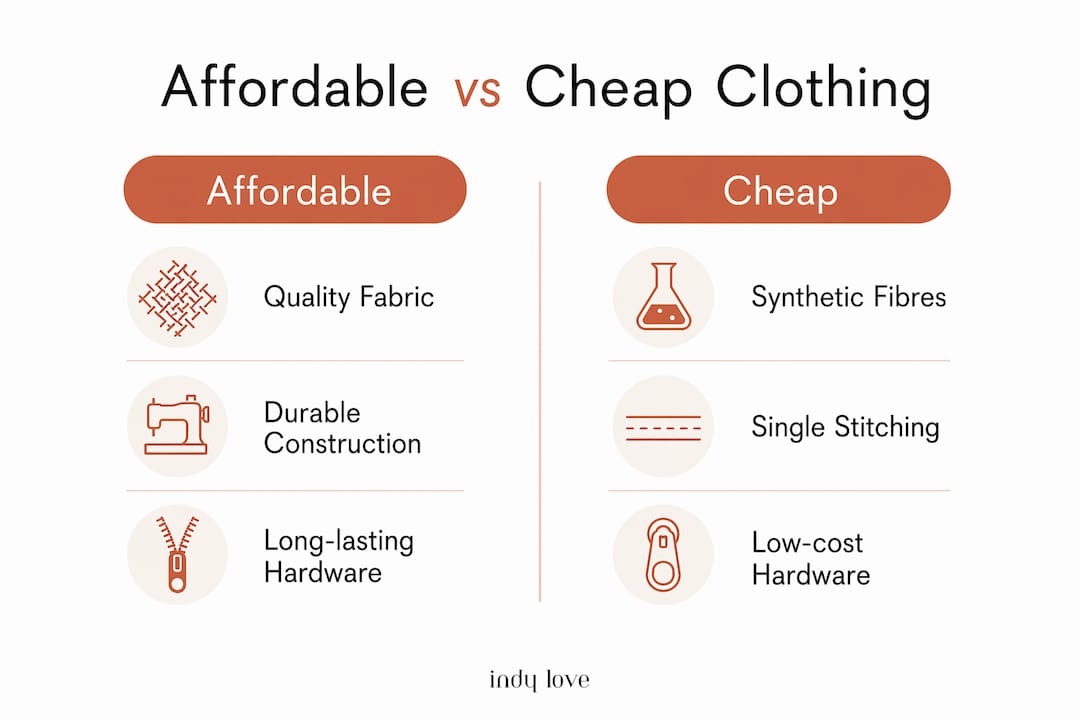
That seam allowance detail matters more than most shoppers realise. A dress with generous seam allowance can be taken in or let out by a tailor, giving it years of additional life. A cheap dress with 6mm seams cannot be altered without the seam unravelling entirely.
Hardware quality follows the same logic:
- Zippers: Affordable garments use YKK zippers, a globally recognised standard for durability. Cheap garments use unbranded plastic zippers that split or jam within months.
- Buttons: Affordable clothing uses corozo or resin buttons that hold their shape and colour for years. Cheap clothing uses hollow plastic buttons that crack or discolour quickly.
- Lining: Quality garments include lining that protects the outer fabric and improves drape. Cheap garments skip lining to reduce cost, which causes the outer fabric to wear faster.
- Finishing: Check the inside of a garment. Affordable clothing has clean, finished seams. Cheap clothing has raw, fraying edges that signal a short intended lifespan.
Affordable clothing features hardware like YKK zippers and corozo buttons that last decades, while cheap alternatives use plastic parts prone to early failure. Learning to spot quality womens clothing by its construction details is a skill that pays off every time you shop. Indy Love’s guide on how to spot quality covers these construction markers in practical detail.
Pro Tip: Before purchasing online, zoom into any available product photos and look for visible stitching lines, button quality, and seam finishing. Brands that photograph garment interiors are usually confident in their construction standards.
How does cost-per-wear reveal the real economics of cheap vs affordable fashion?
Cost-per-wear is the single most useful formula in fashion economics. It is calculated by dividing the purchase price of a garment by the number of times you wear it. A $300 quality coat worn 150 times costs $2 per wear. A $50 disposable coat worn 10 times before it falls apart costs $5 per wear. The cheaper coat costs more.
This formula reframes every purchase decision. A higher upfront price is not the same as a higher cost. Durability, versatility, and occasion range all determine how many times you actually wear a piece, which directly determines its real cost.
Cheap fast-fashion garments costing $12 unravel after about 6 washes, while $60 quality garments last over 12 months. That makes cheap clothing effectively five times more expensive on a per-wear basis. The maths is not close.
| Garment | Purchase price | Estimated wears | Cost per wear |
|---|---|---|---|
| Cheap polyester dress | $25 | 8 | $3.13 |
| Affordable cotton wrap dress | $80 | 60 | $1.33 |
| Cheap fast-fashion top | $12 | 6 | $2.00 |
| Affordable quality blouse | $55 | 50 | $1.10 |
| Cheap unlined blazer | $40 | 10 | $4.00 |
| Affordable structured blazer | $120 | 80 | $1.50 |
The table above shows a consistent pattern. Affordable pieces cost less per wear across every category. Cost-per-wear helps consumers recognise both the economic and environmental benefits of buying higher quality clothes, even at higher upfront costs. Choosing dresses over separates on a budget is one practical application of this logic, and Indy Love’s piece on why dresses beat separates explains the cost-per-wear case clearly.
What misconceptions drive cheap clothing purchases?
Cheap clothing’s value proposition is often a marketing construct that overpromises durability while underdelivering on basic utility. Shoppers are not making irrational decisions. They are responding to marketing that is specifically designed to obscure quality differences.
Fast fashion marketing uses trend urgency, low prices, and high-volume photography to create the impression of value. The psychological effect is real. A $15 price tag feels like a win at the point of purchase, even when the garment fails within weeks. Impulse buying amplifies this effect, particularly when online shopping removes the tactile feedback that would otherwise signal poor fabric quality.
Two practical strategies counter these patterns:
- The 24-hour rule. Wait 24 hours before completing any non-essential purchase. The urgency created by fast fashion marketing fades quickly. If you still want the item the next day, it is more likely a considered choice.
- The three outfit test. Before buying, mentally style the item with at least three outfits you already own. If you cannot do it, the piece will not earn enough wears to justify its cost-per-wear, regardless of price.
The 24-hour rule combined with the three outfit test reduces impulsive purchases and improves cost-per-wear by avoiding fast-fashion buy-and-toss cycles. The social and environmental costs of cheap clothing are also real. Garments that last six washes end up in landfill far faster than durable pieces, compounding the financial cost with a broader environmental one.
Pro Tip: Screenshot items you want to buy and revisit them the next morning. If the excitement has dropped, your wardrobe does not need that piece.
Practical strategies for shopping affordable clothing well
Shopping affordable clothing well is a skill, not a budget. Strategic shopping through resale and thrifting saves consumers 60–80% compared to retail pricing, making high-quality items genuinely accessible. That kind of saving changes what is possible at any budget level.
Practical approaches that consistently deliver better value:
- Prioritise fabric and construction over branding. A well-constructed garment from a boutique label often outperforms a poorly made piece from a recognisable name. Check the seams, the hardware, and the fabric composition first.
- Shop boutique and curated collections. Boutique retailers like Indy Love select pieces for quality and wearability, not just trend appeal. That curation does the quality-filtering work for you.
- Use sales strategically. End-of-season sales on quality pieces are the best intersection of affordability and durability. Buying a well-made winter coat in march at 40% off beats buying a cheap one at full price in june.
- Balance trend pieces with timeless staples. Trend pieces can be affordable and fun. Timeless staples, such as a well-cut wrap dress or a structured blazer, should always be the higher-quality investment.
- Check resale platforms for quality brands. Pre-loved garments from quality labels often show minimal wear and cost a fraction of retail. The construction that made them durable also makes them excellent secondhand buys.
Indy Love’s guide to affordable clothing online covers these sourcing strategies in depth, with specific guidance on what to look for when shopping digitally.
Key takeaways
Affordable clothing costs less per wear than cheap clothing because durability, construction quality, and fabric performance determine real value, not the price tag.
| Point | Details |
|---|---|
| Fabric quality is the first signal | Check fibre length, drape, and stretch recovery before any purchase. |
| Construction reveals longevity | Look for double-stitched seams, YKK zippers, and generous seam allowances. |
| Cost-per-wear is the real metric | Divide the price by expected wears to compare true value across garments. |
| Marketing obscures cheap clothing’s real cost | Apply the 24-hour rule and three outfit test to counter impulse buying. |
| Smart sourcing expands your options | Resale, thrifting, and boutique curation all deliver quality at accessible prices. |
The real lesson I keep learning from my wardrobe
The most common mistake I see shoppers make is treating price as a proxy for value. A low price feels like a win. A high price feels like a risk. Neither feeling is reliable. What actually predicts value is construction quality, fabric performance, and how many times you will genuinely wear the piece.
I changed my own shopping behaviour the first time I calculated cost-per-wear on a dress I had worn twice before it pilled beyond repair. The $28 price tag had felt responsible. The $14-per-wear reality was anything but. That single calculation shifted how I approach every purchase.
The shoppers I see building genuinely great wardrobes are not spending more overall. They are spending more intentionally. They buy fewer pieces, check construction details, and apply the three outfit test before committing. The result is a wardrobe that works harder, lasts longer, and costs less over time.
Sustainable wardrobe building is not about buying expensive things. It is about buying things that earn their place. When you know what separates affordable from cheap, that distinction becomes easy to act on.
— Helen
Quality fashion at prices that make sense
Indy Love Boutique curates women’s fashion with exactly this standard in mind. Every piece in the collection is selected for fabric quality, construction, and wearability across multiple occasions.
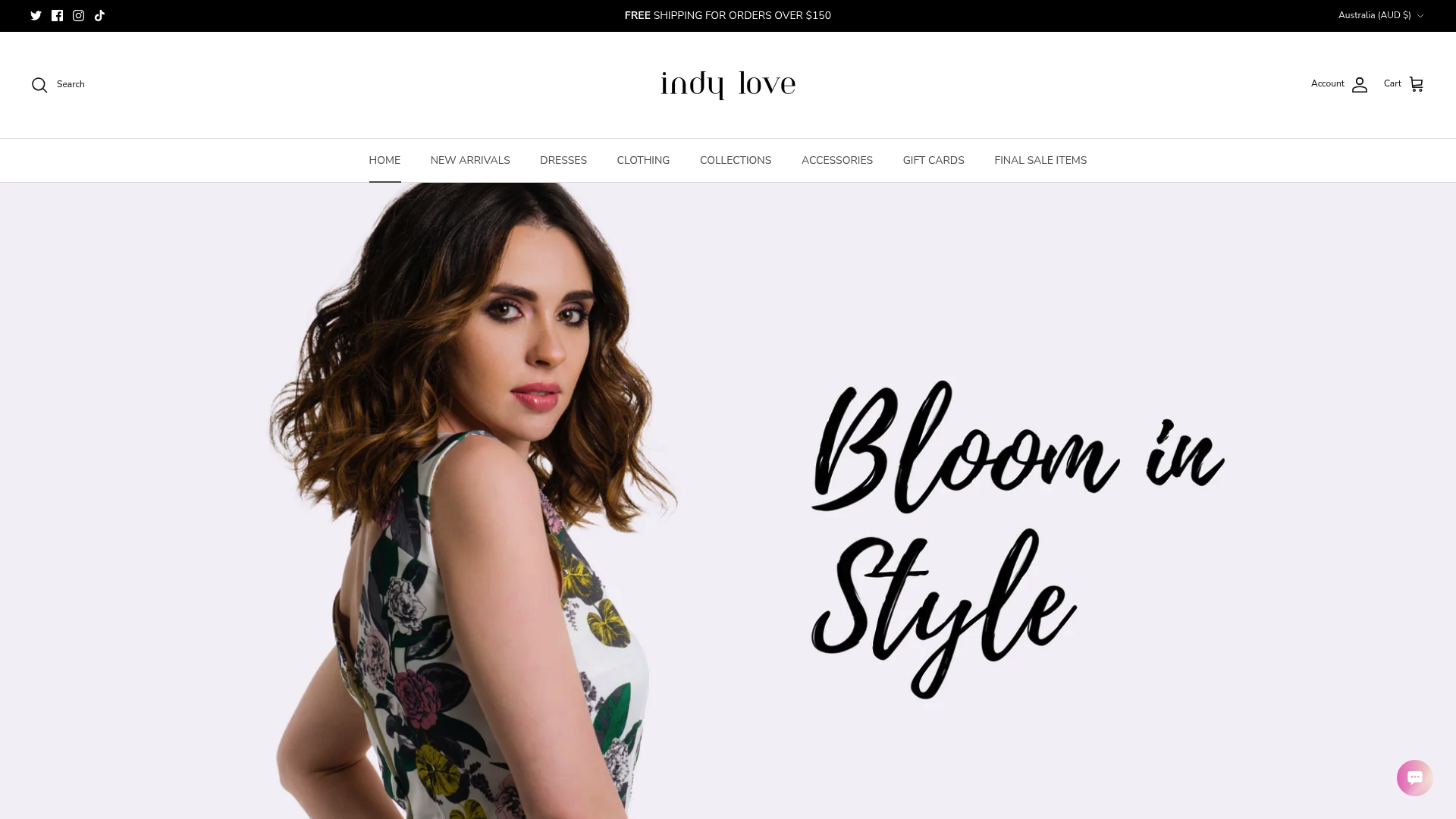
The Alice Shirt Dress is a standout example of affordable done right. It is cut from quality fabric with clean seam finishing and a versatile silhouette that works from casual to dressed-up. The Mary Wrap Dress delivers the same standard in a flattering wrap cut that earns its cost-per-wear across seasons. Both pieces reflect what Indy Love does best: chic, well-made clothing at prices that respect your budget. Free shipping applies on orders over $150 across Australia.
FAQ
What is the difference between affordable and cheap clothing?
Affordable clothing offers quality materials and durable construction at a fair price relative to its lifespan. Cheap clothing prioritises a low upfront cost, typically using inferior fabrics and construction that cause rapid wear and frequent replacement.
How do I calculate cost-per-wear?
Divide the purchase price of a garment by the number of times you wear it. A $60 quality dress worn 50 times costs $1.20 per wear, which is better value than a $20 dress worn 5 times at $4.00 per wear.
What fabric signs indicate cheap clothing?
Short-staple fibres, thin synthetic blends, and fabrics that do not spring back after stretching all signal cheap construction. Pilling after a few washes and colour fading are the most common early indicators.
Are YKK zippers really a quality indicator?
Yes. YKK is a globally recognised zipper standard used in quality garments across price points. Finding a YKK zipper on a garment is a reliable signal that the manufacturer invested in durable hardware throughout.
Does thrifting help you access affordable clothing?
Thrifting and resale shopping save 60–80% compared to retail pricing, making quality garments from reputable labels accessible at a fraction of their original cost. Pre-loved quality pieces often show minimal wear due to the durability of their construction.