
Why boutique clothing feels more personal than mass retail
Boutique clothing is defined by intentional curation: every piece is chosen to reflect a specific aesthetic, a particular woman, and a clear point of view. That is why boutique clothing feels more personal than anything you will find on a rack at a large chain store. Where mass retail optimises for volume, boutiques optimise for connection. The difference shows up in the fit, the service, the atmosphere, and the story behind every garment. For Australian women who want style that actually reflects who they are, understanding how boutique stores differ from mainstream retail is the first step to shopping with real confidence.
Why boutique clothing feels more personal: it starts with curation
Boutique inventories are hand-picked, not algorithm-generated. Every item on the rack or website represents a deliberate choice made by someone with a clear aesthetic vision and a specific customer in mind. That focus is what removes decision fatigue and makes shoppers feel valued rather than lost in an endless scroll of options.
A curated collection tells a story. When you walk into a boutique or land on a well-edited online store, the pieces work together. The colour palette coheres. The silhouettes complement each other. You are not hunting through thousands of unrelated items. You are being guided by someone who has already done the filtering for you.
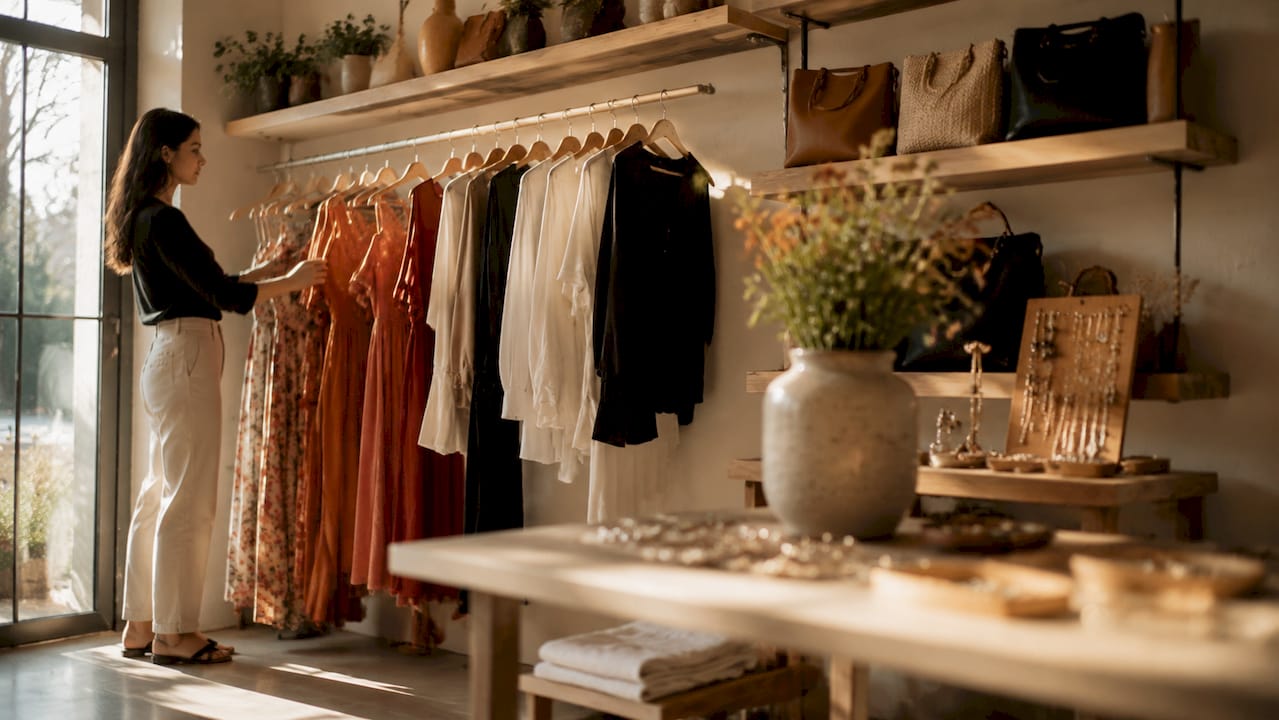
Boutiques also stock pieces you simply cannot find elsewhere. Many carry local designer labels, small-batch runs, or exclusive colourways that never appear in mainstream retail. That exclusivity matters. Wearing something unique to you is a fundamentally different experience from wearing the same dress as half your office.
The benefits of a curated boutique selection include:
- Reduced choice overload: A focused edit means you spend less time deciding and more time enjoying.
- Cohesive styling: Pieces are chosen to work together, making outfit building easier.
- Unique finds: Small-batch and local designer pieces are rarely available through large retailers.
- Aesthetic consistency: The boutique’s point of view acts as a style guide for your own wardrobe.
- Higher quality threshold: Boutique buyers apply stricter quality filters than mass-market buyers.
Pro Tip: When you find a boutique whose aesthetic matches yours, save it. Return regularly. The inventory turns over quickly, and the best pieces sell fast.
How does boutique service create a genuine personal connection?
Boutique staff do not work to a script. They have real conversations, ask genuine questions, and remember your answers. That is the foundation of what the industry calls “memory of preferences,” a concierge-level service approach where staff track your tastes, your size, your lifestyle, and even your upcoming events.
This kind of service transforms shopping from a transaction into a relationship. A boutique that knows you will reach out when a new piece arrives that suits your style. They will remember that you prefer midi lengths, that you avoid synthetic fabrics, or that you have a wedding coming up in october. That proactive contact feels nothing like a generic promotional email.
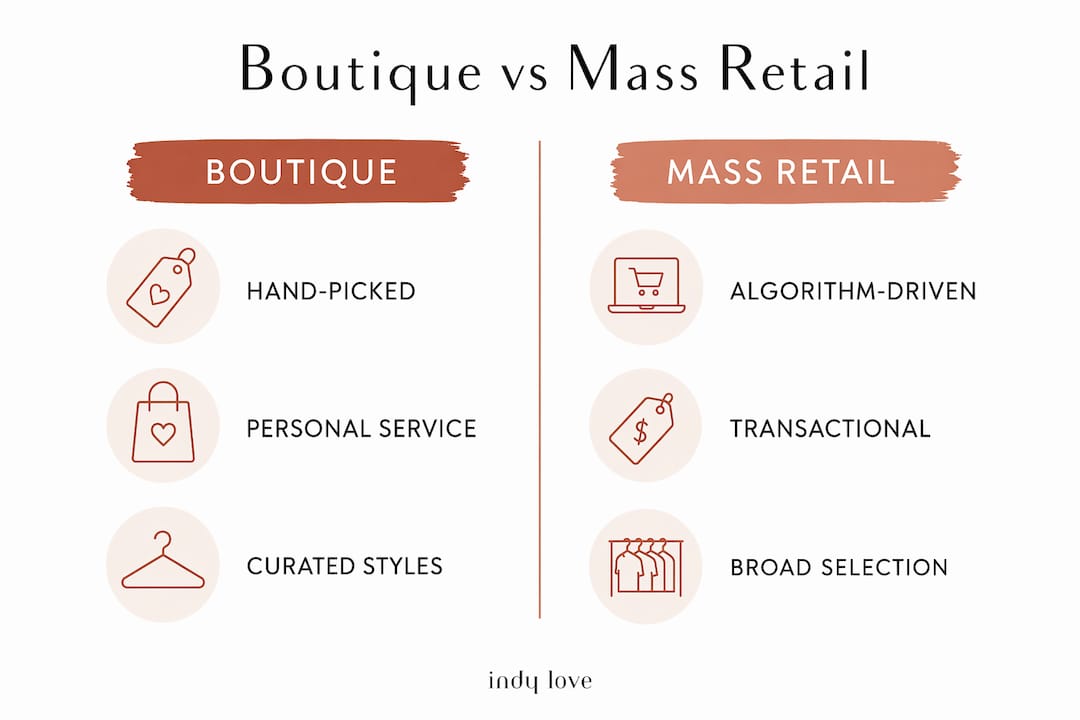
The psychological effect is real. Personalisation triggers a sense of partial ownership in the customer’s mind, based on Zajonc’s 1968 familiarity preference principle. The more familiar and seen you feel in a space, the more you value what you find there. Boutiques engineer that familiarity deliberately.
Here is how boutique service builds a lasting personal connection:
- Unhurried attention: Staff give you time without pressure, creating space for genuine conversation about your style needs.
- Preference tracking: Your tastes, sizes, and lifestyle details are noted and used to personalise future recommendations.
- Proactive outreach: When new stock arrives that matches your profile, you hear about it before anyone else.
- Event awareness: Staff remember your milestones and suggest pieces that fit your life, not just your body.
- Style collaboration: Over time, the relationship becomes collaborative. The boutique helps you build a wardrobe, not just buy individual items.
Pro Tip: Tell your boutique about your lifestyle, not just your size. The more context you give, the more relevant their recommendations become.
What role does the boutique environment play in how you feel?
The boutique environment is engineered to make you feel calm, curious, and comfortable. The decompression zone at the entrance of a well-designed boutique is a deliberate design choice. It is a clear, unhurried space that lowers your stress level before you even see the first garment. Mass retail environments skip this entirely, dropping you straight into a wall of product.
Free-flow layouts, used widely in boutique retail, reduce cognitive load. Instead of navigating rigid aisles, you wander. You discover. The layout encourages exploration without visual fatigue, which means you stay longer and engage more deeply with what you find.
Sensory elements add another layer. Subtle ambient scents like cedarwood or white tea target the limbic system, the part of the brain that processes emotion and memory, without overwhelming you. Layered lighting creates warmth and flatters the clothes on the rack and on your body. These details are not accidental. They are the difference between a space that feels like a chore and one that feels like a treat.
| Sensory element | Boutique approach | Mass market approach |
|---|---|---|
| Lighting | Warm, layered, flattering | Bright, uniform, functional |
| Scent | Subtle cedarwood or white tea | Neutral or absent |
| Layout | Free-flow, decompression zone | Grid aisles, high density |
| Sound | Curated playlist, low volume | Generic background music |
| Space | Generous, unhurried | Packed, high turnover |
Why do Australian consumers connect with local boutique fashion?
Australian consumers have a clear preference for locally made and ethically produced clothing. 40% of Australian fashion consumers prioritise buying Australian-made products, and 65% actively look for a “Made in Australia” label when they shop. That is not a niche preference. It is a mainstream expectation that boutiques are far better positioned to meet than global chains.
Local boutiques also solve a problem that global brands consistently fail to address. Boutique small-batch production is designed for Australian bodies and Australian conditions, not for northern hemisphere climates and sizing standards. A dress cut for a Sydney summer is a fundamentally different garment from one designed for a London winter, even if they look similar on a website.
Ethical production is another point of difference. Boutique storytelling emphasises transparency about sourcing, human connection, and the people behind the product. That transparency creates emotional resonance that global brands struggle to replicate. When you know who made your clothes and why, the garment carries meaning beyond its price tag.
The Australian preference for local boutique fashion is driven by:
- Economic loyalty: Supporting local jobs and the local economy is the primary motivation for buying Australian-made.
- Quality confidence: Local production is associated with higher quality and longer garment life.
- Fit and function: Clothes designed for Australian bodies and climate perform better in daily wear.
- Ethical alignment: Shorter supply chains mean greater transparency and lower environmental impact.
- Gen Z momentum: Gen Z shows a 15% rise in preference for ethical brands, signalling that this trend is strengthening, not fading.
The importance of local boutiques to Australian fashion culture goes beyond style. They are economic anchors, community hubs, and the clearest expression of what it means to dress with intention.
Key takeaways
Boutique clothing feels more personal because it combines deliberate curation, genuine service, considered environments, and local relevance in ways that mass retail cannot replicate.
| Point | Details |
|---|---|
| Curation reduces fatigue | Hand-picked inventories remove choice overload and guide you toward pieces that suit your style. |
| Service builds relationships | Memory of preferences and proactive outreach turn shopping into an ongoing, personalised collaboration. |
| Environment shapes emotion | Decompression zones, ambient scent, and layered lighting make boutique spaces feel calm and memorable. |
| Local design fits better | Australian-made boutique clothing is cut for local bodies and conditions, improving fit and function. |
| Ethics drive loyalty | Transparency about sourcing and production creates emotional connection that mass retail cannot match. |
The part of boutique shopping nobody talks about enough
I have spent years watching women walk into boutiques uncertain and walk out confident. That shift is not just about finding a great outfit. It is about being seen. The boutique experience, at its best, tells you that your taste matters, your body is worth dressing well, and your style is worth someone’s genuine attention.
What I find most underrated is the psychological effect of familiarity. When a boutique remembers you, you start to trust your own instincts more. You stop second-guessing every purchase because you have a relationship with the person helping you. That is a rare thing in retail, and it is worth seeking out.
The shift away from fast fashion is real, and it is being led by women who are tired of disposable clothing that fits poorly and means nothing. Boutique shopping is not just a style choice. It is a values choice. And in 2026, with Gen Z driving ethical brand preference upward and Australian consumers increasingly demanding local production, boutiques are not a niche. They are the future of fashion retail.
My honest advice: find one boutique whose aesthetic you trust, invest in the relationship, and watch how your wardrobe changes. You will buy less and wear more. That is the real benefit of boutique shopping.
— Helen
Indy Love: where boutique curation meets Australian style
Indy Love is built on exactly the principles this article describes. Every piece in the collection is hand-selected for Australian women who want chic, affordable fashion without the compromise of mass retail.
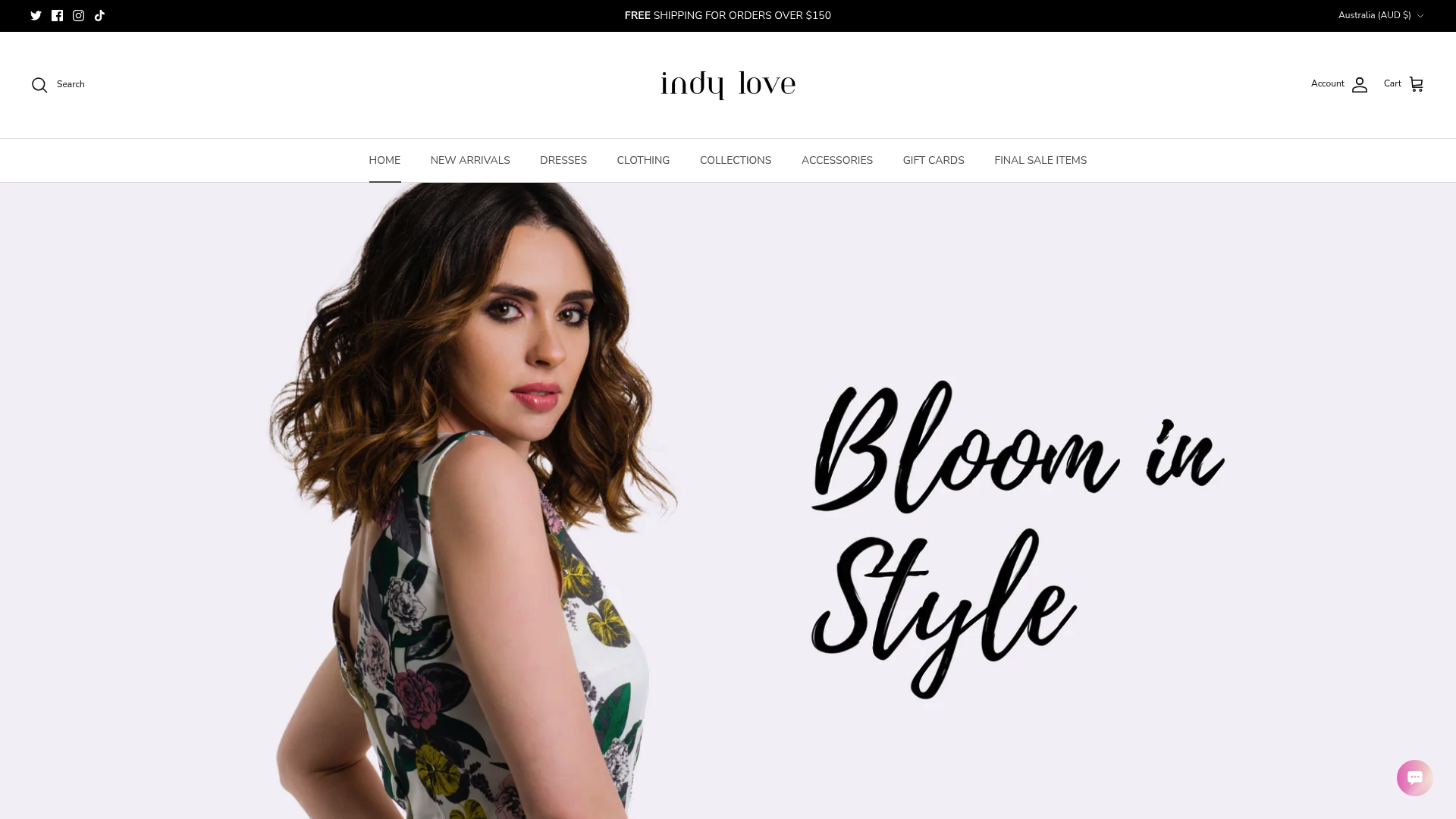
Whether you are after a polished everyday set or something stunning for a special occasion, Indy Love’s edit has you covered. The Anna Knit Set is a perfect example of boutique curation at its best: a considered, wearable piece that feels personal from the moment you put it on. With free shipping on orders over $150 and fast delivery across Australia, experiencing the boutique difference has never been easier. Shop the full women’s fashion collection at Indy Love and find pieces that are genuinely yours.
FAQ
Why does boutique clothing feel more personal than chain store fashion?
Boutique clothing is hand-picked with a specific customer in mind, creating a curated experience that feels tailored rather than generic. Staff also build genuine relationships with customers, remembering preferences and offering personalised recommendations.
What are the main benefits of boutique shopping?
The key benefits include curated selections that reduce choice overload, attentive service that builds over time, unique pieces unavailable in mainstream retail, and clothing designed with quality and longevity in mind.
How do boutiques use the store environment to create connection?
Boutiques use decompression zones, free-flow layouts, ambient scents, and layered lighting to lower stress and create a comfortable, memorable atmosphere. These sensory details make the shopping experience feel personal rather than transactional.
Why do Australian consumers prefer local boutique fashion?
40% of Australian fashion consumers prioritise Australian-made products, and 65% look for a “Made in Australia” label. Local boutiques meet this demand with transparent sourcing, better fit for Australian bodies, and ethical production practices.
Are boutique pieces worth the higher price?
Boutique pieces are designed for longevity, not fast fashion’s short usage cycle. When you factor in cost per wear and the quality of fit, a boutique garment typically delivers better value over time than a cheaper mass-market alternative.