Easy-care fabrics for women: your practical guide
For low-maintenance everyday wear, your best choices are polyester, poly-cotton blends, microfibre, nylon, and engineered knits like Milano and jersey. For Australian wardrobes specifically, poly-blends and structured knits are the standout picks: they handle frequent washing, bounce back from a suitcase, and cope with the heat without demanding an iron.
Quick verdict at a glance:
- Polyester and poly-blends — wrinkle-resistant, fast-drying, colour-fast, and machine-washable every time
- Microfibre — stain-resistant, lightweight, and effortless to clean
- Milano and jersey knits — shape-retaining, crease-forgiving, and polished enough for work
- Nylon — tough, quick-dry, and ideal for activewear or travel
- Lyocell (Tencel®) — the easy-care natural option when finished correctly; soft, breathable, and machine-washable
Table of Contents
- What makes a fabric ‘easy-care’ and what should you look for on the label?
- Which fabrics are the champions of easy care?
- Which fabrics should you avoid if you hate ironing?
- Simple care rules that keep easy-care fabrics performing
- How do you choose easy-care garments for work, travel, and the Australian climate?
- Expert notes from Indy Love Boutique: the truth about easy-care claims
- Key takeaways
- Why I choose easy-care pieces for the Indy Love edit
- Chic and easy: shop easy-care pieces at Indy Love Boutique
- Useful sources for further reading
What makes a fabric ‘easy-care’ and what should you look for on the label?
Easy-care fabrics share five core properties: wrinkle resistance, dimensional stability (they don’t shrink or stretch out of shape), quick-dry performance, stain resistance, and manageable heat sensitivity. A garment that ticks all five genuinely cuts your laundry effort in half.
Wrinkle resistance is the most visible trait. Synthetic fibres like polyester have a built-in “flat memory” that pulls creases out during washing. Natural fibres lack this unless treated with a resin finish, which is why labels sometimes read permanent press or wrinkle-resistant on cotton shirts.
Dimensional stability means the garment washes and dries back to its original shape. Shrinkage and stretching are the two failure modes to watch. Tight knit constructions and synthetic blends resist both far better than loosely woven natural fabrics.
Quick-dry performance matters enormously in Australia’s humid coastal summers. Synthetics dry faster than cotton because they absorb very little moisture. Lyocell sits in the middle: it absorbs more than polyester but releases moisture quickly enough to feel comfortable.
Heat sensitivity is the hidden catch. Polyester and nylon can warp or pill in a hot dryer, so “easy-care” doesn’t mean “throw it in on high.” Always check the care symbol for maximum drying temperature.
On the label, look for:
- Fibre percentage (e.g. 65% polyester / 35% cotton)
- Finish descriptions: permanent press, wrinkle-resistant, easy-care, resin-treated
- Wash and tumble-dry symbols with temperature guidance
- A “machine wash” symbol without a hand-wash or dry-clean-only override
Pro Tip: A 65/35 poly-cotton blend is one of the most reliable easy-care ratios you’ll find. The polyester provides wrinkle resistance and quick-dry; the cotton adds breathability and softness. If a label shows this split, you’re looking at a genuinely low-maintenance garment.
Which fabrics are the champions of easy care?
Synthetics and engineered blends dominate the easy-care category, though a handful of treated naturals now hold their own. Here’s how each one performs in real life.
Polyester
Polyester is the workhorse of wash-and-wear materials. It resists wrinkles, holds colour through repeated washing, and dries fast. The downside is breathability: pure polyester traps heat, which is uncomfortable in a 35°C Sydney summer. Look for lighter weights and open weave constructions if you’re buying polyester for warm-weather wear. Wash on a cool-to-warm cycle (30–40°C) and avoid high-heat drying.
Nylon
Nylon is stronger than polyester for its weight, making it the go-to for activewear, travel pieces, and anything that takes a beating. It’s quick-dry, abrasion-resistant, and holds its shape well. Like polyester, it can feel warm against the skin in hot weather. Machine wash cold, hang or tumble dry low.
Poly-cotton blends
This is the sweet spot for everyday clothing. The polyester component handles wrinkle resistance and quick-dry; the cotton adds softness and breathability. Common blend ratios include polyester/cotton blend, and 55% polyester/45% rayon. Either way, you get a fabric that washes easily, dries quickly, and needs minimal ironing. Great for work shirts, casual dresses, and travel basics.
Viscose and lyocell (Tencel®)
Viscose (rayon) is where easy-care claims get complicated. Standard viscose wrinkles easily, shrinks in hot water, and often requires gentle or hand washing. Lyocell, sold under the brand name Tencel®, is a different story: it’s produced with a closed-loop process, feels silky and breathable, and is typically machine-washable when finished correctly. For Australian summers, lyocell is the natural-feel option that won’t punish you at laundry time. Wash on a gentle cycle at 30°C and hang to dry.
Microfibre
Microfibre’s tightly woven structure prevents liquids from penetrating quickly, making it one of the easiest fabrics to keep clean. Stains tend to sit on the surface rather than soaking in, so a quick blot often does the job. It’s lightweight, packs well, and dries fast. The trade-off is that it can feel slightly synthetic against the skin. Machine wash cold, tumble dry low.
Milano and jersey knits
Knitted constructions like jersey, interlock, and Milano knit wrinkle less and recover shape more readily than most woven fabrics. A Milano knit dress can go from a carry-on bag to a dinner table looking almost pressed. Jersey is softer and more casual; Milano has a structured, polished drape that works for the office. Both are machine-washable and need no ironing. The Lin Knit Midi Dress and Lemonita Knit Dress at Indy Love are good examples of this category done well.
Resin-treated easy-care cotton
Cotton treated with a resin finish gains a “flat memory” similar to synthetics, which is how permanent press shirts stay smooth after washing. The finish does wear down over time, especially with hot washing and high-heat drying. While it lasts, though, you get the breathability of cotton with significantly less ironing. Wash at 30–40°C and avoid the hot dryer to extend the finish’s life.
Linen blends
Pure linen is breathable and quick-drying but notoriously prone to creasing. Linen blended with polyester or viscose softens the crease problem considerably while keeping the airy feel that makes linen so appealing in Australian heat. Look for blends with at least 30–40% synthetic content for a meaningful easy-care improvement.
Pro Tip: For knits, look for a small elastane or Lycra® component (even 2–5%) in the blend. That tiny addition gives the fabric elastic recovery, preventing the bagging at elbows and necklines that pure cotton jerseys develop after a few washes.
| Fabric | Ease of care | Breathability | Durability | Heat sensitivity | Appearance/drape | Sustainability | Typical cost |
|---|---|---|---|---|---|---|---|
| Polyester | Excellent | Low | High | Moderate (avoid high heat) | Varies by weight | Lower (synthetic) | Low |
| Nylon | Excellent | Low-moderate | Very high | Moderate | Smooth, athletic | Lower (synthetic) | Low-moderate |
| Poly-cotton blend | Excellent | Moderate | High | Low-moderate | Casual to smart | Mixed | Low |
| Lyocell (Tencel®) | Good | High | Moderate | Low | Soft, elegant drape | Better (closed-loop) | Moderate |
| Microfibre | Excellent | Low-moderate | High | Moderate | Sleek | Lower (synthetic) | Low-moderate |
| Milano/jersey knit | Excellent | Moderate | Moderate-high | Low | Polished, structured | Mixed | Moderate |
| Resin-treated cotton | Good (while finish lasts) | High | Moderate | Low | Crisp, natural | Moderate | Moderate |
| Linen blend | Good | High | Moderate | Low | Relaxed, textured | Moderate-good | Moderate |
Which fabrics should you avoid if you hate ironing?
The short answer: 100% linen, lightweight viscose, silk, delicate fine wool, and untreated lightweight rayon all demand more care than most busy wardrobes can accommodate.
Red flags to watch for on labels:
- Dry clean only — adds cost and effort every single wear
- Hand wash only — fine occasionally, impractical for everyday pieces
- High viscose percentage (above 70%) with no polyester or lyocell in the blend
- Open weave or very lightweight plain weave constructions (they crease on contact)
- No fibre percentage listed at all (a quality and transparency concern)
- Do not tumble dry on a garment you plan to wear frequently
Practical alternatives: If you love the look of linen, choose a linen-polyester blend rather than 100% linen. If you want the drape of viscose, look for viscose-polyester crepe blends, which hold their shape far better. For wool, Natural Easy Care (NEC) wool fabrics have been developed to be machine-washable and tumble-dryable, so look for washable wool or machine-washable merino on the label.
Simple care rules that keep easy-care fabrics performing
The biggest myth about easy-care fabrics is that they’re indestructible. Correct laundering is what actually preserves performance over time.
The core rules:
Wash at 30–40°C for most easy-care synthetics and blends. Hot water accelerates colour fading, weakens resin finishes on treated cottons, and can distort synthetic fibres. A cool, gentle cycle handles 90% of everyday garments without issue.
Avoid high-heat drying. This is the single most damaging thing you can do to easy-care garments. High dryer heat causes polyester and nylon to distort, degrades resin finishes on treated cottons, and can shrink lyocell. Tumble dry on low or, better still, hang garments damp and let them air dry.
For linen and linen blends, skip the spin cycle and hang the garment damp on a wide hanger, smoothing the seams by hand. Gravity does most of the ironing for you.
Use a gentle, low-alkaline detergent for delicate blends and knits. Harsh detergents strip finishes and break down elastane fibres faster.
Stain basics: Blot immediately rather than rubbing, which pushes stains deeper into the weave. For microfibre and polyester, a damp cloth often lifts surface stains before they set. For lyocell and treated cotton, use a mild spot cleaner and rinse thoroughly before washing.
Pro Tip: For knit dresses and tops, reshape them while damp and dry flat or on a wide hanger. Hanging a heavy wet knit on a narrow hanger stretches the shoulders out of shape permanently.
| Fabric | Wash temp | Tumble dry | Iron/steam | Key watch-out |
|---|---|---|---|---|
| Polyester | 30–40°C | Low heat only | Low heat or steam | High heat causes distortion |
| Nylon | Cold–30°C | Low heat only | Low heat | Melts at high iron temp |
| Poly-cotton blend | 30–40°C | Low-medium | Low heat | Hot wash fades colour |
| Lyocell (Tencel®) | 30°C gentle | Hang dry preferred | Low steam | Shrinks in hot water |
| Microfibre | Cold–30°C | Low heat | Low heat | Avoid fabric softener |
| Milano/jersey knit | 30°C gentle | Hang dry or flat dry | Steam only | Reshape while damp |
| Resin-treated cotton | 30–40°C | Low heat | Low heat | Hot wash removes finish |
| Linen blend | 30–40°C | Hang damp | Low steam | Skip spin for fewer creases |
How do you choose easy-care garments for work, travel, and the Australian climate?
Pick your fibre based on use case, not the marketing buzzword on the swing tag.
Before you buy, check:
- Fibre percentage on the care label (synthetics above 50% generally signal easy-care)
- Presence of elastane or Lycra® (even a small amount improves shape retention in knits)
- Weave or knit type: twill, gabardine, and tight poplins resist creasing better than open plain weaves
- Care symbols: a machine-wash symbol with no hand-wash or dry-clean override is what you want
- Labels reading washable wool, resin finish, or permanent press for natural-fibre options
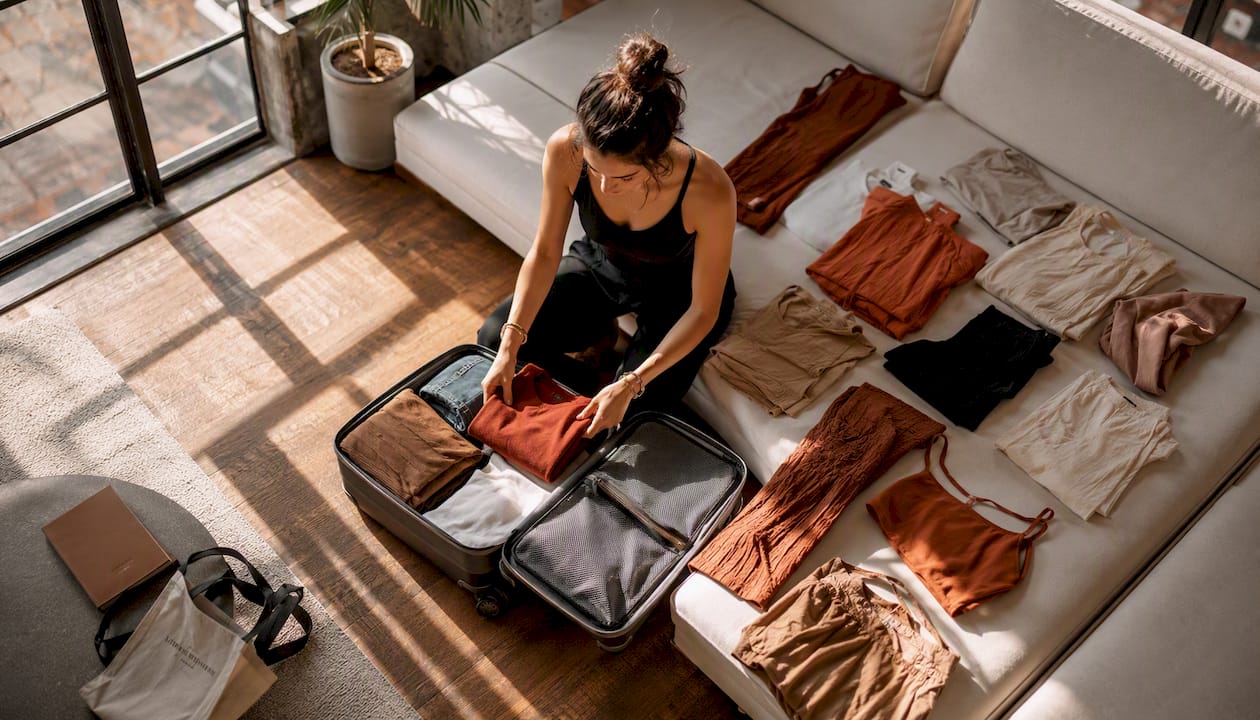
For travel: Prioritise crease-resistant weights (mid-weight knits and poly-blends travel best), darker or tonal colours that hide transit creases, and quick-dry fabrics you can rinse in a hotel sink. A Milano knit dress packs flat and arrives looking polished.
For workwear: Look for structured drape without obvious synthetic sheen. Poly-viscose crepe and Milano knit both deliver a professional finish. Avoid fabrics with high sheen (cheap polyester) or very open weaves that crease at a desk.
For the Australian climate: Breathability and quick-dry are in tension. Pure synthetics dry fast but trap heat. The best compromise for hot days is a lyocell blend or a lightweight linen-poly blend: you get airflow without spending the afternoon ironing. Check Indy Love’s summer fashion guide for climate-specific styling ideas.
Three questions to ask before you buy:
- What is the fibre percentage, and does it include a synthetic component above 50%?
- Does the care label show a machine-wash symbol without a dry-clean or hand-wash restriction?
- Is there elastane or a knit construction that will recover its shape after washing?
Expert notes from Indy Love Boutique: the truth about easy-care claims
Easy-care labels help, but garment construction and finish — not the fibre name alone — determine how a piece actually performs over time. This is the gap between what a swing tag promises and what ends up in your ironing pile.
The most common mistakes shoppers make:
- Ignoring care symbols in favour of the fibre name. A 100% polyester blouse with a dry-clean-only symbol is not an easy-care garment, regardless of the fibre.
- Over-using hot dryers. High heat is the fastest way to destroy resin finishes on treated cottons and warp synthetic fibres. Cool or low heat, every time.
- Trusting marketing terms without checking fibre detail. “Easy-care cotton” means nothing without a resin finish or a synthetic blend to back it up. Look for the actual percentage and finish description.
- Buying open-weave or very lightweight plain-weave fabrics expecting them to behave like structured knits. Construction matters as much as fibre content.
Resin finishes on treated cottons do wear out, typically faster when washed hot or dried on high heat. Once the finish degrades, the garment behaves like untreated cotton. You can extend its life significantly by washing cool and air drying.
Pro Tip: Quality construction signals that preserve easy-care performance include flat-locked seams (they don’t add bulk or twist), consistent stitch density, and a fabric weight that feels substantial without being stiff. Lightweight fabrics with loose construction crease and distort regardless of fibre content.
Key takeaways
Poly-blends and engineered knits are the most reliable easy-care fabrics for Australian women’s wardrobes, combining wrinkle resistance, quick-dry performance, and machine-washability in everyday wear.
| Point | Details |
|---|---|
| Top easy-care fibres | Polyester, poly-cotton blends, microfibre, nylon, and lyocell cover most everyday needs. |
| Knits beat most wovens | Jersey and Milano knit recover shape after washing and rarely need ironing. |
| Care habits matter most | Cool wash and low-heat drying preserve easy-care finishes far longer than fibre choice alone. |
| Label-reading is non-negotiable | Check fibre percentage, care symbols, and finish descriptions before buying. |
| Indy Love Boutique | Stocks curated knit and poly-blend pieces selected for washability and shape retention across Australian conditions. |
Why I choose easy-care pieces for the Indy Love edit
When I’m selecting pieces for Indy Love, easy-care performance is never an afterthought. Australian women wash their clothes frequently, travel with them, and wear them in serious heat. A dress that looks stunning on the rack but needs dry cleaning after every wear simply doesn’t belong in a wardrobe built for real life.
The fabrics I keep coming back to are structured knits, poly-viscose crepes, and lyocell blends: they hold their shape, wash beautifully, and still have the kind of drape that makes a piece look considered rather than practical. If you ever have questions about the fabric content of a specific piece, reach out directly through the site. Getting the fabric right is the whole point.
Chic and easy: shop easy-care pieces at Indy Love Boutique
Curated easy-care style, delivered fast across Australia. At Indy Love, every piece in the collection is chosen with real wearability in mind: you’ll find knit dresses, poly-blend tops, and lyocell styles that wash, dry, and wear beautifully without drama. Product descriptions include fabric content so you can check fibre percentages before you buy.
Free shipping on orders over $150, with fast delivery across Australia. Browse the full collection and filter by occasion, whether you need a travel-ready midi, a work-week knit, or a warm-weather dress that handles the washing machine as well as it handles a 30°C afternoon. Head to Indy Love and find your next easy-care favourite today.
Useful sources for further reading
These sources are worth bookmarking if you want to go deeper on fabric science, care techniques, or easy-care textile innovation. For specific product purchases, always rely on the garment’s care label and the fabric details listed on Indy Love product pages.
- EC65-445 Wash and Wear Fabrics — UNL Extension: A foundational reference on the three categories of wash-and-wear textiles, including historic blend ratios and resin-finish chemistry (see wash and wear fabric guide).
- Natural Easy Care fabrics — Science Learning Hub: Explains the development of machine-washable, tumble-dryable wool fabrics and what NEC certification means.
- How to spot quality women’s clothing — Indy Love Boutique: Indy Love’s own guide to reading construction cues and care labels when shopping online.
Recommended
- How to spot quality women’s clothing: a practical guide – Indy Love Boutique
- Fabric care labels and online shopping: what you need to know – Indy Love Boutique
- Why affordable clothing differs from cheap: a clear guide – Indy Love Boutique
- Style outfits that move with you: looks for busy women – Indy Love Boutique