
The role of pockets in women's clothing explained
Pockets in women’s clothing are functional design features that allow hands-free carrying of essentials like phones, keys, and wallets, while also serving as symbols of autonomy and equality. The role of pockets in women’s clothing goes far beyond convenience. These small fabric compartments carry a loaded history of social exclusion, feminist resistance, and consumer frustration that shapes how garments are designed and sold today. Women have long demanded genuine, usable pockets as a baseline feature, and the fashion industry is finally starting to listen.
How did pockets evolve in women’s fashion history?
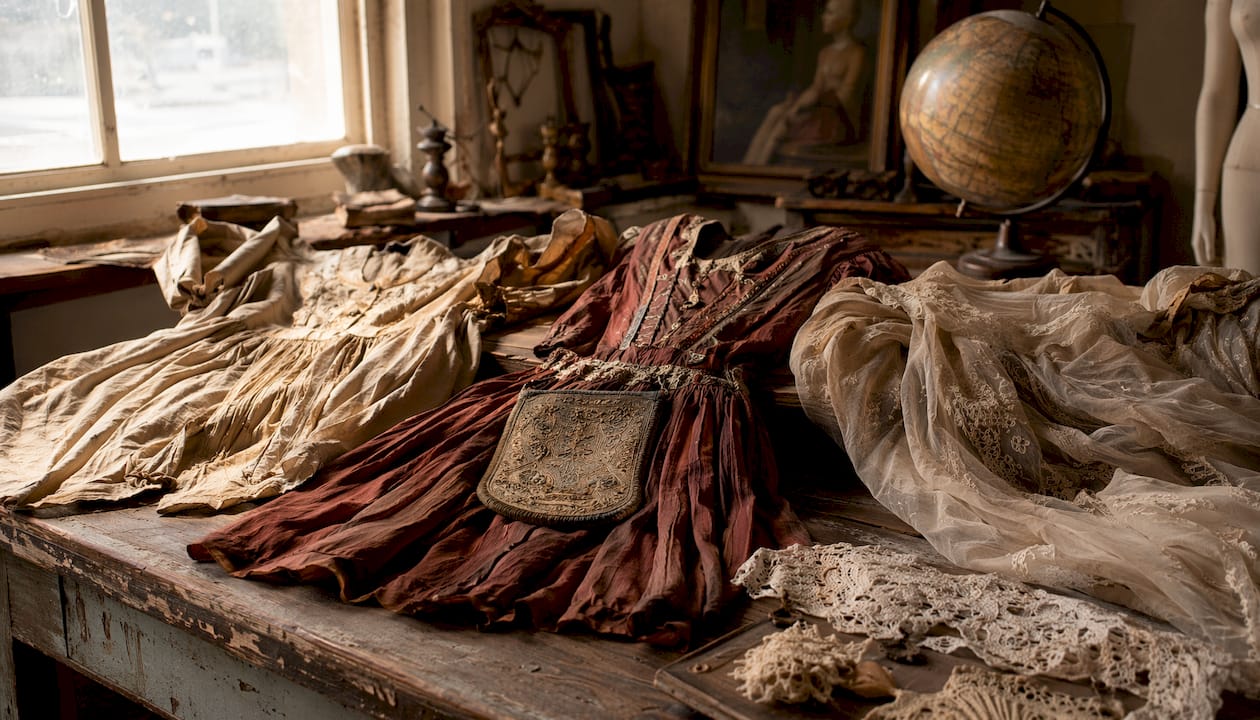
Women’s pockets have a surprisingly rich and political past. In the 17th and 18th centuries, women wore separate tie-on pockets beneath their skirts, accessed through slits in the outer fabric. These were spacious, practical, and entirely hidden from view. They held everything from sewing tools to personal letters.
The shift came in the late 18th century, when fashion moved toward slender, body-skimming silhouettes. Bulky pockets disrupted the line of a gown, so they were removed. That decision was not purely aesthetic. It reflected a broader cultural attitude that women’s clothing should prioritise appearance over utility.
By the 19th century, the handbag and reticule had replaced the pocket entirely. Women carried small decorative bags instead of storing items on their person. This change had a practical consequence: belongings became easier to monitor, restricting women’s privacy and mobility in ways that men never experienced.
Key moments in the disappearance of women’s pockets:
- 17th century: Tie-on pockets worn under skirts provided generous storage.
- Late 18th century: Slim silhouettes made built-in pockets unfashionable.
- 19th century: Handbags replaced pockets as the accepted way for women to carry items.
- Early 20th century: Suffragette suits reintroduced visible pockets as political symbols.
- Mid-20th century onwards: Decorative and faux pockets became standard in mass-market women’s wear.
This history explains why pocket functionality in fashion remains a contested issue today. The absence of pockets was never accidental. It was a design choice shaped by gender norms.
Why do many women’s clothes still lack real pockets?
The fashion industry prioritises slim silhouettes and cost-saving, and real pockets disrupt both. Adding a functional pocket requires more fabric, additional pattern pieces, and skilled tailoring to prevent the pocket from pulling or distorting the garment’s drape. Faux pockets, by contrast, cost almost nothing to produce and maintain the intended silhouette.
Fast fashion compounds the problem. When mass-market labels copy runway looks, they replicate the aesthetic without the construction. A runway dress might feature a pocket as a styling detail rather than a working feature. The copy lands in stores with a sewn-shut slit that looks like a pocket but holds nothing.
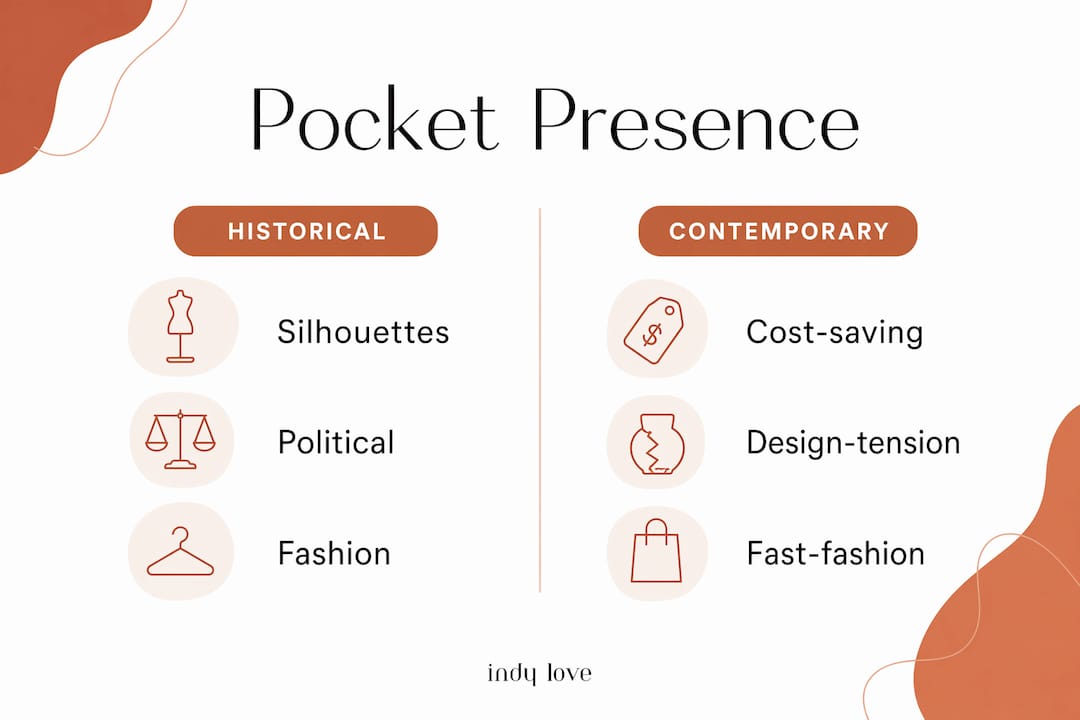
There is also a design tension that even high-end labels acknowledge. Adding functional pockets alters the garment’s drape and fit, which is why designers sometimes omit them to preserve a precise silhouette. That trade-off makes sense on a runway. It makes far less sense in everyday women’s attire, where carrying a phone without a bag is a basic need.
Pro Tip: When shopping online, search the product description for the word “pockets” rather than relying on garment photos. Decorative pocket stitching and real pockets look identical in flat-lay images.
Context matters too. In some industries, pockets are prohibited for safety compliance. Food processing uniforms, for example, ban pockets to prevent contamination. That is a legitimate design constraint. But applying the same logic to everyday dresses and trousers is not a safety decision. It is a cost decision dressed up as aesthetics.
What practical benefits do pockets bring to daily and professional wear?
Pockets enhance convenience and autonomy by enabling hands-free carrying without a bag. That benefit sounds simple, but its impact on daily life is significant. A woman who can slip her phone into a dress pocket while chasing a toddler, attending a meeting, or walking between appointments does not need to manage a bag at the same time.
In professional women’s workwear, pockets serve a technical function beyond convenience. Modern multi-pocket workwear uses reinforced stitching at pressure points, bar-tacking at stress seams, and compartments sized for specific devices. Professional apparel in Australia is increasingly designed to comply with AS/NZS 4399:2017 for UV protection, and pockets are integrated as part of that technical construction rather than added as an afterthought.
| Pocket type | Common use | Key feature |
|---|---|---|
| Side seam pocket | Casual dresses, skirts | Hidden in seam, minimal silhouette impact |
| Patch pocket | Workwear, utility trousers | Visible, high capacity, reinforced stitching |
| Welt pocket | Tailored jackets, blazers | Slim profile, suits formal wear |
| Cargo pocket | Activewear, outdoor wear | Multiple compartments, secure closure |
| Phone-specific pocket | Activewear, running gear | Sized for devices, often with zip |
Pockets also improve safety in professional contexts. A nurse who can keep a pen and notepad in a pocket rather than a bag reduces cross-contamination risk. A tradeswoman who stores a measuring tape in a reinforced hip pocket keeps her hands free for the task. The benefits of pockets in clothing scale from the everyday to the genuinely critical depending on the wearer’s work.
Understanding contemporary workwear style means recognising that pockets are not decorative additions. They are functional components that affect how a garment performs across a full working day.
How do pockets reflect feminist movements and social equality?
Pockets in women’s clothing have long been a symbol of autonomy. Men’s pockets historically provided privacy and mobility that women were actively denied. That disparity was not accidental. It reflected a social order in which women’s independence was managed, in part, through the clothes they wore.
The early 20th century suffragette movement used clothing as a political tool. Suffragette suits with multiple visible pockets challenged gender utility norms directly. Wearing a jacket with working pockets was a statement: women had things to carry, places to go, and no intention of being decorative. The pocket was a small but visible act of resistance.
“Pockets are about being considered. They reflect whether clothes are designed to work for women’s lives, or simply to look good on them. When a garment has no pockets, it sends a message that the wearer’s practical needs were not part of the design conversation.” — Georgia Wall, campaigner, Region Illawarra
Contemporary campaigns around pocket equality carry that same energy. The argument is not just about convenience. It is about whether the fashion industry considers women’s real lives when designing their clothes. A dress with genuine pocket functionality signals that the designer thought about the wearer as a person with things to do, not just a body to dress. That distinction matters more than it might seem.
The feminist movement used clothing to challenge gender norms across generations. Pockets remain one of the most tangible, everyday expressions of that challenge. Every time you reach into a dress pocket and find it real, you are benefiting from decades of women demanding to be taken seriously.
Key takeaways
Pockets in women’s clothing are both a practical necessity and a symbol of equality, and their presence or absence reflects deliberate design choices with real consequences for wearers.
| Point | Details |
|---|---|
| Historical removal was deliberate | Pockets disappeared from women’s wear as silhouettes slimmed and gender norms tightened in the 19th century. |
| Cost drives fake pockets | Faux pockets save fabric and labour, but they fail the wearer by prioritising aesthetics over function. |
| Professional wear sets the standard | Workwear with reinforced, multi-pocket designs shows that functionality and style are not mutually exclusive. |
| Pockets carry political meaning | From suffragette suits to modern campaigns, pockets signal whether fashion considers women’s real lives. |
| Consumer demand is changing design | Women increasingly seek garments with genuine pockets as a non-negotiable feature in casual and professional wear. |
Why I think the pocket debate is more serious than fashion admits
I have spent years watching the pocket conversation get dismissed as a minor gripe. It is not. The absence of pockets in women’s clothing is a design decision that compounds daily. You reach for your phone at a café and realise you have nowhere to put it. You attend a work event and spend the evening clutching a bag because your dress has no pockets. These are not dramatic inconveniences, but they add up to a persistent message: your practical needs were not considered.
What strikes me most is how the industry frames the trade-off. Designers talk about silhouette and drape as though utility is the enemy of beauty. That framing is false. Tailored workwear proves it every day. A well-constructed patch pocket on a blazer does not ruin the garment. It completes it. The problem is not that pockets are incompatible with style. The problem is that adding them costs more and requires more skill, and the industry has historically decided that women’s convenience is not worth that investment.
Consumer demand is shifting that calculation. Women are actively seeking out garments with real pockets and rejecting those without. Brands that respond to that demand are not making a feminist statement. They are making a business decision. But the effect is the same: clothes that actually work for the women wearing them. That is the standard every garment should meet, and it is the standard worth holding the industry to.
— Helen
Stylish dresses with real pockets, curated by Indy Love
Finding chic women’s clothing with genuine, working pockets should not feel like a treasure hunt. Indy Love curates a range of dresses and separates designed for real life, where style and pocket functionality sit side by side.
The Alice Shirt Dress is a standout pick for women who want a polished look without sacrificing practicality. For something with a relaxed, versatile feel, the Passion Dress delivers on both style and storage. Indy Love ships fast across Australia, with free shipping on orders over $150. Browse the full women’s fashion collection and find pieces that are as functional as they are beautiful.
FAQ
Why do women’s clothes often have fake pockets?
Fake pockets save fabric and tailoring costs while preserving the garment’s intended silhouette. Real pockets require additional pattern pieces and reinforced stitching, which increases production complexity.
Are pockets a feminist issue?
Pockets have been tied to women’s autonomy since the suffragette era, when visible pockets on suits were used as political statements. Their absence in women’s clothing reflects a design culture that has historically prioritised appearance over women’s practical needs.
What pocket styles work best in dresses?
Side seam pockets are the most flattering in dresses because they sit hidden within the seam and do not alter the garment’s drape. Patch pockets add a casual, utility feel and work well on shirt dresses and midi styles.
Do pockets affect how a garment fits?
Adding functional pockets does alter a garment’s drape and fit, particularly in lightweight fabrics. That is why many designers omit them. Well-constructed pockets with interfacing and correct placement minimise this effect significantly.
Are pockets ever intentionally left out for safety reasons?
In some industries, pockets are prohibited for safety compliance. Food processing uniforms ban pockets to prevent contamination. Outside regulated industries, omitting pockets is a design and cost choice, not a safety requirement.
Recommended
- What does fashion on a budget mean for Australian women? – Indy Love Boutique
- How to spot quality women’s clothing: a practical guide – Indy Love Boutique
- Why affordable clothing differs from cheap: a clear guide – Indy Love Boutique
- Types of women’s fashion aesthetics: 2026 guide – Indy Love Boutique