Fashion micro trends vs macro trends: your shopping guide
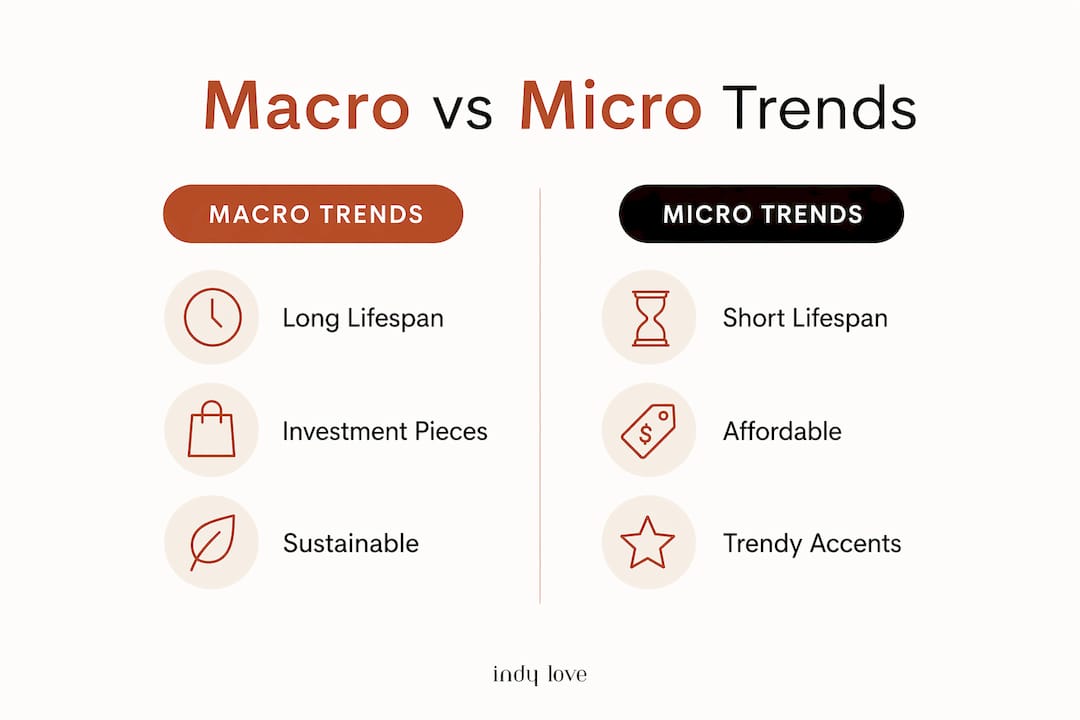
Macro trends are long-term cultural shifts that span multiple seasons to years; micro trends are short-lived viral fads that can peak and fade within weeks. The shopping rule is simple: invest in macro, accent with micro.
Here’s what that looks like in practice:
- Macro (invest): Natural fibres, linen, relaxed tailoring, capsule wardrobe thinking — pieces you’ll wear for years
- Micro (accent): Pearl headbands, barrel pants, novelty prints — fun, affordable, low-commitment
- Budget split: Follow the 70/30 rule — 70% timeless basics, 30% expressive trend pieces
- Australian context: Google’s fashion search data shows concurrent Australian interest in both sustainable fashion and short-lived novelty items, confirming this dual approach is exactly how local shoppers already think
Table of Contents
- What are macro trends, and why do they shape your wardrobe?
- What are micro trends, and how quickly do they come and go?
- How do trends affect your wardrobe, budget, and the planet?
- How to shop trends: a checklist for Australian online shoppers
- Outfit ideas: pairing macro foundations with micro accents
- Your verdict and one-season action plan
- How trends shape the true cost of fashion
- Key takeaways
- Why the macro/micro balance is the smartest way to shop right now
- Chic basics and trend accents, curated at Indy Love
What are macro trends, and why do they shape your wardrobe?
Macro trends are long-term cultural shifts that typically span multiple seasons to years, influencing values, consumer behaviour, and the overall direction of fashion. They don’t arrive with a single viral post — they build gradually, driven by broader societal changes like environmental awareness, shifting work habits, and evolving ideas about comfort and identity.
In Australia, the clearest current macro trends are natural fibres and linen, the rise of capsule wardrobe thinking, and the ongoing casualisation of everyday dressing. Google’s Australian fashion search trends confirm rising searches for linen, sustainable fashion, and capsule wardrobes — all signals of macro-level momentum, not passing fads.
Macro trend forecasting typically operates 12–24 months ahead of retail. When a trend has reached that planning horizon, it’s already embedded in fabric sourcing, collection strategy, and retail buying — meaning the pieces you invest in now will still feel relevant well into next season and beyond.
Because macro trends move slowly, they’re the right place to spend more. A well-cut linen dress or a relaxed-fit trouser in a neutral tone earns its cost-per-wear many times over. These are the pieces that form your wardrobe’s foundation — and the ones worth choosing carefully.
What are micro trends, and how quickly do they come and go?
Micro trends are short-term aesthetic moments, often lasting just one or two seasons, driven by social media virality, influencer moments, and capsule drops. They can emerge from a single TikTok video, a celebrity street-style shot, or a limited-edition collaboration — and they can fade just as fast.
Recent Australian examples include pearl headbands, barrel-leg pants, and bold novelty tops. Each had a clear viral origin, a rapid peak, and a sharp decline once saturation set in. Micro trends are also more regionally variable — what dominates Sydney street style may barely register in Adelaide.
Signs a micro trend is already peaking:
- Every fast-fashion retailer has stocked it
- You’re seeing it in discount bins or end-of-season sales
- Search volume has plateaued or dropped
- Influencers have moved on to the “next thing”
- The trend has appeared in mainstream department stores
Micro trends give your wardrobe personality and cultural currency. The trick is keeping your spend proportionate. Online shopping accelerates how quickly micro trends spread among younger shoppers, which means by the time a trend feels ubiquitous, you may already be near its exit point.
Pro Tip: Search the trend name on Pinterest. If the results look identical across hundreds of pins, saturation has arrived — shop it only if the price is low and the piece is versatile enough to outlast the moment.
How do trends affect your wardrobe, budget, and the planet?
| Macro trends | Micro trends | |
|---|---|---|
| Lifespan | Multiple seasons to years | Weeks to a few months |
| Investment risk | Low — pieces retain relevance | Higher — risk of rapid markdown |
| Sustainability impact | Lower waste, higher cost-per-wear value | Higher waste potential if over-purchased |
| Best use | Wardrobe foundations, key investment pieces | Accents, accessories, affordable one-offs |
| Resale value | Stronger — classic silhouettes hold value | Weaker — trend-specific pieces date quickly |
Micro trends create overproduction risk for brands and markdown exposure for shoppers. When you buy a micro-trend piece at full price and it’s discounted 60% two months later, that’s the cost of mistiming. Macro-led purchases rarely suffer the same fate.
Sustainability tips for Australian online shoppers:
- Choose natural fibres (linen, cotton, wool) — they last longer and biodegrade
- Ask: “Will I wear this at least 30 times?” before buying
- Explore ethical online shopping options and pre-loved platforms for micro-trend pieces
- Repair and restyle before replacing
- Resell or donate trend pieces quickly — they hold more value early
Australia’s e-commerce fashion revenue reached $11.6 billion in 2025, with return rates are estimated to be relatively high. Buying with intention — rather than impulse — directly reduces your contribution to that return and waste cycle.
How to shop trends: a checklist for Australian online shoppers
Before you buy any trend piece, run through this list:
- Is it macro or micro? If it’s macro, spend more. If it’s micro, spend less.
- Does it work with three things you already own? If not, skip it.
- What’s the fabric? Natural fibres age better and feel better on Australian skin in warm weather.
- What’s the cost-per-wear? Divide the price by the number of times you’ll realistically wear it in a year.
- Is it already on sale everywhere? That’s a saturation signal — the trend is exiting.
- Check the returns policy before you order. Australian online shopping mistakes often come down to skipping this step.
Budget guidance: The 70/30 rule is your friend. Allocate roughly 70% of your clothing budget to macro-aligned basics — neutral dresses, quality knitwear, well-cut trousers. Reserve 30% for expressive micro-trend pieces like accessories, printed tops, or a statement bag.
Shipping and returns checklist for Australian buyers:
- Check estimated delivery windows — standard post can take 5–10 business days to regional areas
- Confirm whether returns are free or at your cost before ordering
- Size up if you’re between sizes on trend-driven cuts (barrel pants, for example, run small in the waist)
- Order early in the season to avoid missing stock on fast-moving micro pieces
Pro Tip: Fashion on a budget doesn’t mean buying cheap — it means buying smart. One well-chosen macro piece at $120 beats three micro-trend impulse buys at $40 each, every time.
Outfit ideas: pairing macro foundations with micro accents
The best outfits right now combine a solid macro foundation with one chic micro accent. Here are five quick recipes:
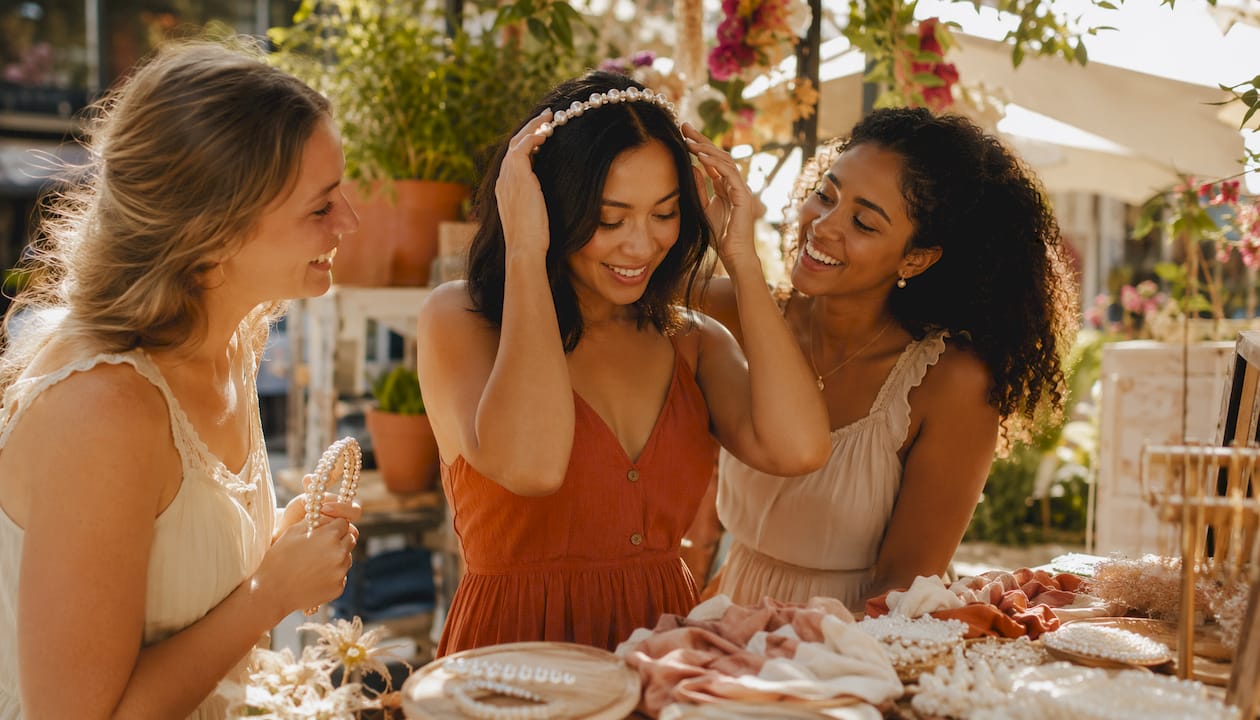
- Linen midi dress + pearl headband: The dress is your macro investment (natural fibre, timeless silhouette); the headband is your micro moment. Wear to brunch, a work event, or a weekend market.
- Neutral wide-leg trousers + novelty printed top: The trousers carry the outfit season after season; the top does the trend work. Style with white sneakers or block-heeled mules.
- Classic white shirt + barrel-leg jeans: Both pieces lean macro right now, but the barrel cut adds a current-season edge. Add a simple bangle to finish.
- Knit midi skirt + fitted turtleneck: A macro pairing that works across autumn and winter. Swap in a micro-trend bag or earrings to update it without buying new clothes.
- Relaxed blazer + simple slip dress: The blazer is your macro anchor; layer a delicate chain or pearl accessory for the micro accent.
Before you buy for any of these recipes: Check your wardrobe first. You likely already own the macro foundation — the gap is usually just the accent piece.
Pro Tip: Tone down a loud micro trend by keeping everything else in the outfit neutral. One statement piece reads as intentional; two reads as costume.
Your verdict and one-season action plan
Macro trends are where your money goes; micro trends are where your personality shows. Prioritise quality foundations, then layer in affordable accents that reflect the current moment without locking you into a look that dates in three months.
Your action plan for this season:
- Audit your wardrobe and identify one macro gap (a quality linen piece, a well-cut neutral trouser, a versatile knit).
- Buy that one macro piece with intention — fabric, fit, and versatility first.
- Choose one or two micro accents at an affordable price point (a pearl headband, a printed top, a statement earring).
- Edit out anything you haven’t worn in two seasons — resell or donate before it loses value.
- Bookmark the 70/30 rule and apply it to every future purchase decision.
How trends shape the true cost of fashion
Longevity dressing — buying fewer, higher-quality pieces and editing rather than continuously adding — is the practical answer to both the financial and environmental cost of trend chasing. The average garment today is worn just seven times before being discarded. Micro trends, bought impulsively and worn briefly, are the primary driver of that statistic.
Macro-aligned purchases flip that equation. A quality linen dress worn across two summers, styled three different ways, has a cost-per-wear that makes it genuinely affordable. The impact of trends on fashion spending is clearest when you compare the two approaches side by side: macro pieces appreciate in usefulness over time, while micro pieces depreciate almost immediately after purchase.
Key takeaways
Macro trends are long-term investments; micro trends are short-term accents — the 70/30 rule keeps your wardrobe stylish, affordable, and sustainable.
| Point | Details |
|---|---|
| Macro vs micro lifespan | Macro trends span multiple seasons to years; micro trends last weeks to a few months. |
| The 70/30 budget rule | Spend 70% of your clothing budget on timeless basics, 30% on expressive trend pieces. |
| Saturation signals | When fast fashion has stocked a trend and prices are dropping, the micro moment is exiting. |
| Sustainability wins | Most garments are only worn a few times — macro-led buying dramatically improves that outcome. |
| Shop at Indy Love | Indy Love curates macro-friendly basics and chic micro accents with fast shipping across Australia. |
Why the macro/micro balance is the smartest way to shop right now
The conventional wisdom says you should either chase every trend or ignore them all. Neither works. Ignoring trends entirely means your wardrobe feels dated; chasing every micro moment means you’re constantly spending and constantly disappointed when pieces feel irrelevant by next season.
The more interesting truth is that micro trends are most valuable when they’re cheap and fast. A $25 pearl headband that you wear for one season and pass on? That’s a great use of a micro trend. A $180 barrel-leg leather skirt bought at peak saturation? That’s a micro trend punching above its weight class.
Australian shoppers aged 25–44 are the most active online fashion segment, and they’re already blending aspiration with practicality. The Australia Post eCommerce Report confirms this cohort favours fast delivery and clear value alongside versatile pieces. That’s the macro/micro balance in action — not a theory, but how the most engaged Australian shoppers are already buying.
My honest recommendation: build your wardrobe around three to five macro pieces per season, then play with micro accents at a price point you’d spend on a good lunch. Style should be fun, not financially stressful.
Chic basics and trend accents, curated at Indy Love
You’ve done the thinking — now the fun part. Indy Love is your go-to for both sides of the equation: macro-friendly wardrobe foundations and affordable micro accents, all curated for Australian women who want style without the guesswork of scrolling through thousands of options.
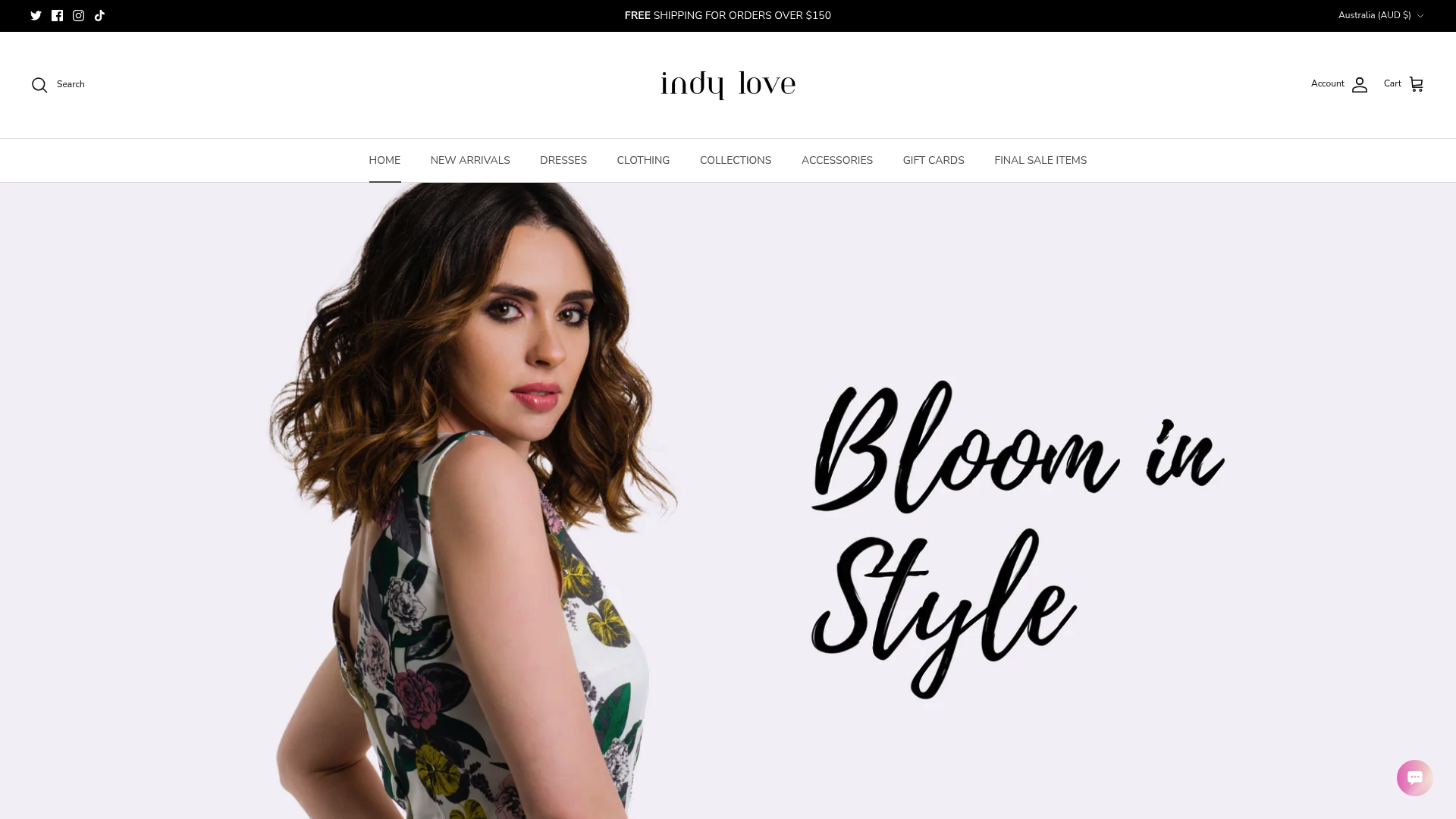
The Alice Shirt Dress is exactly the kind of macro investment worth making — a versatile, neutral-toned piece that works across seasons and occasions. For your micro accent, the Willow Pearl Headband adds a chic, on-trend finish to almost any outfit without the commitment of a full trend purchase.
Free shipping on orders over $150, fast delivery across Australia, and a carefully edited range that does the trend analysis for you. Shop the full collection and find your next favourite piece today.