How proportions in dressing create balanced, flattering outfits
Proportions control everything your outfit communicates — height, balance, and where the eye lands first. Get them right and even a simple outfit looks considered. Three rules deliver the fastest results: think in thirds rather than halves (the rule of thirds), aim for uneven divisions like 60/40 or 70/30 instead of a straight 50/50 split, and always add a deliberate third piece to create visual interest. Before you leave the house, run a quick micro-check: where does the hemline sit, where is the waistline defined, and have you added that third layer or accessory?
- Rule of thirds: divide your outfit into three uneven sections rather than two equal halves — it reads as more dynamic every time.
- 60/40 or 70/30 mindset: let one part of the outfit dominate visually; a perfect 50/50 split tends to flatten a silhouette.
- Third-piece rule: a jacket, scarf, belt, or layer adds a third visual element that breaks up the body in a flattering, intentional way.
The Washington Post’s coverage of fashion formulas confirms these numerical shortcuts are widely used because they reliably create visual interest when applied with a little thought.
Key takeaways
Proportions in dressing work because uneven divisions — particularly 60/40 and 70/30 splits — create visual movement that a flat 50/50 split cannot.
| Point | Details |
|---|---|
| Uneven divisions flatter | Aim for 60/40 or 70/30 splits rather than equal halves to create a dynamic, balanced silhouette. |
| Measure three things | Find your torso-to-leg ratio, shoulder-to-hip width, and natural waist position before choosing hemlines. |
| Third piece creates thirds | Adding a belt, jacket, or scarf breaks the outfit into three visual zones and applies the rule of thirds instantly. |
| Fabric and tailoring lock it in | Structured fabrics define; drapey fabrics minimise — a small hem or waist alteration often delivers the biggest proportion payoff. |
| Indy Love wrap and shirt styles | The Alice Shirt Dress and Mary Wrap Dress are cut to define the waist and create a natural 1/3–2/3 visual division out of the box. |
Table of Contents
- What do proportions actually mean in clothing?
- How to measure your proportions quickly at home
- Core proportion rules and when to use each one
- Styling strategies for the most common proportion goals
- Outfit formulas you can copy right now
- Proportion mistakes that are easy to fix
- How to shop and tailor for your proportions
- Why proportion rules work: the research behind them
- The thing most proportion guides get wrong
- Proportion-friendly pieces worth trying
- Sources
What do proportions actually mean in clothing?
In apparel, proportion refers to the comparative relationship between parts — the size of your top relative to your bottom, the length of your torso against your legs, the width of a sleeve against the body of a jacket. It is a design principle that integrates line, texture, colour, and silhouette into a coherent whole.
Stylists typically split proportion into two axes.
Vertical proportions describe how the body is divided from head to hem: where your torso ends and your legs begin, how long your neck appears, where a jacket hem cuts across your body. A long torso paired with shorter legs calls for different hemline choices than the reverse.
Horizontal proportions describe width relationships: how your shoulder width compares to your hip width, how a voluminous sleeve balances against a fitted body, how a wide-leg trouser relates to a cropped top. These are the divisions that determine whether an outfit looks top-heavy, bottom-heavy, or balanced.
Here is the shorthand you will see throughout styling advice:
- Rule of thirds: divide the visual field into three unequal parts; one section should dominate.
- 60/40 and 70/30: the dominant section takes roughly 60–70% of the visual space; the secondary section takes 30–40%.
- Third piece: a third garment or accessory (belt, blazer, scarf) that breaks the outfit into three distinct visual zones.
- 3-3-3: three tops, three bottoms, three shoes — a capsule concept that supports proportion decisions by keeping colour and style cohesive.
How to measure your proportions quickly at home
You do not need a stylist or a fitting room. A tape measure and a full-length mirror are enough.
- Find your torso-to-leg ratio. Stand straight and measure from the top of your shoulder to your natural waist, then from your natural waist to the floor. If your torso measurement is more than half your total height, you have a longer torso. If your legs are the longer section, you have a shorter torso. This single number tells you where to place waistbands and where hemlines should fall.
- Check your shoulder width against your hip width. Measure across the fullest part of your shoulders and across the widest part of your hips. If they are within 2–3 cm of each other, you have a balanced frame. A wider shoulder reading means you can add volume below; a wider hip reading means you can add structure above.
- Mark where your natural waist falls. Bend sideways — the crease that forms is your natural waist. Note whether it sits high (closer to your ribs) or low (closer to your hips). Garments that hit at or just above this point will always define your waist; garments that hit below it will obscure it.
Pro Tip: If a garment gaps at the bust, pulls across the hips, or makes you look shorter than you feel, that is almost always a proportion mismatch rather than a size problem. Note where the tension or excess fabric sits — it tells you exactly which measurement to adjust.
Style guides for petite frames consistently recommend high-waisted bottoms and cropped outerwear as reliable proportion tools for creating the visual impression of height — the same logic applies in reverse for taller frames wanting to ground a look.
Core proportion rules and when to use each one
Rule of thirds and the third-piece rule
The rule of thirds borrows from visual design: an image divided into three unequal parts reads as more dynamic than one split in two. Applied to dressing, it means your outfit should have three distinct visual zones — not two equal blocks of colour or length. A cropped jacket over a midi skirt with a visible belt is a classic thirds application: short top third, defined waist, long lower two-thirds.
The third-piece rule, widely covered in mainstream media as an accessible styling shortcut, works on the same logic. Adding a blazer, scarf, or belt to a two-piece outfit creates that third zone automatically.
60/40 and 70/30 ratios
Research published in the Family and Consumer Sciences Research Journal, drawing on a 50-year analysis of Vogue, found that pleasing apparel proportions cluster around uneven divisions — vertical splits of 35/65 and 40/60 appeared frequently, while exact golden-section proportions are uncommon in everyday dress. The practical takeaway: let one section of your outfit dominate. A 50/50 split — say, a top and trouser of equal visual weight and length — tends to feel static because neither half leads the eye.
| Ratio | What it looks like | Best for |
|---|---|---|
| 50/50 | Equal top and bottom length or volume | Rarely flattering; use only to create deliberate symmetry |
| 60/40 | Slightly longer or fuller bottom half | Everyday balance; casual and workwear |
| 70/30 | Dominant lower half with a cropped or fitted top | Evening looks, maxi skirts, wide-leg trousers |
| 1/3–2/3 | Short top, long bottom (or vice versa) | Classic thirds application; most universally flattering |
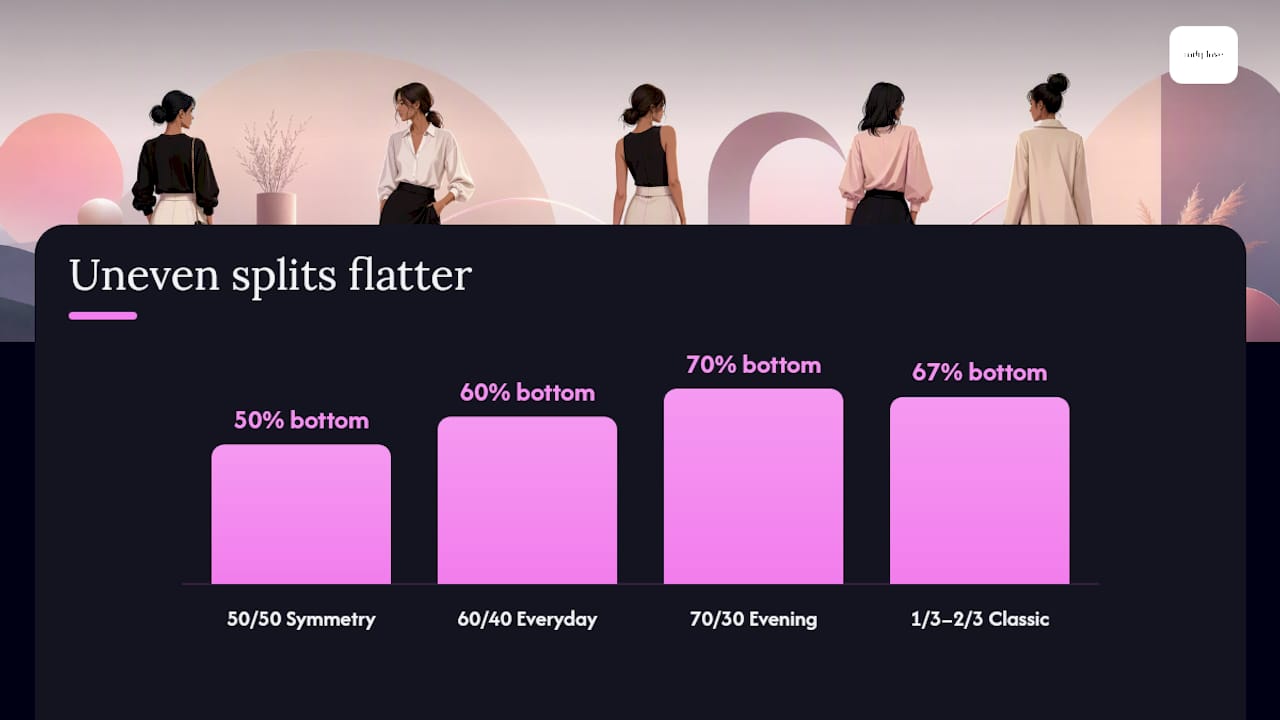
Three visual cues to check whether your ratio is working: the eye should move naturally from top to bottom (or bottom to top) without stopping; no single garment should look like it is fighting for attention; and the waist — defined or implied — should be visible somewhere in the composition.
The 3-3-3 and capsule concepts
The 3-3-3 approach — three tops, three bottoms, three pairs of shoes — can yield many outfit combinations when items share colour and style cohesion. It genuinely helps with proportions by forcing you to choose pieces that work together, which naturally keeps ratios consistent. Industry analysis notes, though, that the 3-3-3 rule is best treated as a flexible scaffold for reducing decision fatigue rather than a strict silhouette rule. Think of it as a starting exercise to build proportion instinct, not a formula that changes your body’s visual lines on its own.
Styling strategies for the most common proportion goals
Elongating your silhouette
Vertical lines are your strongest tool here. A single-colour outfit from top to toe creates an unbroken vertical line that reads as taller and leaner. High-rise bottoms raise the visual waistline and lengthen the leg. Cropped outerwear shortens the top third and pushes the eye downward, amplifying leg length. Hemlines matter too: a midi length that hits at the narrowest part of the calf is more elongating than one that cuts across the widest point.
- Wear your top tucked in or half-tucked to define the waist and lengthen the lower body.
- Choose pointed-toe shoes or nude footwear that continues the leg line rather than cutting it.
- Avoid wide horizontal stripes across the widest part of your body — they interrupt the vertical read.
Balancing shoulders and hips
If your shoulders are broader than your hips, add volume below: A-line skirts, wide-leg trousers, and pleated bottoms all shift visual weight downward. Avoid heavy shoulder details and opt for V-necks or scoop necks that draw the eye inward.
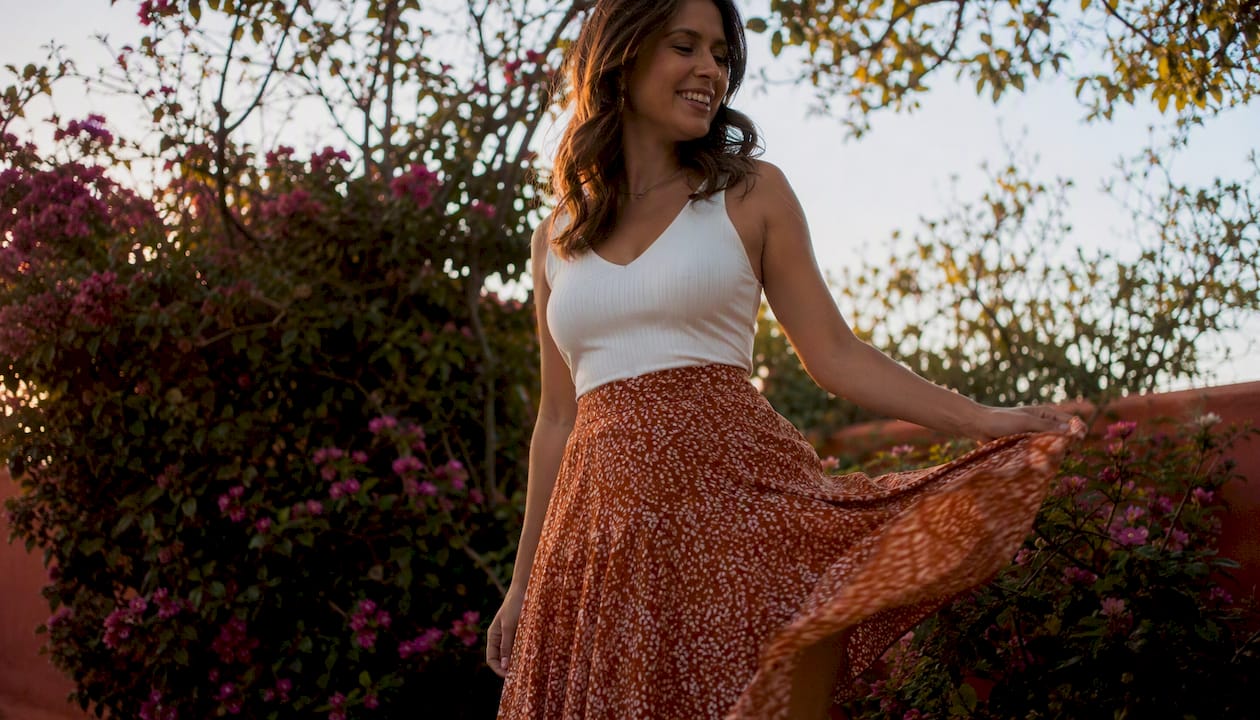
If your hips are broader than your shoulders, reverse the logic: structured shoulders, boat necks, and statement sleeves widen the upper body visually. A fitted or flared skirt that skims rather than clings keeps the lower half proportionate.
Pro Tip: Asymmetric top layers — a one-shoulder top, a draped neckline, an off-centre belt — are particularly effective at redirecting the eye away from the wider point. The asymmetry itself creates visual movement that distracts from a straight horizontal read.
Creating or defining a waist
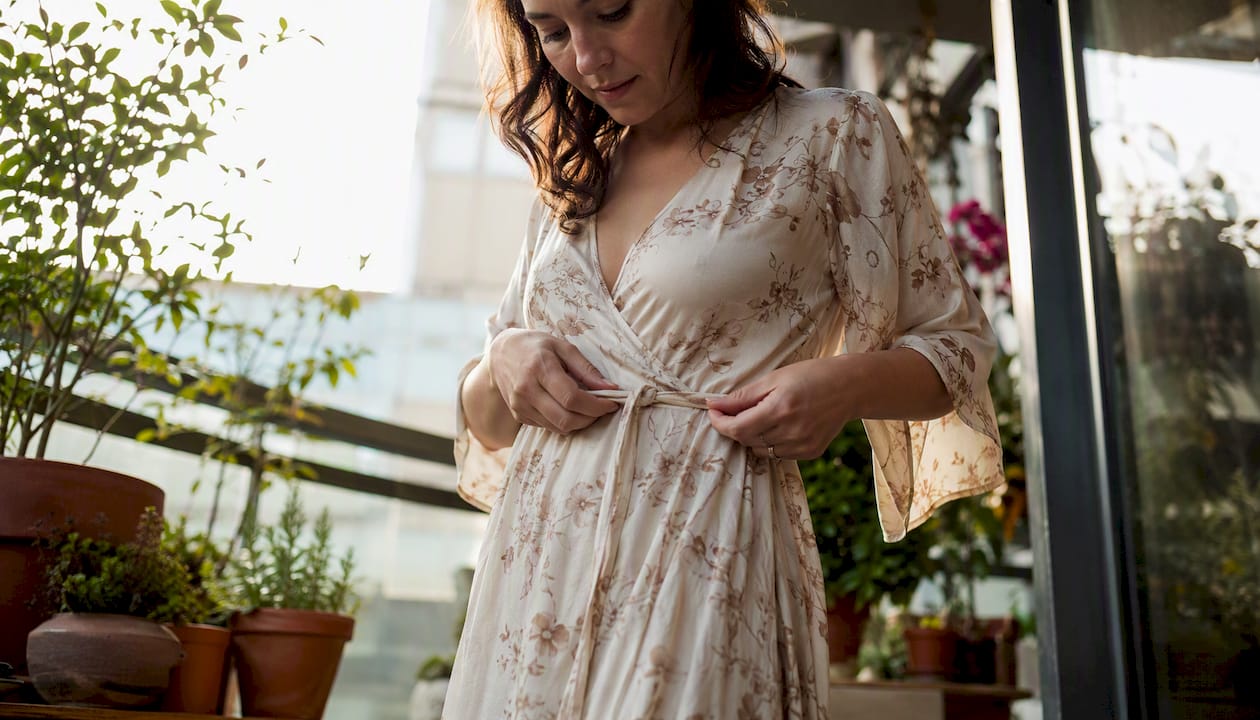
A belt placed at or just above the natural waist is the fastest fix. If you prefer not to belt, a half-tuck achieves the same definition with less structure. Wrap styles work because the diagonal line of the wrap creates an implied waist even without a separate belt. Garments with seaming or darting at the waist — rather than a straight cut — hold their shape through the day and maintain the proportion without adjustment.
Adding or removing perceived volume
Drapey fabrics (viscose, silk, jersey) skim the body and reduce perceived bulk. Structured fabrics (denim, ponte, brocade) hold their shape away from the body and add volume. If you want to reduce bulk in one area, choose a drapey fabric there and a more structured piece elsewhere. Seam placement matters too: princess seams elongate; horizontal seams across the widest point add width. Stylists consistently point to fit and fabric quality as the factors that make proportion rules look intentional rather than accidental.
Outfit formulas you can copy right now
These combinations put the ratio rules into practice. Swap lengths and footwear to adjust the visual division for your height.
Formula 1 — Classic thirds (casual): Cropped knit top + high-waisted wide-leg jeans + pointed-toe flats. The top takes roughly one-third of the visual space; the jeans take two-thirds. Nude or tonal footwear keeps the lower two-thirds unbroken.
Formula 2 — 70/30 evening: Fitted bodysuit + floor-length maxi skirt + block-heel sandals. A simple gold chain is the third piece without adding visual bulk.
Formula 3 — Defined waist (workwear): Relaxed blazer + wide-leg trousers + belt at the natural waist. The belt creates the thirds division; the blazer and trousers share the remaining visual space in roughly equal measure. This works because the belt, not the hemlines, is doing the proportion work.
Formula 4 — Petite-friendly elongation: Monochrome midi dress + cropped denim jacket + nude block-heel mules. The single colour runs the full length; the jacket shortens the top third deliberately; the heel adds height without breaking the leg line.
Footwear and accessories shift perceived proportions more than most people expect. A shoe that matches your skin tone or your trouser colour extends the leg line. A bag that is too large relative to your frame adds visual weight; a bag that is too small reads as an afterthought. Keep accessories proportionate to your frame — a petite frame with an oversized tote creates a competing horizontal that undermines the vertical you have built.
Proportion mistakes that are easy to fix
Knowing what breaks a proportion rule is often more useful than memorising what builds one.
- Equal halves (50/50): A top and bottom of identical visual length and weight is the most common mistake. Fix it by tucking, cropping, or choosing a longer bottom — anything that shifts the split toward 60/40.
- Wrong jacket length: A jacket that ends exactly at the widest point of your hips adds width there. Move the hem up (cropped) or down (hip-length or longer) to shift the visual break to a narrower point.
- Hemlines at the wrong calf point: A skirt or dress hem that cuts across the widest part of the calf makes the leg look shorter and wider. Aim for just below the knee or at mid-calf where the leg narrows.
- Over-accessorising: Too many competing elements dilute the proportion rules you have built. Personal stylist guidance consistently points to visual clutter as the fastest way to undo a well-proportioned outfit. Choose one statement piece and keep the rest minimal.
- Fabric bulk in the wrong place: A chunky knit tucked into a full skirt doubles the volume at the waist. Swap the knit for a fine-gauge version or leave it untucked as a third layer over a fitted base.
How to shop and tailor for your proportions
Reading product photos well saves you from buying pieces that look great on a model but land wrong on your frame. Check where seams, waistlines, and hems hit on the model relative to her body — if the model is significantly taller or shorter than you, those points will shift on your frame. Most product pages list the model’s height and the size worn; use that to calculate where a hem will actually fall on you.
A short tailoring checklist to keep handy:
- Shorten a hem when it cuts at the widest point of your calf or thigh — moving it 3–5 cm can change the entire proportion read.
- Take in the waist of a dress or jacket when the garment fits your shoulders and hips but bags through the middle.
- Add a dart at the back of a shirt or blouse when the shoulder fits but the fabric pulls across the bust or back.
- Raise a waistband on trousers or skirts when the rise is too low and shortens your torso visually.
Budget tailoring tip: hemming and waist suppression are the two least expensive alterations and deliver the highest proportion payoff. A $20–$30 hem adjustment on a dress you already love is almost always worth it.
Pro Tip: When choosing between a drapey fabric and a structured one for the same silhouette, pick structured for the area you want to define and drapey for the area you want to minimise. A structured shoulder with a drapey skirt keeps the eye at the top; a drapey blouse with a structured trouser grounds the look below the waist.
Fabric weight also affects how a proportion rule reads in motion. A stiff fabric holds the shape you intended; a soft fabric collapses into the body and can lose the visual division you built. Check fit guides for buying dresses online to understand how different fabric weights behave across sizes before you buy.
Why proportion rules work: the research behind them
These rules are not arbitrary style opinions. Design educators have taught proportion as a core apparel design principle for decades, describing it as the element that integrates line, texture, colour, and silhouette into a coherent whole.
The most cited empirical support comes from a study published in the Family and Consumer Sciences Research Journal, which analysed proportions in Vogue across 50 years. The findings showed that pleasing vertical proportions clustered around 35/65 and 40/60 splits, while horizontal proportions often sat near 50/50 but with 60/40 and 70/30 patterns following the “not too equal, not too unequal” design guideline. Exact golden-section proportions (approximately 38/62) appeared occasionally but were not the norm in everyday dress.
Research note: The same journal study found that recommended proportions in design textbooks typically fall between 50/50 and 60/40 — close enough to feel balanced, unequal enough to feel dynamic.
| Proportion type | Common pleasing range | What to avoid |
|---|---|---|
| Vertical (torso to leg) | 35/65 to 40/60 | Exact 50/50 split at the waist |
| Horizontal (top to bottom width) | 50/50 to 60/40 | Extreme split without deliberate intent |
| Outfit thirds (visual zones) | 1/3 to 2/3 division | Two equal halves with no third element |
The historical variation in these proportions matters too. That is why the 60/40 guideline works as a starting point rather than a strict formula, and why breaking it intentionally (an oversized coat over slim trousers, for example) can read as fashion-forward rather than wrong. Understanding how fashion micro and macro trends influence proportion choices helps you decide when to follow the guideline and when to push against it.
The thing most proportion guides get wrong
There is a persistent idea in styling advice that proportion rules exist to “fix” a body — to make hips look smaller, shoulders look narrower, or height look greater. That framing misses the point entirely.
Proportion rules are visual design tools. They work on any body because they are about the relationship between garment pieces, not about correcting what the body underneath looks like. A 70/30 split looks dynamic on a petite frame and on a tall one; the visual logic is the same. What changes is where the division falls, not whether the rule applies.
The more useful question is not “what does my body need fixing?” but “where do I want the eye to go?” That shift in framing makes proportion dressing feel like self-expression rather than a corrective exercise. The rules give you a repeatable starting point; your own preferences, the occasion, and the pieces you already own determine where you take it from there.
Numerical formulas like the third-piece rule and the 3-3-3 approach are best treated as scaffolding. Practice them for a few weeks and they become instinctive — you stop counting thirds and start feeling when something is off. That instinct is the actual goal.
Proportion-friendly pieces worth trying
Getting proportion right becomes much easier when the garment is already cut to do the work for you. Wrap styles and shirt dresses are two of the most reliable proportion-friendly cuts available because they define the waist structurally, create a natural thirds division, and adjust to different body shapes without alteration.
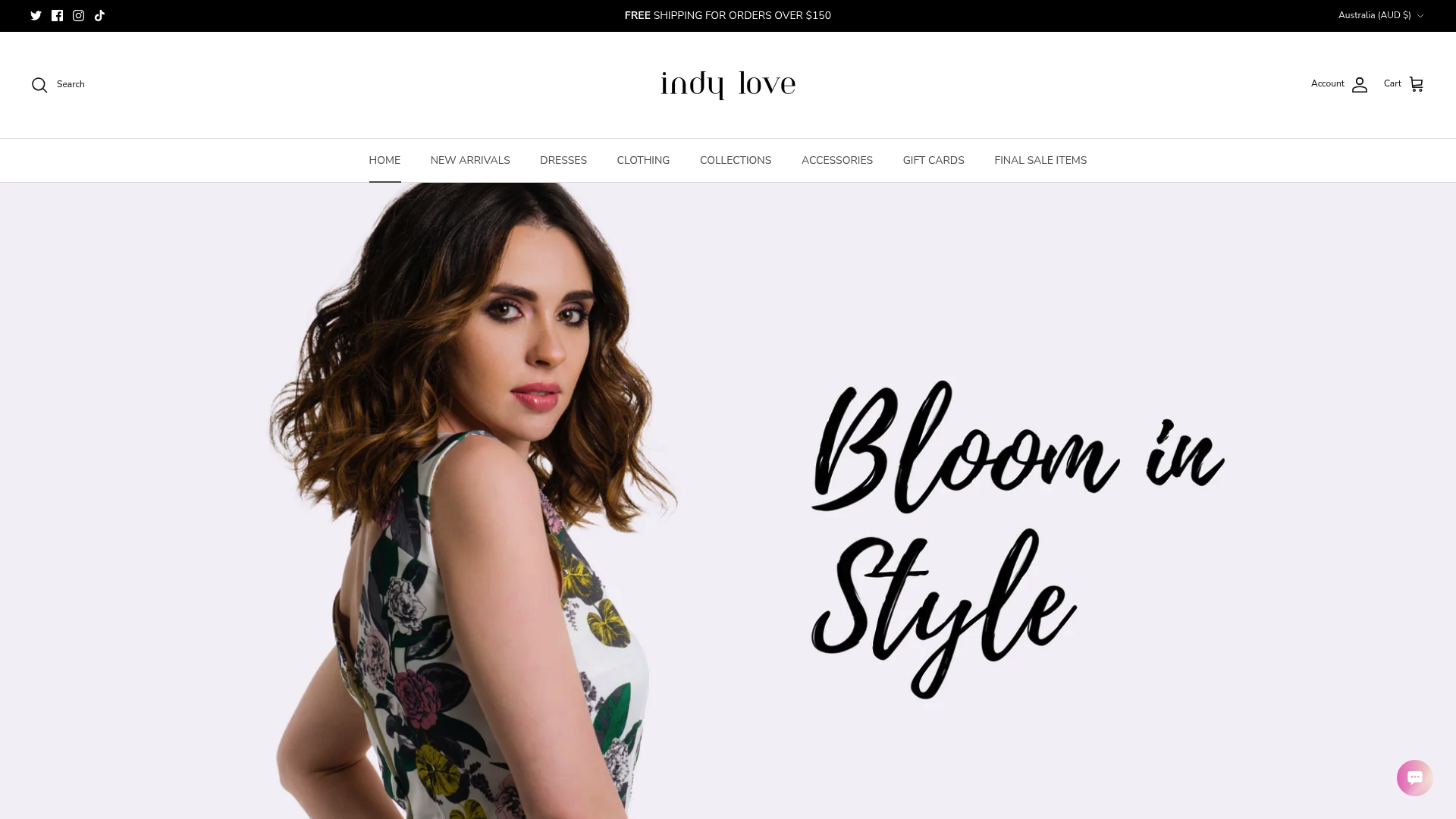
The Alice Shirt Dress at Indy Love is a strong example: the shirt-dress cut places the waist definition at the natural waist, the hem falls at a length that creates a clear 1/3 top to 2/3 lower-body visual, and the button placket adds a vertical line that elongates. The Mary Wrap Dress solves the waist-definition problem directly — the wrap tie sits exactly where you need it, and you can adjust the tie height to shift the visual division up or down depending on your torso length. Both styles ship fast across Australia, with free shipping on orders over $150. Use the online size guide to confirm your fit before ordering, and if a small hem adjustment is needed, a local tailor can fine-tune the length for under $30.
Sources
The sources below underpin the proportion guidance in this article and are worth bookmarking if you want to go deeper.
- InStyle — stylist-approved transitional capsule wardrobe
- Apparel Digest — A critical look at the 3-3-3 rule
- The Washington Post — The third piece, the 3-3-3 rule and other fashion formulas, explained
- ByShree — What is the 3-3-3 rule in fashion? Simple style guide